Railway Children Foundation for Street-Connected Youth In India
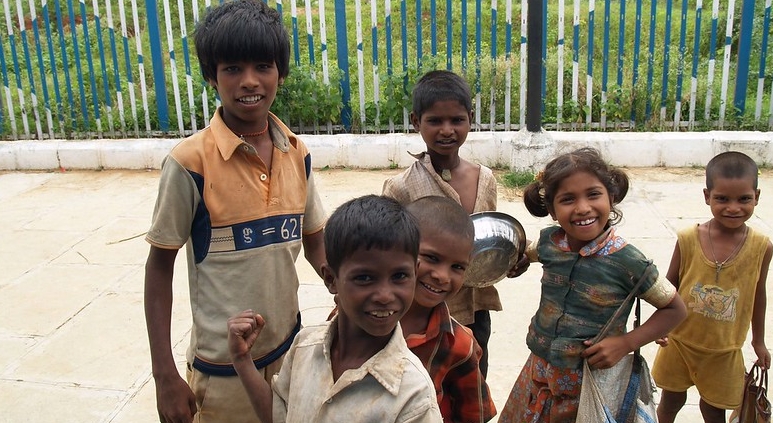 Every year, thousands of children in India run away from home, boarding trains in search of safety and a better future. Fleeing poverty, abuse or neglect, many have no destination in mind, only hope that life elsewhere will be better. Unsure of what lies ahead, many children use trains in search of refuge. In India, a child goes missing every eight minutes.
Many of these children eventually become known as “runaways” or “street-connected youth,” though they leave home for a variety of reasons. Often, they seek escape from difficult circumstances and board trains without a specific destination. Children who experience forced labor, domestic violence, neglect, accidental separation or extreme poverty often see no alternative but to leave home. Although many leave without knowing where they will end up, they board trains hoping to find safety and opportunity as the number of missing and street-connected children continues to grow.
Behind these statistics are children like 15-year-old Raju, whose experience illustrates why so many minors leave home. One December morning, Raju, born in Madhya Pradesh, decided to flee his home and travel by rail to another state because of abuse from his father. Forced to endure grueling work or face severe consequences, Raju saw no other choice when considering his future. Raju told FairPlanet, “He used to mercilessly beat me up if I did not accompany him to work. My parents stopped sending me to school after the eighth grade because I was the oldest child, and I had to start earning money.” Raju’s story mirrors the experiences of thousands of children in similar situations.
For children like Raju, trains are often the most affordable and accessible way to reach safety, with more than 400 trains serving Delhi daily. However, the number of children going missing is alarmingly high. In 2024, the National Crime Records Bureau reported 98,375 missing children, or 269 children every day. A total of 22,768 male and 75,603 female children went missing, an increase of 7.8% from 91,296 the previous year. Despite this, there is reason for hope: recovery efforts have successfully located more than 98,800 children, providing futures for street-connected youth in India.
Railway Children Foundation
The Railway Children Foundation, established in 1995, is an international nongovernmental organization (NGO) whose mission is grounded in the belief that every child can thrive free from life on the streets. Collaborating with governments, communities and transport companies, it aims to identify vulnerable children and offer vital support. Over the past year, the organization reached and safeguarded more than 3,308 children in India across eight train stations, located more than 1,700 children, and trained 3,935 railway officials on child rights and protection.
The organization highlights the dangers children face when arriving alone at busy railway stations, where many remain lost, frightened and preyed upon by traffickers. Large stations attract traffickers because of their anonymity and the high influx of unaccompanied children from across India.
With more than 25 million daily passengers, railway stations have become key hubs for human trafficking. In India, trafficking is a widespread internal issue affecting boys and girls, with more than 13,000 cases reported thus far in 2026 and only about two-thirds of the children recovered. Odisha, Bihar, Telangana and Maharashtra have the highest number of cases, driven by socioeconomic vulnerabilities and by forced marriage, labor and sexual exploitation.
To help prevent a life filled with violence and exploitation, trained workers identify vulnerable children arriving alone and coordinate with transport staff and police to escort them to a foundation shelter, where they can receive crisis support. Additionally, child help desks at stations are set up to help children find someone trustworthy and receive care.
Childline India Foundation
The Childline India Foundation partners with Indian Railways to rescue children in transit. Railway personnel are trained to recognize signs of trafficking to save children before it is too late. During one railway intervention, Childline staff intercepted four boys deceived by a trafficker promising employment. Instead, investigators found they were being taken to perform forced labor for 12-14 hours a day under abusive conditions. The foundation encounters similar cases every day, rescuing an average of more than 90 vulnerable children through its railway intervention program.
The foundation also raises public awareness about vulnerable children traveling by train, adorning trains and platforms with 200,000 signs advertising its initiative and contact information. Announcements on PA systems also draw attention, encouraging passengers to stay alert, and child kiosks, staffed 24 hours a day at more than 83 stations, facilitate swift action. These efforts account for 48,000 rescued children since 2015.
The outcomes have been encouraging, with hundreds of calls from passengers who believe children are trafficking victims. To afford futures for street-connected children in India, once rescued, they receive shelter, counseling and support as they begin rebuilding their lives.
Looking Ahead
Every child boarding trains to find a better future deserves the opportunity to thrive in a safe environment where education, stability and safety replace uncertainty and fear. For thousands of runaway children in India, a train ride begins as an escape from abuse but can lead to worse outcomes without effective intervention. While the challenges remain immense, expanding railway intervention programs, increasing public awareness and strengthening child protection systems offer hope that fewer children will fall victim to exploitation. Goals proposed by organizations such as Railway Children include family reunification and care, immediate protection and care, systemic policy, long-term empowerment and futures for street-connected children in India. With continued cooperation and awareness, children will have a chance at reconciliation with their families, the safety to thrive and an opportunity to look toward a brighter future.
– Elora Gunn
Elora is based in Louisville, KY, USA and focuses on Good News for The Borgen Project.
Photo: Flickr
