3 Projects Combatting Food Insecurity in Eritrea
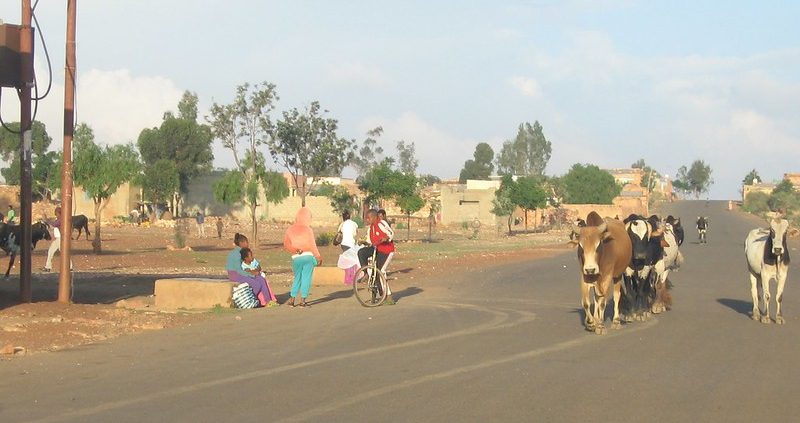 Eritrea is a small country with a population of approximately 3.6 million, located in the Horn of Africa and divided into six administrative regions. Sudan, Ethiopia and Djibouti border Eritrea, which has an arid and semi-arid climate with limited and erratic rainfall. Agriculture contributes to around 25% of GDP and provides employment for almost all rural households, with 70 to 80% of the population depending on farming and livestock for income and food production.
Food Insecurity in Eritrea
Because Eritrea relies heavily on unpredictable rainfall for agricultural production, the country remains one of Africa’s most food-insecure nations. The Eritrea Food Security Strategy reports that Eritrea produces only 60% of its national food requirements during favorable rainfall years. However, during drought years, production can fall to 20 to 25% of national food needs.
As a result, an estimated 66% of Eritreans, around 2.36 million people, cannot obtain sufficient food and essential goods to maintain a healthy standard of living. Approximately 37% of the population, or 1.31 million people, live below the food poverty line. Around half of all households require food assistance in usual years, and that figure rises to 80% during years of poor harvests.
Food insecurity in Eritrea has particularly severe consequences for children. The Global Nutrition Report estimates that 52.5% of children under five suffer from stunting, significantly above the African regional average of 30.7%. The Eritrea Food Security Strategy also found that 44% of children are underweight, while malnutrition causes anemia in nearly 50% of children.
Eritrea’s Human Development Index score of 0.503 places the country firmly in the low human development category.
Projects Combatting Food Insecurity
Despite these challenges, a range of initiatives are working to strengthen Eritrea’s food security from the ground up. Eritrea’s Ministry of Agriculture launched the Small and Productive Farm Plot initiative, locally known as Nirqah, under the national framework “Safe and Nutritious Food for Everyone, Everywhere.”
The Small and Productive Farm Plot’s concept is that each participating household works and manages a 1,000-square-meter plot, roughly a quarter of an acre, growing cereals, pulses, vegetables and sweet potatoes. Farmers then use crop residues to support livestock. This model is adapted to Eritrea’s diverse agroecological zones, allowing households to cultivate multiple crops throughout the year.
The early results are encouraging. During the first phase across the Maekel, Anseba, Debub and Gash-Barka regions, more than 12,000 households participated. These households produced yields of up to 970 kg of wheat, 950 kg of maize, 730 kg of sorghum and 420 kg of barley per 1,000-square-meter plot.
To date, farmers have cultivated more than 33,000 plots under the program. In the Gala-Nefhi region alone, the program reached 4,421 plots, while introducing 1,641 modern beehives and distributing 40,000 village chickens. In Serejeka, 4,700 farmers took part in the Small and Productive Farm Plot program. Looking ahead, Eritrea’s Ministry of Agriculture has set a national production target for 2028 aimed at balancing output across cereals (50%), pulses (25%) and oil crops (25%).
Environmental Threats
Alongside long-term agricultural development, Eritrea has contended with environmental threats. In December 2024, the Food and Agriculture Organization (FAO) and the Ministry of Agriculture identified a serious escalation in desert locust activity along Eritrea’s Red Sea coastline. The locust outbreak threatened 50,000 hectares of cropland and 450,000 hectares of rangeland, land that supports the livelihoods of approximately 600,000 people.
More than 700,000 sheep and goats, as well as 200,000 cattle, faced losing access to their primary feed sources. The United Nations (U.N.) Central Emergency Response Fund (CERF) allocated $500,000 to FAO for a rapid response program. Between Jan. 16 and July 15, 2025, FAO worked alongside the Ministry of Agriculture and distributed 20,000 liters of Deltamethrin pesticide, 330 protective masks and 20 walkie-talkies to the ministry’s Plant Protection Unit.
By the end of the project, response teams had treated 21,450 hectares of infested land and safeguarded 38,770 tons of standing crops and 100,000 animals. Beyond treating infested farmland, the program directly reached 30,000 people, 55% of whom were women and girls. Radio broadcasts, community meetings and information sessions also reached another 600,000 people across five targeted regions.
The program trained more than 1,030 people, including 30 extension agents and 1,000 community volunteers, in locust monitoring, early detection and safe pesticide handling. Officials also reserved the remaining supplies for the 2025 locust season to strengthen future preparedness.
Water Infrastructure
Eritrea’s long-term investment in water infrastructure also underpins agricultural growth and food security. When Eritrea gained independence in 1993, the nation had approximately 130 dams, a figure that has since grown to 800. The expansion has enabled irrigation, reduced reliance on erratic rainfall and improved the stability of food production.
The dairy sector, constrained by fodder and water shortages resulting in a low-quality national herd, has historically underperformed. To combat this, Self Help Africa launched the DESIRA initiative, the Climate Smart Agriculture Research and Innovation Support for Dairy Value Chains program. This initiative works across the Debub, Anseba and Maekel Zobas districts and aims to improve dairy productivity and profitability, develop dairy value chains and increase national dairy consumption for nutritional benefits. The program expects to directly benefit 800 producer households, or around 4,000 people, along with approximately 50 academic and scientific staff.
Improving food insecurity in Eritrea also requires knowing where the needs are greatest. In 2025, the U.N. system in Eritrea supported the screening of 312,269 children ages 6 to 59 months for nutrition-related symptoms.
Looking Ahead
Food insecurity in Eritrea remains a challenge, shaped by decades of conflict, an unforgiving climate and limited resources. However, the projects taking shape across the country demonstrate how lasting solutions can emerge by building resilience from the ground up. These programs signal that Eritrea is taking meaningful steps toward a more food-secure future.
– Helen Turnbull
Helen is based in Cardiff, Wales and focuses on Good News for The Borgen Project.
Photo: Flickr
