Child Poverty in Panama Through One Woman’s Story
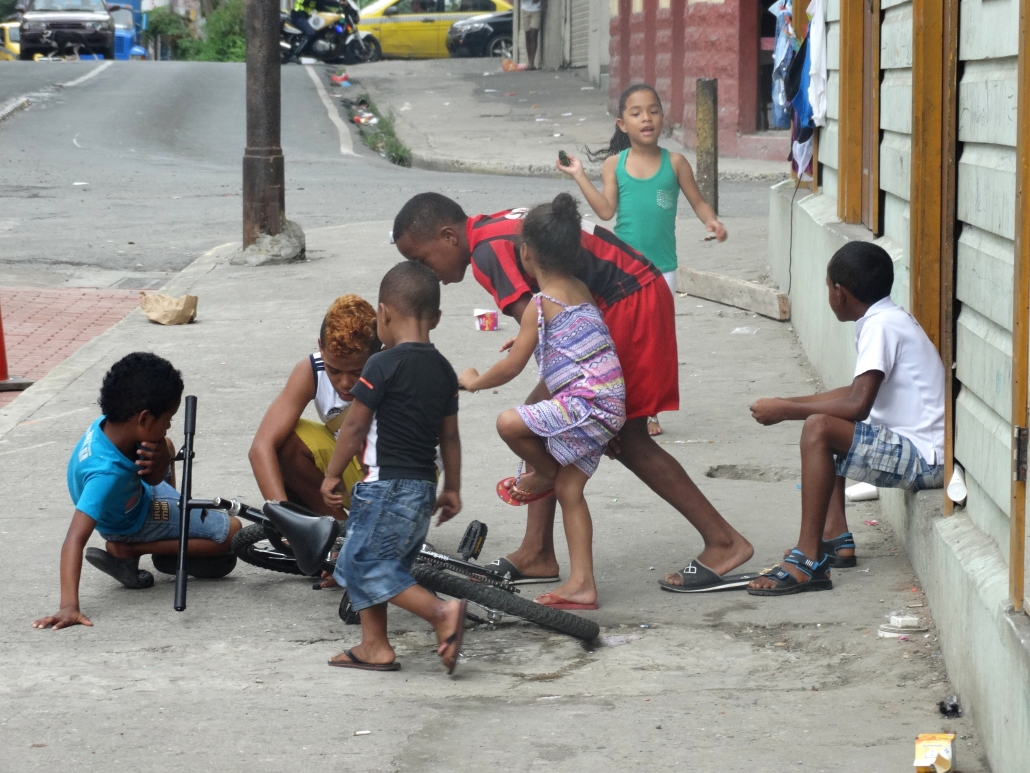 People often use percentages to measure child poverty in Panama. However, it also shows up in the choices families make regarding school, work and survival. The Borgen Project spoke with a woman in her late 70s from Colón, Panama, who asked to remain anonymous for privacy reasons.
She remembered how her childhood was shaped by church, school and carnival traditions, as well as by financial difficulties and limited opportunities. Her story is an example of a broader problem across this Central American country. A report from the World Bank and UNICEF in 2026 stated that 34.5% of children and teens in Panama live in monetary poverty, with 16% living in extreme poverty.
Employment Shaped Daily Life
The interviewee reminisced that, while daily life in Colón felt close-knit and joyful growing up, finding steady work was difficult. She discussed living in an economy where jobs paid very little. She remembered that many families depended on better wages from employment in the Canal Zone.
In her account, unemployment affected every aspect of people’s lives. Current research supports this view. According to the World Bank and UNICEF, households with children living in poverty are more likely to be led by adults with limited education and participation in the labor market, making it harder for these families to move toward financial stability.
When Poverty Interrupts Education
The woman said her family struggled to keep paying for private school and she eventually moved to a lower-cost government school. This shift shows that financial hardship can narrow a child’s opportunities early in life. Reflecting on that reality, she told The Borgen Project, “If you don’t pay, you can’t go to school.”
UNICEF says preschool and secondary education services in Panama remain hard to access in rural, peri-urban and Indigenous communities and around 30% of children still lack access to preschool education. UNICEF also reports that girls in Indigenous areas face a greater risk of educational exclusion than children in other parts of the country. When a family’s income is unstable, school becomes one more cost that is difficult to sustain.
The Burden Falls Unevenly Across Panama
Although the interview centers on life in Colón, a city with a significant Afro-descendant population, today’s data shows that child poverty in Panama is especially severe in rural and Indigenous territories. The World Bank-UNICEF report says 83% of children in Indigenous comarcas (regions) live in poverty, while 55% live in extreme poverty. In the Ngäbe-Buglé comarca, child poverty exceeds 90%.
UNESCO likewise reports that children and youth in both remote rural and Indigenous areas face lower participation rates and weaker learning outcomes compared to other students in Panama. These extreme disparities show that child poverty in Panama does not affect everyone evenly across the country. It is highly concentrated in places where families have less access to services, infrastructure and formal employment.
Cash Transfers Offer One Active Response
One existing response is Red de Oportunidades (Opportunities Network), Panama’s conditional cash transfer program. The United Nations Economic Commission for Latin America and the Caribbean (ECLAC) describes it as a national program that supports households living in extreme poverty. The program places special attention on those living in rural and Indigenous areas.
It is designed to help impoverished mothers with children obtain sufficient schooling and health follow-ups. Programs like this are important because they ease immediate pressure on families while helping children stay connected to education and basic services. For households facing precarious financial situations, this support prevents temporary hardship from becoming further exclusion.
Early Childhood Support Could Make a Long-Term Difference
Panama is also placing more attention on early childhood. A 2024 report from the Panama Ministry of Social Development (MIDES) states that three in 10 children in Panama live in multidimensional poverty. That figure rises to nine in 10 in the comarcas. The same report notes that most early childhood centers are concentrated in urban areas and estimates that only 3% of children under 3 have access to them.
In response, MIDES says the Contigo Creciendo model is being tested in 13 pilot communities in Panamá Oeste and the Emberá-Wounaan comarca, with UNICEF’s support. MIDES, UNICEF and the Development Bank of Latin America and the Caribbean (CAF) also presented three caregiving guides in 2024 for children from birth to 47 months, designed for low-cost use in vulnerable and hard-to-reach communities. These are the kinds of interventions that can help families before poverty causes even greater damage to children’s development.
The interviewee said that access to better employment and housing would have made a significant difference for families like hers. As she put it, “Without money, you can’t do anything.” Her story shows how survival often depended on persistence, family sacrifice and adaptation, not on actual security.
Current data suggests that many Panamanian children still face those same structural barriers today, especially in more impoverished rural and Indigenous areas. However, Panama has effective tools to reduce child poverty, including cash transfer programs, early childhood initiatives and more targeted support for socially isolated communities. If these efforts continue to expand where the need is greatest, the next generation may face fewer of the limits that shaped her childhood.
– Ashirah Newton
Ashirah is based in Brooklyn, NY, USA and focuses on Global Health for The Borgen Project.
Photo: Flickr
