Village Health Workers Close the Immunization gap in Lesotho
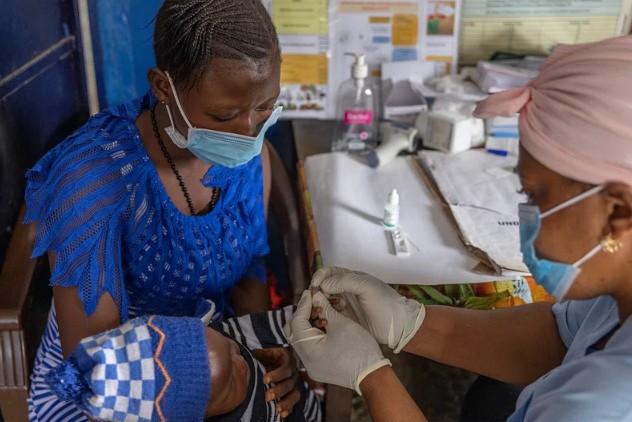 In Lesotho’s mountain communities, a missed vaccine is often not just a missed appointment. It can result from distance, transport costs, difficult terrain or uncertainty about where services are available. That is what makes the immunization gap in Lesotho both a poverty issue and a health issue. During the Ministry of Health’s nationwide measles-rubella campaign in October 2025, village health workers helped reduce these barriers by going door-to-door. They directed parents to vaccination points and helped health teams reach children who might otherwise have been missed.
A Campaign Built Around Outreach
Lesotho began preparing early for the October 2025 campaign. The World Health Organization (WHO) reported that the national drive ran from Oct. 20–24, followed by mop-up efforts from Oct. 25–27 in low-coverage areas. The campaign was expected to reach 196,308 children ages 0–59 months through four interventions: measles-rubella vaccine oral polio vaccine, vitamin A and deworming tablets.
The WHO also said 85 participants joined training beforehand, including district health officials and representatives from the education and local government sectors. This campaign also built on earlier progress. According to the UNICEF Lesotho Annual Report 2024, measles-containing vaccine first-dose coverage rose from 84% in 2023 to 93% in 2024. The same report stated that UNICEF supported the administration of 12,564 measles-rubella vaccines in hard-to-reach areas during Africa Vaccination Week. It also highlighted media partnerships and outreach efforts to improve vaccine confidence.
How Village Health Workers Closed the Gap
Lesotho’s immunization gap has narrowed because village health workers performed practical, local work that a central system alone could not. First, they went house-to-house. The WHO’s reporting from Qacha’s Nek stated that village health workers explained the importance of immunization directly to families and guided them to vaccination sites.
In places where households are scattered across steep terrain, door-to-door outreach helps families who might otherwise miss the campaign entirely. This approach is crucial for those who do not know where to go, when vaccinators will arrive or who cannot risk a difficult trip without clear information.
Second, they helped build trust. The WHO reported that in Mokhotlong, health teams used patient dialogue and accurate information to speak with parents who were initially hesitant about vaccination. Village health workers were central to that effort because they were known in their communities and could speak as trusted neighbors rather than as distant officials.
Third, they noticed who was missing. A Gavi VaccinesWork report described how a village health worker in Leribe realized that a mother’s children had not appeared at a temporary vaccination point and alerted nursing staff. That follow-up uncovered a deeper problem: the family had fallen behind on routine childhood vaccines because the mother could not afford the $1.50 medical booklet or the roughly $1.60 return fare to Motebang Hospital. The case showed how village health workers do more than spread information. They help health teams identify children whose absence is tied to poverty rather than refusal.
Why Poverty Keeps Children at a Distance
The Leribe case shows why the immunization gap in Lesotho is tied to poverty. According to the World Bank, Lesotho’s unemployment rate was at 30.1% in 2024 and about 45.7% of the population lived on less than $3.00 per day. In that context, even minor health-related costs can become real barriers to routine care. For families living that close to the edge, access is shaped not only by whether vaccines are available but by whether reaching them is affordable.
Partners Supported Local Action
Lesotho’s Ministry of Health led the campaign, but local efforts were strengthened by external support. Gavi, the WHO and UNICEF provided financial and technical support for planning, implementation and monitoring. UNICEF’s 2024 annual report also stated that it developed community-based health policies and standardized training toolkits for village health workers, helping strengthen care quality at the community level.
The campaign showed that inclusion matters. A December 2025 VaccinesWork report stated that Lesotho printed 400 braille information packets ahead of the campaign, the first time the country’s immunization system had made vaccine information available in braille. According to the same report, 110,733 children under 5 received the measles-rubella vaccine, polio drops, albendazole and vitamin A during the Oct. 20–24 campaign.
This matters because closing the immunization gap in Lesotho is not only about delivering vaccines. It is also about making sure information reaches parents in forms they can use.
Final Remarks
Lesotho’s October 2025 campaign did not erase every structural barrier in a single week. The immunization gap in Lesotho is still shaped by poverty, geography and the limits of routine service delivery. But the campaign showed what progress looks like in practice: village health workers who know which households have young children, local chiefs opening their homes as vaccination sites and health teams that follow up when children do not appear.
In mountain communities where exclusion can happen quietly, this kind of community-based effort makes health care more accessible to families who are most likely to be missed. If Lesotho continues investing in village health workers, outreach and inclusive communication, more children from low-income families will be far less likely to be left behind.
– Tom Basu
Tom is based in Buckinghamshire and focuses on Good News and Global Health for The Borgen Project.
Photo: Rawpixel
