The Importance of Midwife Training Programs in Liberia
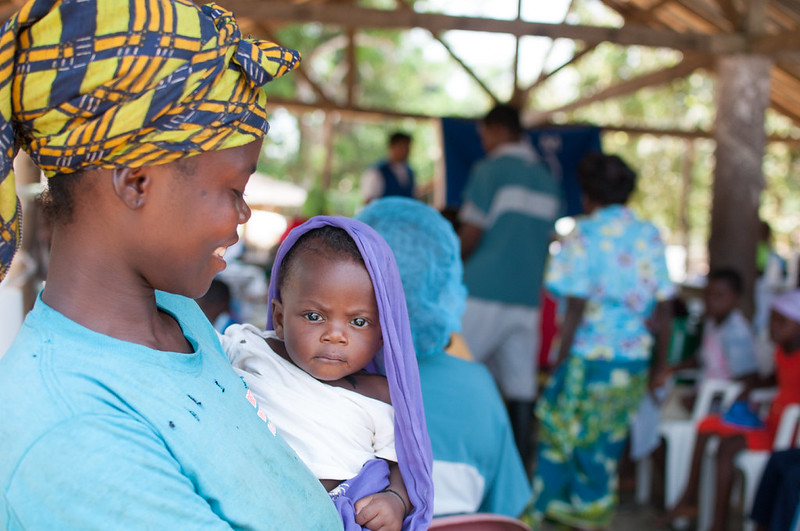 Liberia has one of the world’s highest rates of maternal mortality. The National Institutes of Health (NIH) recently published a study conducted by researchers from 2018 to 2021 that determined a maternal mortality ratio (MMR) of 1,565 per 100,000 births during this period. This study also determined that there was a 5% regression during this time in maternal mortality. The United Nations Population Fund (UNFPA) estimated differently, with an MMR of 854 per 100,000 births. While these estimates vary, all determine that Liberia has one of the highest MMR rates worldwide.
Maternal mortality, or the instance of a mother dying during or immediately after childbirth, occurs for different reasons. Researchers estimate that 75% of maternal deaths are the result of hemorrhages, severely high blood pressure, infections and unsafe abortion.
MMR statistics from neighboring countries illustrate just how high Liberia’s numbers are. Immediate neighbors’ MMRs range from Cote d’Ivoire’s at 399 per 100,000 births to Guinea’s 553 per 100,000 births.
Midwife Training Programs in Liberia
These statistics show that lowering maternal mortality rates in Liberia is possible. While the solution is multifactorial, growing and strengthening midwife training programs in Liberia is a pivotal part of the solution.
Midwives are medical professionals with differing levels of training who provide support to women through pregnancy, childbirth and in the early postpartum period. They work alongside obstetricians and gynecologists and provide personalized care to women. In Liberia, midwives would support pregnancy, delivery and postpartum, and would also help educate patients. Another key part of a midwife’s role in Liberia is educating patients on things like preventing unwanted pregnancies, personal care and HIV prevention.
Currently, Liberia has only 200 trained midwives. With 400 health facilities and a population of 4 million, 200 midwives account for a small fraction of the population. For reference, Côte d’Ivoire has 2,627.
Midwife training programs vary in length, but a prospective midwife can obtain a certificate in a minimum of 12 months in this region. To significantly reduce the MMR in Liberia, global health authorities are looking to maximize midwife training.
Given these numbers, solutions that expand access to care, particularly through trained midwives, are the clear focus of the World Health Organization (WHO) and its H6 partners.
The Schools
The Danish Midwives Association has partnered with several organizations such as the WHO and its H6 partners (UNAIDS, UNFPA, UNICEF, U.N. Women and the World Bank), to fund and clone the Danish program and establish an accessible path to Liberian midwifery. This partnership both standardizes and strengthens the midwife training taught in Liberia, with three years of education and works to strengthen health care facilities. The partners will provide additional antibiotics and family planning supplies, teach methods to prevent and care for hemorrhages, educate community members and provide more sanitary conditions in health facilities.
Midwife training programs in Liberia are currently limited to six schools. The primary focus will be to strengthen those six schools. A key part of strengthening the program is to train and retain teachers. This is specifically where the Danish Midwife Association comes in. In order for the schools to work efficiently, staff need to be robust and skilled.
With only about 200 midwives in all of Liberia, most women in the country currently do not receive prenatal care and give birth without medical assistance. Adding significant numbers of personnel to medical facilities that can both educate women on healthy pregnancies and assist in labor and delivery would narrow the care gap women experience in Liberia. Narrowing this gap would directly affect the MMR in Liberia.
Looking Ahead
While MMR is high and midwife headcounts are low, global health authorities have developed a clear plan to change this. With involvement of groups like the WHO and its H6 partners and their partnership with the Danish Midwives Association, these global health authorities are working to increase midwife headcounts to bolster prenatal care and improve maternal health outcomes.
– Nicole Miller
Nicole is based in Pittsburgh, PA, USA and focuses on Global Health and Politics for The Borgen Project.
Photo: Flickr
