Amaranth and Food Insecurity in Nigeria
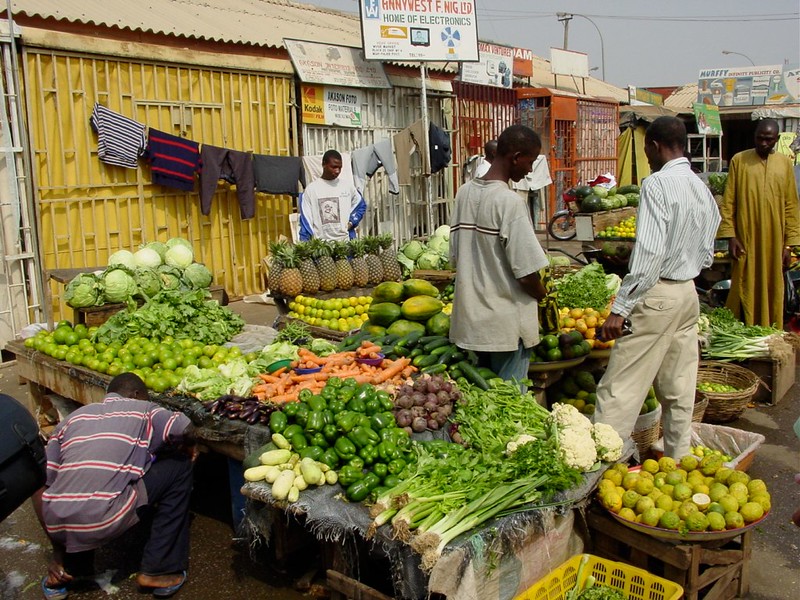 Nigeria is a country in West Africa currently experiencing a hunger crisis. An estimated 35 million people are living with acute food insecurity, and 4.8 million require immediate nutritional assistance. Ensuring people in Nigeria are fed is one of the most important ways to address poverty in rural communities.
One of the crops used to combat food insecurity is frequently grown in Nigeria but rarely planted. Amaranth is common throughout the hot and humid regions of Nigeria and is often maintained rather than sown. It grows naturally throughout the countryside, and deliberately planted varieties are often found in gathering spaces where many people in the community can benefit from them.
The Benefits of Amaranth
When the rainy season begins, amaranth flourishes and grows quickly. After about three to five weeks, the leaves can be harvested and eaten or sold. It is a stable yield crop, meaning that while yields may not be large, it will almost always provide some yield, regardless of drought or pests.
According to Laurajean Lewis, the global director of genetic resources at the International Maize and Wheat Improvement Center (CIMMYT) in Mexico, amaranth is one of the few plants that grows almost everywhere in the world. Lewis explained that because farmers harvest the leaves rather than the seeds, the plant reseeds itself, and seeds can also be collected and replanted in new areas.
Amaranth is a resilient plant and is important for nutrition in Nigeria. In some places, it accounts for up to 25% of Nigerians’ daily protein intake. Sometimes referred to as a nutritional powerhouse by scientists, it also contains high levels of folic acid and calcium, which are important for pregnant or lactating women.
Barriers to Cultivation
The general outlook on amaranth is negative. It is seen as a poverty staple, and in some places it is considered acceptable only for feeding livestock. One variety is called pigweed because of the belief that it is only suitable for pigs. Despite this perception, it is widely eaten and sometimes intercropped with high-yielding crops such as corn. Its leaves are often boiled and eaten like spinach, with a mild flavor said to resemble artichoke. It also produces edible seeds, making the plant dual-purpose for many. The seeds can be ground into a flour that is well-suited for baby food and is important for childhood development.
Improving Food Insecurity in Nigeria
Amaranth is seen as a poverty food in West Africa, and especially in Nigeria, but it plays an important role in supporting rural communities and providing essential vitamins and minerals to many. It also offers nutritional support for vulnerable groups, such as children, pregnant women and older adults. As food insecurity continues to affect millions of Nigerians, amaranth remains a practical and culturally significant tool in the fight against hunger and rural poverty.
– Eddie Hofmann
Eddie is based in Seattle, WA, USA and focuses on Good News and Global Health for The Borgen Project.
Photo: Flickr
