Madhubani Art and Poverty in Bihar
 According to the Multidimensional Poverty Index (MPI), the Indian state of Bihar is the most impoverished state in terms of multidimensional poverty. Poverty in Bihar goes beyond a lack of income; it reflects an impoverished state of health, education and living standards.
Bihar is heavily reliant on agriculture for its economic survival. However, with 73% of its area designated as flood-prone, the state’s people find themselves stuck in a vicious cycle of survival and sustenance. It has been noted that 76% of the population lives under the recurring threat of floods.
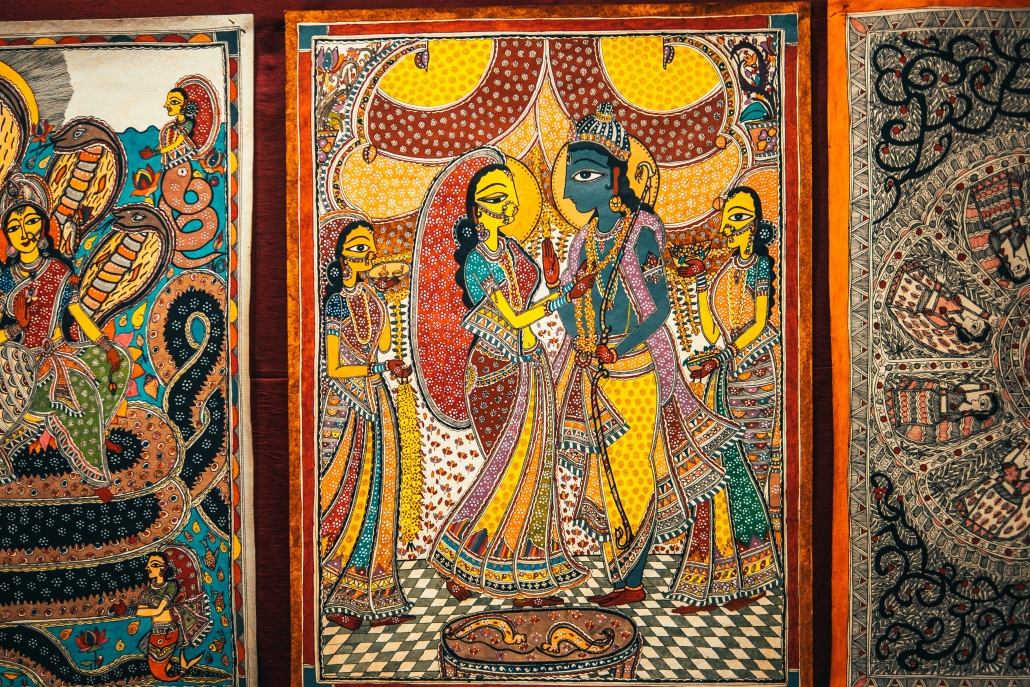
Despite the recurrent cycle of ruin and revival, the people of north Bihar, specifically in Madhubani District, have found a way to use their indigenous knowledge and Madhubani art tradition to generate income. Madhubani art, a distinctive folk art form originating in the region and also known as Mithila painting, has grown from a purely cultural expression into a livelihood that now sustains tens of thousands of families.
From Tradition to Economic Empowerment
Madhubani art originated in the villages of Mithila long before the modern era, where women decorated mud walls and floors with elaborate patterns expressing mythology, nature and community life. The art is defined by bold lines, bright, often natural colors and intricate geometric motifs depicting gods, animals, wedding scenes and ritual imagery.
As droughts struck rural Bihar in the mid-20th century, artists began transferring this heritage onto paper, cloth and canvas, a transformation that unlocked commercial horizons. Today, Madhubani art manifests across surfaces from canvas and handmade paper to sarees, notebooks and decorative homeware, giving artisans access to urban markets, exhibitions and global tourism.
Economic Impact: Numbers That Matter
Recent government records indicate that this traditional craft now provides regular income support to artisan families in Madhubani district. This support also extends to other surrounding areas, far beyond its original birthplace. In core hubs such as Jitwarpur, nearly 70% of local families depend on the sale of Madhubani art for income, with many artists coming from low-income backgrounds.
Formal support measures have also made tangible gains. More than 5,000 artisans in the region have applied for specialized artisan credit cards designed to help them access loans for materials, training and other business needs. Tax policy reforms have reduced the Goods and Services Tax (GST) on handicrafts from 12% to 5%, making artworks more affordable for buyers and providing greater earnings stability for artisans.
Though precise income figures can vary widely by artist and medium, studies of artisan households show that sales revenues often constitute a major share of family earnings. The revenues help cover daily expenses, schooling and health care, providing breakthroughs for communities once mired in seasonal migrant labor. Moreover, success in Madhubani art has given women greater public visibility.
Many women now represent their communities at fairs, exhibitions and cultural events across India and abroad, breaking social norms that once confined them to the home. Women artisans report greater influence over family finances, improved household decision-making power and a stronger ability to invest in their children’s education, outcomes that can improve household well-being and reduce economic vulnerability.
Government Programs and Policy Support
The Bihar government has launched handicraft promotion campaigns and training programs to improve design quality, market access and digital selling skills for rural artisans. It aims to transform the craft into a sustainable enterprise. Nonprofit and livelihood programs, such as Bihar Rural Livelihoods Promotion Society (Jeevika), have also engaged Madhubani artists, linking them to broader rural development and poverty-alleviation strategies.
Such initiatives typically emphasize skills development, collective marketing and cooperative organization to empower artisans economically and socially. Government programs have helped transform this cultural skill into economic opportunity. The National Handicrafts Development Program funded a $1.1 million craft village in Jitwarpur.
The program created artist stalls, training centers and tourism infrastructure that reduce dependence on intermediaries. Meanwhile, Bihar’s JEEViKA self-help groups have enabled rural women artists to access credit, expand production and negotiate better prices. Despite these gains, artists and observers note ongoing challenges.
These include limited year-round demand, exploitation by middlemen and uneven institutional backing, indicating that more coordinated policy is still needed for long-term sustainability.
Changing the Narrative
The growing value of Madhubani art extends beyond individual households. Local tourism circuits, craft villages and cultural initiatives attract visitors interested in heritage experiences, catalyzing secondary employment in hospitality and travel. Artisans have also benefited from global interest, with works reaching buyers in the U.S., Europe and Japan and appearing in prestigious cultural forums and museum collections.
This blend of heritage preservation, gender empowerment and economic diversification offers a replicable model for other rural communities seeking to leverage cultural capital into sustainable development.
A Work in Progress
Despite notable strides, deep rural poverty has not vanished. Many households still supplement art earnings with agricultural or migration income and the market continues to fluctuate with seasonal and economic cycles. Yet, for villages once marked by limited livelihood options, Madhubani art has expanded economic horizons, giving thousands of families greater stability and hope.
Poverty in Bihar has not disappeared, but the shift from single-source farm income to diversified art-based earnings has improved household stability. It also reduced migration pressures and created one of Bihar’s few homegrown rural creative economies.
– Sayanee Mandal
Sayanee is based in Glasgow, UK and focuses on Good News for The Borgen Project.
Photo: Unsplash
