Women’s Economic Empowerment in Southeast Asia
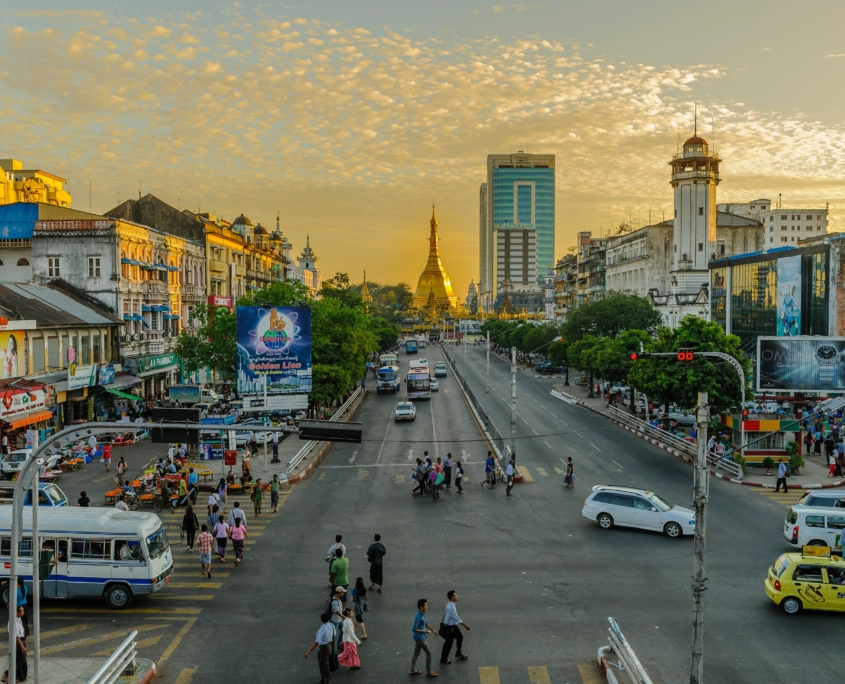 Across rural areas of Southeast Asia, self-managed rotating savings and credit associations (ROSCAs) are transforming the economic landscape for women in Vietnam, Cambodia and Myanmar. These community savings and loan groups, built on mutual trust and cooperation, enable women who often lack access to formal banking systems to pool resources, gain capital and invest in small businesses. The ripple effects on household poverty reduction, social capital formation and rural economic diversification are profound, providing a grassroots model for women’s empowerment and inclusive development.
Women’s Economic Empowerment in Southeast Asia
ROSCAs are informal financial groups where members regularly contribute a fixed amount of money into a common fund. This fund is then rotated among members, granting each person access to a lump sum during their turn. Unlike traditional banks, these groups rely on social trust rather than collateral or credit scores, making them especially accessible for women in rural communities where formal financial institutions often exclude them.
In Vietnam’s Mekong Delta, for example, women farmers participate in ROSCAs to finance agricultural inputs or start small trade ventures. In Cambodia’s Kampong Cham province, these groups help women fund home-based businesses such as weaving or food production. Myanmar’s Chin State has seen women use ROSCA funds to diversify income by investing in poultry or tailoring.
Impact on Poverty and Social Capital
The benefits extend beyond just access to capital. By participating in ROSCAs, women build networks of mutual support and accountability that foster social cohesion. This social capital can be as valuable as the financial resources, encouraging collective problem-solving and resilience in the face of economic shocks.
Studies from the region indicate that households involved in community savings groups experience greater financial stability and reduced vulnerability to poverty. The ability to invest in income-generating activities directly improves livelihoods, while the collaborative nature of these groups enhances women’s confidence and decision-making power within their families and communities.
Driving Rural Economic Diversification
ROSCAs also contribute to broader rural economic diversification. By enabling women to access credit and manage savings, these groups help shift economies away from single-commodity dependence toward a wider variety of small-scale enterprises. This diversification is critical in mitigating risks associated with agricultural price volatility and climate change impacts.
In Cambodia, some ROSCAs have expanded to include group lending and microinsurance schemes. This allows members to pool risks and protect against crop failure or health emergencies. Such innovations demonstrate the potential for ROSCAs to evolve into more complex financial ecosystems tailored to local needs.
Best Practices and Policy Recommendations
Policymakers and development agencies can strengthen the impact of ROSCAs by considering the following:
- Capacity Building. Provide training on financial literacy and group management to strengthen sustainability.
- Legal Recognition. Create supportive regulatory frameworks that recognize and protect informal savings groups.
- Linkages with Formal Finance. Facilitate partnerships between ROSCAs and microfinance institutions or banks to expand access to credit.
- Inclusive Participation. Promote gender equity and inclusion of marginalized women to ensure broad community benefits.
Governments in Vietnam, Cambodia and Myanmar are increasingly recognizing the importance of grassroots financial mechanisms. Integrating ROSCAs into national poverty alleviation strategies could unlock significant progress toward economic empowerment and poverty reduction.
Looking Ahead
Community savings and loan groups exemplify how local solutions can address systemic barriers and advance women’s economic empowerment in Southeast Asia. By harnessing the power of collective action and social trust, ROSCAs offer a scalable, culturally appropriate path toward financial inclusion. Supporting these groups through policy, capacity building and access to formal financial systems will be vital to sustaining their impact. In a region where millions of women remain financially excluded, grassroots savings associations are not just a means of survival; they are engines of empowerment, transforming lives and communities one cycle at a time.
– De’Marlo Gray
De’Marlo is based in Long Beach, CA, USA and focuses on Business and Technology for The Borgen Project.
Photo: Unsplash
