Brazil Prosperity Fund: Unlocking Brazil’s Trading Power
 The Brazil Prosperity Fund was a range of projects designed to use aid from the U.K. to expand Brazil’s trade network and accelerate the country’s development. The scheme invested $40 million of U.K. aid between 2018 and 2023 and focused on four key areas:
- Energy
- Green Finance
- Future Cities
- Trade
Funding provided by the Brazil Prosperity Fund helped facilitate the exchange of information between U.K. scientists and the Brazilian Energy Program (BEP) on the most efficient ways to collect and utilize biogas. This led to the passing of Brazil’s Fuel of the Future law in October 2024, which regulates the country’s energy sector. The law was passed to reduce Brazil’s greenhouse gas emissions and establish the country as a market leader in the sale of renewable energy, maximizing its trading power.
São Paulo Metro System Expansion
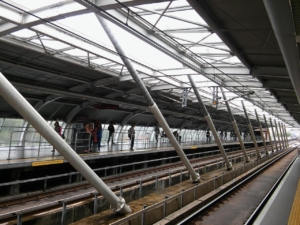
The Brazil Prosperity Fund provided funding, along with the World Bank, for the Brazilian branch of the Future Cities Programme. The funds from this scheme were used to expand the existing metro system in São Paulo, South America’s largest conurbation, with a population of more than 20 million people.
A key innovation in this scheme was to help expand Brazil’s trading power by connecting the city’s international airport to the Barra Funda area via express trains in 2018. This has allowed easier access to the city center for international travelers and a good entry into the country.
The São Paulo municipal government intends to continue to expand its metro network, with seven new metro lines planned for construction over the next decade.
The Brazil Exportação Platform
Brazil’s trading power had previously been hampered by the lack of access Brazilian businesses had to international markets. The Brazil Prosperity Fund aimed to alter that by establishing the Brazil Exportação (BRAEXP) trading platform.
BRAEXP works by identifying potential international buyers for Brazilian businesses and suggesting methods of payment that are accessible both to the businesses themselves and to consumers based overseas. The platform reported more than 50,000 unique accesses between its foundation in November 2023 and June 2024.
Reforming Brazil’s Transfer Pricing
Economic advisors from the U.K. were also involved in designing reform to Brazil’s transfer pricing system. Brazil’s trading power had previously been limited by its transfer pricing laws. These laws left some goods vulnerable to “double taxation,” where foreign exporters risked paying significantly more than the market rate to sell their products in Brazil.
The Organization for Economic Co-operation and Development (OECD), the global policy forum that sets guidelines for international trade, has established the “arm’s length principle.” Under this agreement, any transaction between two parties must be priced within an appropriate range, as if the transaction were taking place between two entirely unrelated parties.
By enshrining this into Brazilian law in January 2024, the Brazilian government ensured fair competition between domestic and international producers. This makes Brazil a more attractive trading partner to developed nations.
The UK’s Trade With Brazil
The most recently published data shows that the total value of the U.K.’s trade with Brazil stood at approximately $16.6 billion for the year between April 2024 and March 2025. This represents an increase of more than 80% since the launch of the Brazil Prosperity Fund in 2018. The U.K.’s positive trade balance with Brazil increased, reaching more than $12 billion in the four quarters to the end of Q1 2025. This growth occurred despite the U.K.’s overall trade balance remaining negative during this period. These latest figures also show that Brazil is now the U.K.’s 26th largest trading partner globally and the country’s largest in South America.
Brazil’s trading power with the U.K. primarily stems from its exports of food and drink. These make up more than half of the U.K.’s imports from Brazil and utilize the South American country’s unique climate in an economically and environmentally sustainable way. Conversely, the U.K.’s leading exports to Brazil are medicinal and pharmaceutical products (17.4% of exports between April 2024 and March 2025) and mechanical power generators (10.2%). It is hoped that exports in both of these areas will further aid Brazil’s development and ability to produce exportable goods, while also improving the nation’s health care services.
Trade in the service sector, where the U.K. is a traditionally large exporter, between the two countries has been primarily based around financial services. By providing Brazilian businesses with access to London-based financial markets, this financial trade may allow for greater trade between Brazil and the rest of Europe, while also improving Brazil’s economic stability.
What Can We Learn From Brazil?
Brazil’s growing trade relationship with the U.K. is an example of a mutually beneficial arrangement between a developing nation and a developed nation, which overcomes geographic and linguistic barriers. This would not be as profitable for either country, without the recent acceleration of Brazil’s development, which was partially funded by international aid schemes such as the Brazil Prosperity Fund.
– Billy Stack
Billy is based in London, UK and focuses on Business and Politics for The Borgen Project.
Photo: Pixabay
