Community Identity in Guyana
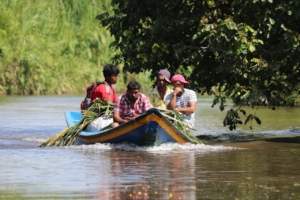 From the smell of curried goat at Georgetown’s Stabroek Market to the crash of the Kaieteur Falls in the Amazon, the developing country of Guyana in South America exudes diversity. This principle can also be applied to the increasing notion of community identity in Guyana, which aims to unite a land thriving with multiculturalism.
In 2019, 48.4% of the Guyana population lived below the poverty line of $5.50 per day. However, this worrying statistic provoked positive change in a nation striving to place its citizens at the heart of recent economic revival.
Grassroots Strategies for National Growth
President Dr. Mohamed Irfaan Ali has led political efforts to tackle disparities in living conditions and employment opportunities for Guyanese. He has recently sought to adopt a strategy centered on a campaign that involves “meeting residents at the grassroots level” rather than relying on the ever-fluctuating international market. As a result, self-dependency is tied to a strengthened facet of community identity in Guyana.
Outlined in the 2017 National Development Strategy, the government voiced strong concern over a de-skilled workforce caused by regional disparities within the country. The goals of recent legislation can be explained through a two-pronged approach:
- Community-based initiatives that have specific regional interests at heart.
- Nationwide approaches that seek to place all Guyanese at the forefront of national socioeconomic development.
Political Investment into Individual Communities
Community identity in Guyana has been central to developments revolving around a poverty reduction strategy under Ali’s administration. Regional strategies that target community initiatives have aimed to address problems unique to those living within the region. For example, the president visited residents living in Baracara village to emphasize agricultural production in the rural community.
Face-to-face contact between political representatives and their respective electorates ensures that policy-making adapts to the specific circumstances. The president visited communities in Georgetown to address urban issues such as unemployment. As a result of these discussions, more than 30 young people secured jobs, showing how domestic political engagement has directly improved the lives of Guyanese.
The Greater Guyana Initiative: Nonprofit Regional Partnerships
Alongside political efforts to strengthen community identity in Guyana, nonprofit organizations continue to run region-based programs. The Greater Guyana Initiative has supported communities nationwide with projects prioritizing local interests. In Potaro-Siparuni, Essequibo, the 2024 Hinterland Poultry “Egg Sandwich” Project Phase II has focused on egg production.
The organization has improved workplace machinery and equipment for workers in the region. As a result, the province has achieved at least a 75% hatchability rate, boosting both profit margins and workers’ salaries. The age of these workers is also an important consideration.
The Greater Guyana Initiative has taken active measures to provide opportunities for young people to remain in education. With child labor statistics in the Upper-Demerara Berbice region reaching 27.8%, nearly 10% above the national average, entrepreneurial programs have been offered as alternatives to full-time labor. These programs equip young adults with a skillset that encompasses both practical and analytical learning skills.
From 2024 to 2025, agriculture- and innovation-based initiatives were deployed across Guyana to boost youth employment in the industry. This pathway toward a promising career offers students an alternative to child labor, allowing them to apply skills gained from higher education. These carefully tailored initiatives highlight how organizations have sought to strengthen the domestic economy by improving the equipment and resources available to Guyanese.
At the same time, the targeted workers’ age reflects a moral commitment to reducing child labor in Potaro-Siparuni and Upper-Demerara Berbice. In essence, government and nonprofit organizations have recognized the potential of prioritizing domestic over international production.
Final Remarks
Locally based initiatives have carried national implications. A strengthened community identity in Guyana has brought greater focus to domestic output. As an alternative to international reliance, self-sufficiency has fostered a stronger national identity. With self-sufficiency comes greater community engagement with politicians, negotiations for better working conditions and improved salaries. Returning to the 2017 National Development Strategy, the long-term goal of repatriating the sizable Guyanese diaspora now appears increasingly attainable.
– Ash Fowkes-Gajan
Ash is based in London, UK and focuses on Good News and Politics for The Borgen Project.
Photo: Pexels
