Floods in Brazil: Avoiding Another Disaster
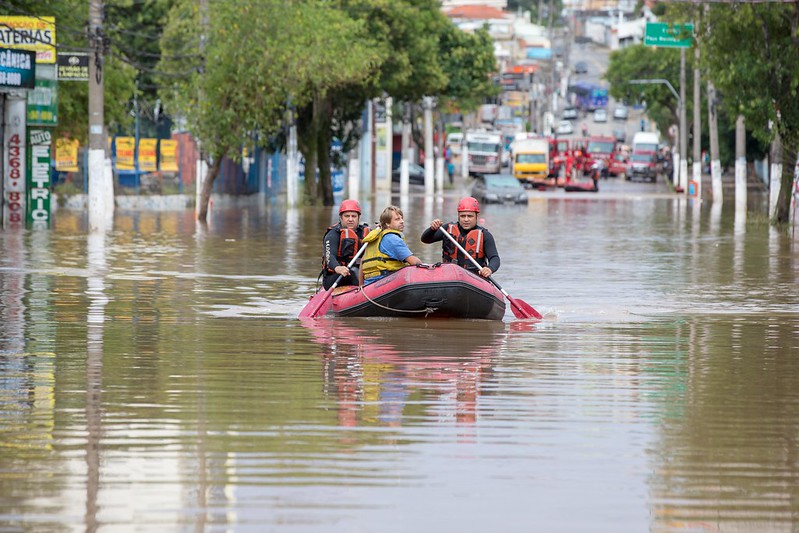 The 2024 floods in Brazil, specifically in Rio Grande do Sul were considered the worst natural disaster in the region’s history. Heavy rain started to pour in April 2024 and did not stop for 10 days, overwhelming the basins of the Taquari, Caí, Pardo, Jacuí, Sinos, and Gravataí rivers. The water eventually overflowed as it reached the cities and ravaged several municipalities in Porto Alegre.
Floods in Brazil
Several neighborhoods and communities in the Rio Grande do Sul had been completely submerged in two weeks. People lost their homes, jobs, possessions, and loved ones, having to find shelter in churches and stadiums or, in the case of more vulnerable communities, under boats and cars. Around 163 people died, almost 600,000 were displaced and more than 65,000 were in shelters.
A recent study by the Metropolis Observatory showed that poorer families were the most affected by the floods in Brazil as they were struggling to rebuild themselves. Neighborhoods like Humaitá, in which the majority of the population earned a minimum wage, suffered the most. Similarly, in the Delta do Jacuí islands, 200 people had to improvise shelter in tents, cars, and under bridges. Floods have always been common in the city and have always affected the low-income population the most.
Volunteers
Alexandre da Silva, who volunteered in Porto Alegre’s shelters, said that it looked like a “war scene.”
“There was a lot of water. There were many volunteers with boats and helicopters—the rescues were non-stop. Hospitals [were full of] with people suffering from hypothermia, fainting and [those] who had ingested a lot of water.”
Overnight, residents from Porto Alegre found themselves in poverty. The unemployment rate could rise from 5.3% to 6.1%, and the investment needed to rebuild the city could cost billions of dollars. Specialists state that, despite a trend of impoverishment in the region, the extent is uncertain.
“People lost their jobs and did not get any compensation. They lost their houses and had no place to stay; they left with just the clothes on their backs because the flood was very fast. Imagine you are in your house and suddenly it starts flooding. Within three hours, the water had taken over”, declared Alexandre.
People Helping
The disaster quickly reached social media as people detailed their stories and asked for any sort of help. What was expected to be a small movement mobilized the entire country. At the time, the most popular content creator was the make-up artist Camila Pudim. In response to the floods and her new-found success, she posted on TikTok to encourage people to donate to Rio Grande do Sul. The video amounted to more than 90 million views, and several other creators followed in her footsteps, promising to donate their content’s revenues to the cause.
The previous 70,000 people in shelters fell to 1,800 by November 2024 in a continuous decline, and efforts are still ongoing towards the complete restructuring of the cities. The Brazilian government has recently authorized the budget to reconstruct 7,500 houses and the regional authorities have allocated 212 temporary residences aimed at providing homes to those awaiting definite housing.
Solidarity Campaign
Additionally, System Fiep organized the Solidarity Campaign, which continues working towards supporting the flood’s victims. Since its beginning in May, it has raised more than 65 tons of donations among them water bottles, food, clothing, bedding, hygiene products, cleaning products and toys.
The state is now implementing a new strategy, “Plano Rio Grande”, for reconstruction, adaptation, and climate resilience – allocating around 2.2 billion reais to the project. The actions taken include the transfers from the Civil Defense to the affected municipalities (which amount to a total of R$148 million), resources for the reconstruction of roads (R$117.7 million), the Volta por Cima social program, which allocated R$251.2 million to homeless and displaced families, and a program for dredging small rivers and streams (R$300 million).
Corporations Involving
SLC Institute, an organization within the agricultural business, helped with equipment, logistics, fundraising, and by donating R$ 500,000 to the Food Bank, an aid campaign. Renner, one of the most popular fast-fashion companies in Brazil, funded boat rentals that, according to its own Public Relations team, made 900 rescues in Porto Alegre and surrounding metropolitan areas. CMPC, a major player in the forest sector, also used trucks, helicopters, and backhoe loaders to assist in rescuing people and animals.
In addition, when combining the efforts, donations from the former and latter organizations summed up to 80,000 pieces of clothing, 75,000 liters of water, 5,000 bedsheets and towels, 14,000 blankets, 14,000 hygiene items, 15 tons of food, 4,000 food bank parcels, dozens of chemical toilets, and 750 mattresses destined to shelters.
– Beatriz Cicci
Beatriz is based in London, UK and focuses on Good News and Politics for The Borgen Project.
Photo: Flickr
