Ending Child Marriage in Guinea
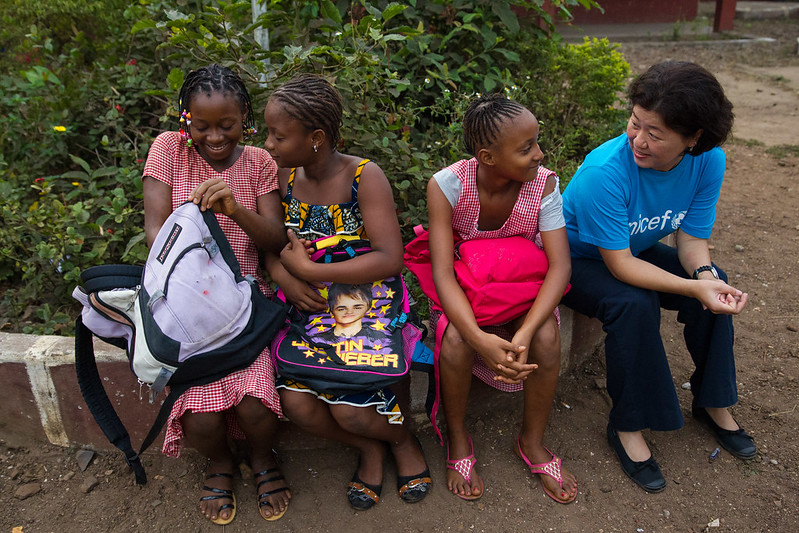 Child marriage occurs in many countries but Guinea has some of the highest prevalence rates in the world. The World Bank defines child marriage as a “marriage or union taking place before the age of 18.” Many often associate it with poverty and low levels of education, and it disproportionally affects girls. There are several successful programs to reduce child marriage in Guinea.
Affected Population
In Guinea, though the law states that the minimum age of marriage is 18, this is not always upheld in practice. According to Girls Not Brides, 47% of girls marry before 18 and 17% of girls marry before the age of 15. This compares with 2% of boys who are married before age 18.
Rates of child marriage differ based on location. Rates of child marriage are two times higher in rural than urban areas, which may coincide with higher levels of poverty in the countryside. Child marriage in Guinea is more common in some areas of the country than others, with the highest rate being in Labé where 76% of children marry before 18, according to Girls Not Brides.
Reasons behind Child Marriage
Child marriages are often done with parental consent and because of financial worries, as children can be offered in exchange for goods. Other reasons include religious beliefs and fears of girls falling pregnant outside of marriage, Girls Not Brides reports.
Child marriage brings many dangers to these girls; 95% of girls married before 18 experience FGM/C, according to Girls Not Brides. Girls who are married as children are more likely to give birth earlier and experience complications in these pregnancies. They also have a higher chance of contracting infections like HIV and are at a higher risk of experiencing domestic violence.
Child Marriage and Poverty
Guinea is experiencing high levels of poverty with, according to the World Bank, 43.7% of people living below the poverty line – this equates to 5.8 million people. Statistically, there is a strong positive correlation between rates of poverty and rates of child marriage. This can be seen in Guinea; Labé is one of the poorest areas of the country with 66% of people living below the poverty. The city also has the highest rate of child marriage in Guinea.
UNICEF has identified that increasing access to education is a significant contributing factor to reducing rates of child marriage. According to Girls Not Brides, 63% of women without an education marry before 18, compared with 26% with secondary level education or higher. Therefore, a key aspect of tackling child marriage is increasing access to education; this is also an important aim of downsizing poverty.
Solutions
Though Guinea is amongst the highest in the world for child marriage, some changes are taking place. The country signed up to the SDGs, one of which aims to end child marriage. Guinea also signed the Convention on the Rights of the Child and in 2017 launched the African Union Campaign to End Child Marriage in Africa, according to Girls Not Brides. This campaign began in 2014 and aims to target the countries in Africa most affected by child marriage. It has given countries and leaders space to advocate for girls’ rights and has encouraged many countries to change their laws regarding child marriage. It has also led to more research on child marriage, providing important information on its impacts.
UNICEF has implemented the Fundamental Skills Improvement Programme, which trains teachers with the overall aim of improving the reading and mathematical abilities of children in Guinea. At the beginning of the program, 61% of students could not identify numbers. Just six months into the scheme this decreased to only 4%. Because of this success, many other schools are applying to the program, increasing its reach from 1,500 students to almost 6,000.
Equity Committee
The U.S. government has also offered help to increase access to education; the USAID education programme created an Equity Committee to grow the number of girls in education. The World Bank also joined this to fund studies into how to educate girls, as it was such uncharted territory, as well as running publicity campaigns to encourage more girls, and their families, to access education. This resulted in the percentage of girls attending school increasing from 23% to 36% and the percentage of boys rising from 51% to 66% in just four years.
This increase in education has had an impact on the number of child marriages in Guinea. There has been an overall decrease in the number of child marriages: the World Bank has reported that the mean age of marriage in 18-22-year-olds is 15.5, compared with 16.8 in 18-49-year-olds, therefore showing a decline.
There have been notable improvements and the future opportunities are looking brighter for Guinea’s young people as work continues to decrease child marriage in Guinea. By continuing to increase the number of children, especially girls, accessing education and by downsizing poverty, Guinea can further the progress made to eradicate child marriage.
– Eryn Greenaway
Eryn is based in England and focuses on Global Health for The Borgen Project.
Photo: Flickr
