Solving the Problems of Child Poverty in Guyana
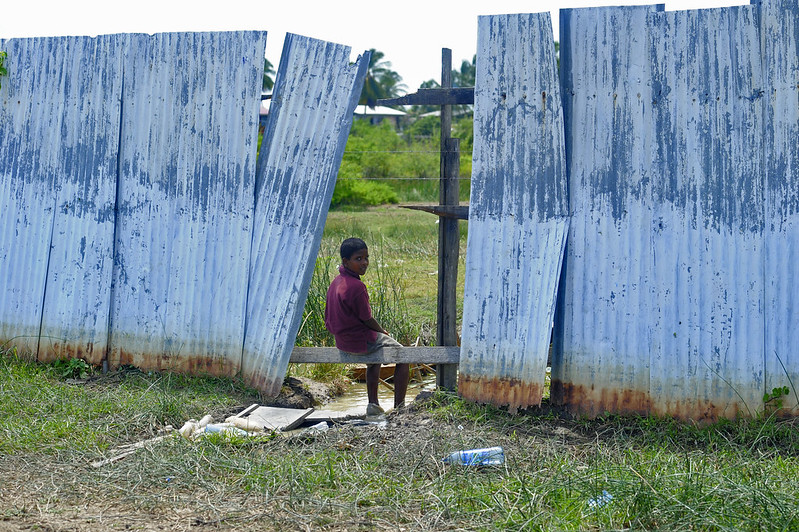 Despite having a stock of gold, timber and bauxite, Guyana has struggled to overcome poverty and attract investments to improve its economy. According to UNICEF, Guyana’s teen and youth poverty rates in 2019 were 33.7% and 47.5% for those under 16. There have been no recent reports on the child poverty rates, but the COVID-19 pandemic may have pushed more into greater poverty. Many factors contribute to child poverty in Guyana, such as access to sanitation, health care, education, food and child labor. However, the government and many international organizations are currently working to solve these problems regarding child poverty in Guyana.
Child Food Poverty
Ideally, a child should eat around five or more different food groups a day to not suffer from food poverty. From 2016 to 2022, 20% of children lived in severe food poverty, eating up to two food groups and 40% lived in moderate food poverty, receiving three to four food groups daily. There has been an increase in food poverty for children, changing from 10% in 2012 to 20% in 2022. Guyana has since introduced many initiatives such as the National School Feeding Programme which targets around 126,000 students in 2024. According to Guyana Times, around 85.0000 students benefitted from this initiative in 2023.
Sanitation
In 2020-2021, around 86% of the population had access to basic sanitation. Two percent of the population in Georgetown have access to a sewage system whereas the rest of the population disposes of waste through septic tanks and pit latrines. Due to poor waste disposal and pollution, waterborne diseases are a risk to the health and well-being of both children and adults.
To overcome this, Guyana Water Incorporated (GWI) has planned to advance its water, sanitation and hygiene accessibility in Region One, which has a large population of indigenous descent. Through working with UNICEF, it provided a new well in White Water which provides drinking water to more than 70% of the community. GWI has also constructed around 35 Ventilated Improves pit latrines in several communities within Region One, which has benefitted thousands of Venezuelan migrants and Guyanese people.
Right to Health
Health care is free throughout Guyana, but the standard of health care is lower than in other developed countries. Medical facilities are limited, even in the capital Georgetown and there are no medical facilities in remote regions. This means that children living in remote areas cannot access health care. However, recently there have been announcements of more being built within its various regions to improve access to health care facilities, with construction in East Demerara being carried out on a Pediatric and Maternal Hospital to help improve infant and maternal survival rates.
With health care facilities improving and existing in more regions, child poverty in Guyana regarding health should begin to decrease. In May 2024, Demerara Waves reported that child mortality rates are decreasing due to the improvements in the health care system in the country.
Education
Education is free to all in Guyana and is compulsory from the ages of 6 to 15, according to Humanium. However, in rural areas, many children cannot access education due to “poor infrastructure, long distances to schools, transportation costs and a shortage of qualified teachers,” which potentially leads to many children dropping out of school. The COVID-19 pandemic further hindered access to education due to “the lack of information technology and the limited availability of electricity in rural and riverine communities.”
In 2023, the World Bank announced it would contribute $35 million towards reforming the education sector in Guyana. The main aims of these reforms are to invest in access to educational materials, and teacher training and upgrade school facilities. The World Bank aims to ensure affordable textbooks are available to all students and will provide training to teachers. This project will also improve the infrastructure of school buildings and the facilities within them.
As a result of this program, smart classrooms have been introduced, with touchscreen whiteboards, cameras for recording lessons, and monitors to display videos. This helps students who miss school for various reasons as they can access their lessons online through recordings, ensuring that they do not miss large amounts of curriculum.
Child Labor
Child labor often comes about due to family debt, insufficient income or human trafficking. Low education rates are also a contributing factor. Around 41% of Amerindian Indigenous children partake in domestic work and 34% in hazardous work, according to the U.S. Department of Labor. Children in Guyana face terrible forms of child labor, such as commercial sexual exploitation or performing dangerous tasks in mining. The U.S. Department of Labor reports that 4.9% of children working are used to take part in illicit activities, including the planting of marijuana, and smuggling of drugs, weapons and goods.
Since 2021, law enforcement authorities have taken measures to prevent child labor in Guyana by establishing a National Steering Committee on Child Labour and a Ministerial Task Force on Trafficking in Persons. Authorities have also introduced policies like the National Action Plan for the Elimination of Child Labor 2019-2025, according to Humanium. Through policies like these, there have been increased police reports of child labor cases, such as 9 cases of children in forced labor and 14 cases of young girls in commercial sexual exploitation since 2021, according to the U.S. Department of Labor.
Moving Forward
In recent years, the Guyanese government and international organizations have begun to invest more in long-lasting and permanent solutions regarding child poverty in Guyana. With these improvements and many more in the future, child poverty should steadily decline dramatically, ensuring each child’s safety in society and allowing them to lead healthy and enriching lives.
– Kimran Gill
Kimran is based in Leicester, UK, and focuses on World News for The Borgen Project.
Photo: Flickr
