5 Facts about Clean Water and Sanitation
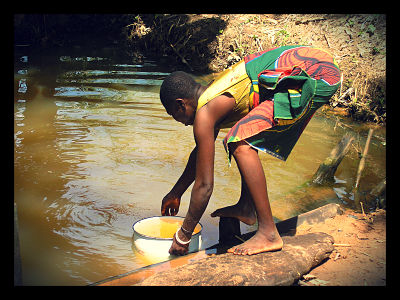
- The water and sanitation crisis claims more lives through disease than any war claims through guns. Unlike war, however, this global crisis does not make media headlines. Today, national security concerns rank high on the international agenda. Terrorist threats, violent conflict, the growth of illicit trade in arms and drugs, and the proliferation of nuclear weapons are of major concern. Against these challenges many lose sight of basic human security imperatives, including those linked to water. No act of terrorism, however, generates economic devastation on the level of the water and sanitation crisis.
- At the start of the 21st century unclean water is the world’s second biggest killer of children. Every 21 seconds a child dies from a water-related illness, a rate equivalent of a jumbo jet crashing every four hours. A total of 3.4 million (adults and children) people die each year from a water related disease. That is almost the entire city of Los Angeles. 99 percent, or nearly all deaths, occur in the developing world.
- In our increasingly prosperous world, more than 1 billion people are denied the right to clean water and 2.6 billion people lack access to adequate sanitation. These numbers are rooted in institutions and political choices, not in water’s availability. In high-income areas of cities of Asia, Latin America and Sub-Saharan Africa people enjoy access to several hundred liters of water a day delivered into their homes by public utilities. Meanwhile, poor households and slum dwellers in rural areas of the same countries have access to much less than the 20 liters of water required for one person to meet the most basic human needs.
- Women and young girls are especially disadvantaged by the water crisis as they are traditionally burdened with the responsibility of collecting water, sacrificing their time and education. Every person is entitled to an equal set of social, political, and civil rights. This equal citizenship includes the means to exercise these rights effectively. Water insecurity compromises these rights. A woman who suffers from recurring water-related illness, or spends long hours collecting water, has less capacity to participate in society, even if she can take part in electing her government. In total, women spend 200 million hours a day collecting water.
- Cutting the proportion of those without access to safe drinking water and adequate sanitation in half by 2015 is estimated to result in about 272 million more school attendance days a year. Also, the value of deaths avoided, based on discounted future earnings, would total about US$ 3.6 billion a year. Diarrhea is the second leading cause of death among children in the world under the age of five. Sanitation and proper hygiene are crucial to the prevention of diarrhea.
– Ali Warlich
