5 Facts About Child Poverty in Equatorial Guinea
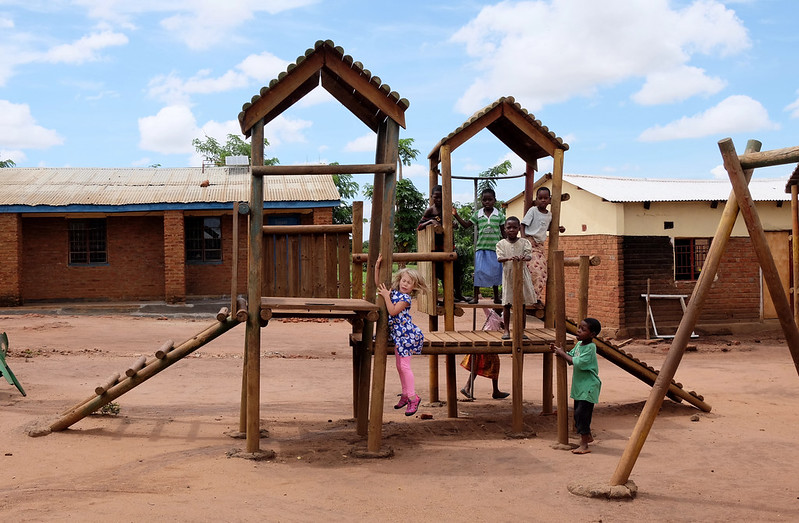 Equatorial Guinea is the third richest country in Africa with a per capita income of $8,462.30. Despite this figure, poverty in Equatorial Guinea is among the highest in the world. More than 70% of Equatorial Guinea’s population lives in poverty. With a majority of the population being less than 18 years old, child poverty in Equatorial Guinea is also among the highest in the world.
5 Facts About Child Poverty in Equatorial Guinea
- Prevalence of diseases and immunization – In Equatorial Guinea, relatively high income levels do not translate into lower levels of poverty. According to World Bank data from 2021, only 53% of children aged 12-23 months received vaccines against DPT (Diphtheria, Pertussis and Tetanus). Similarly, data from 2015 shows that only one in four newborns received a vaccine against polio and measles, while only one in three received a vaccine against tuberculosis. These numbers are among the lowest levels of child immunization in the world.
- Poverty and education – According to data from 2012, nearly 40% of Equatorial Guinea’s children aged 6 to 12 years did not attend school. Of note, in 2015, the gross enrollment rate of children in primary school was only 63% which is the second lowest in the world, ahead of Somalia. This is a worrying statistic as poverty levels have a direct effect on education levels which also affects the growth and development of children.
- Focus on economic growth and corruption – Extreme child poverty in Equatorial Guinea and its simultaneously high-income levels can be explained by the country’s sole focus on economic growth. For every $100 that the government spends, 80% of it is spent on infrastructure and only 2-3% is spent on health care and education. This is one of the reasons why Equatorial Guinea’s health care and educational parameters are often among the lowest in the world. The Human Rights Watch report also attributed this to some of the senior government officials accumulating a vast amount of wealth during the period of the oil boom.
- Social welfare measures – While the above figures paint a grim picture of the current state in Equatorial Guinea, there is still hope for the future. The government’s current social security system in the country reaches only a small portion of the population, with a limited number of social programs to assist the poor with health care and education. This means that if social welfare measures such as social insurance and health waivers fill this gap, there is a potential to drastically improve some of Equatorial Guinea’s social metrics. By ensuring a plan to redistribute its income, there is potential for rapidly improving not only child poverty but also the poverty levels of the entire population in the country.
- Support from nonprofits – The SOS Children’s Villages is a nonprofit established in 1949 that has its presence in multiple countries across the world, including in Equatorial Guinea. The organization actively supports children at risk of losing the care of their families and provides them with education and medical assistance. By addressing some of the key issues and with the help of organizations such as the SOS Children’s Village, there is no reason that Equatorial Guinea cannot be on a rapid road to progress.
Room for Improvement
Equatorial Guinea’s high-income levels also tell us that there is a potential to not only address its poverty issues but also other important problems such as education and health care. High levels of income inequality and limited penetration of social welfare have limited the progress of the country. However, as the report by the Overseas Development Institute suggests, by addressing these issues quickly, Equatorial Guinea could soon be on a rapid road to progress.
While this is what the government could do to improve the socioeconomic situation of its citizens, the work of nonprofits organizations such as the SOS Children’s Villages will go a long way to helping children in Equatorial Guinea.
– Ritvik Madhukar Annapragada
Photo: Flickr
