Top 10 Facts About Living Conditions in Suriname
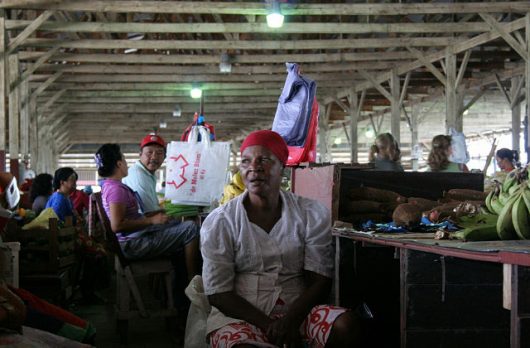
Suriname, a former Dutch colony, is one of the most diverse (ethnically, culturally and linguistically) countries on earth.
Top 10 Facts About Living Conditions in Suriname
- Suriname ranks 77 of the 100 most corrupt countries in the world. The International Narcotics Control Strategy Report issued by the U.S. government in March 2017 stated that corruption at the bureaucratic level was deeply endemic and played a role in the inefficient policy-making environment.
- Suriname was ranked 94 out of 182 countries on the Human Development Index (HDI). In the same year, the World Bank classed Suriname as an upper-middle income country. Since 2005, the HDI has continually increased which explains the increase in GDP.
- Officially, Suriname does not have a minimum wage. However, unofficially, this figure is estimated to be SRD 600 per month, the lowest possible wage for civil servants. This amounts to $3,998 per year.
- Suriname has a relatively high poverty rate, with 70 percent of its population living beneath the poverty line. Most of its population works in the mining industry which is extremely vulnerable to shocks in the market. The mining industry contributes to 85 percent of exports and 27 percent of government revenues.
- Suriname has one of the lowest GDPs in South America. The country’s economy is heavily reliant on trading natural resources which left it particularly vulnerable to low international prices for commodities such as bauxite.
- Between the years 2000 and 2015, there have been 57,811 local cases of malaria in Suriname. However, there has been a significant reduction in the rates of malaria between 2006 and 2015. This has been the result of intensive efforts to contain the disease, such as distributing free, long-lasting insecticide-impregnated mosquito nets as well as several policlinics run by the Medical Mission, providing care for the indigenous population.
- Suriname’s cost of living is 70 percent cheaper than in the United States. People in Suriname pay 3.3 percent less for groceries, 58.6 percent less for entertainment and sports, and 82.7 percent less for housing. A one-bedroom apartment in a downtown area of the U.S. costs $1075.75 on average, as compared to $162.92 in Suriname.
- Suriname also has high inflation rates, with 55.5 percent inflation in 2016 and 22.3 percent in 2017. Given that the average gross salary in Suriname is $28,093, the inflation rates affect the working poor and middle-class people the hardest, as they are unable to afford basic necessities.
- Suriname has four hospitals, as well as several district-level hospitals and private clinics. General access to health care in Suriname is fairly high with around 90 percent of locals living within a 5km radius of a hospital.
- Suriname has free, compulsory education up until the age of 12. Children who attend public schools are taught completely in Dutch, but there are private or international schools which teach subjects in English. Many students continue their education to the tertiary level in either the Netherlands or the U.S., even though the Anton de Kom University in Paraimbo offers degrees in medicine, law and some sciences.
In conclusion, the top 10 facts about living conditions in Suriname shows that while there is a considerable way to achieving a developed nation status, the relatively good access to education and healthcare will contribute to a burgeoning economy.
– Maneesha Khalae
Photo: Flickr
