Top 10 Facts About Poverty in Beijing
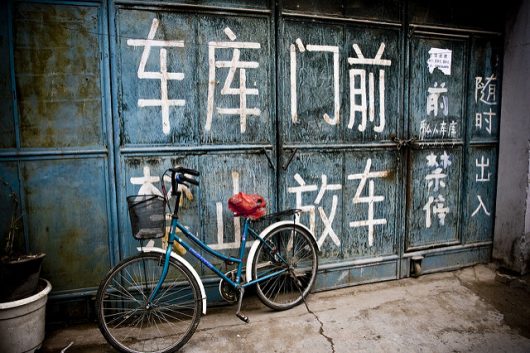
Where media centers around the progressive, global standpoints, over 43 million people who survive on less than 2,300 yuan ($350 a year), bustle their way through the busy streets of China. This eye-opening issue of poverty is especially troublesome (and prevalent) in the city of Beijing, and is not alone on the list of unsettling facts about poverty within the city. Unfortunately, poverty in Beijing is a fact of life for many residents.
10 Facts About Poverty in Beijing
- Five hundred million people — 40 percent of the population in China — get by on less than $5.50 a day. This is the cost of a single specialty coffee in many cities, including Beijing which is one of the more expensive cities in China.
- Premier Li Keqiang wishes to move 100 million rural residents into the cities by 2020. He claims that “urban life brings higher standards of living” and it “increases domestic consumption to rebalance China’s export-reliant economy.” Though the government did not want these residents to move into major cities such as Beijing, subsequent influx was difficult to control.
- The government of Beijing disliked this movement and capped its population, along with destroying entire city blocks in order to remove current migrants and other vulnerable people. Beijing is attempting to push these people to smaller cities like Liaocheng, Zhengzhou and Ankang.
- About 50 percent of immigrants struggle to find stable jobs in these small cities because of the unfamiliarity and absence of social networks. These people are incentivized to move based on the promises of expenses — such as housing — paid by the government.
- If land is seized by the government during this movement, owners will only receive a pay of about 5 to 10 percent of the land’s actual value, if any money at all. This tends to happen often, due to the limited property rights of the villagers.
- China’s government has spent the majority of its money on infrastructure, in order to incentivize voluntary moves of residents to Beijing rather than forcing constituents from their homes. However, this plan may drive China further into debt, rather than helping its economy in the country as a whole.
- Beijing’s government has a more committed approach to fighting poverty than Hong Kong. The leadership wishes to put an end to the extreme hardship by 2020 — a key fact about poverty in Beijing.
- Beijing adjusts its poverty line for inflation each year. As of 2017, 43 million of the 1.3 billion fell below the line. Beijing’s poverty line rests at 2,300 yuan ($350 a year), but the World Bank’s global standards for extreme poverty is set at $700 a year.
- China has been in the lead for the world’s poverty-reduction efforts for four decades. The population pulled over 700 million people out of poverty so far. This is great news, but the world should continue its optimism with caution — China is at risk of its efforts becoming lost due to corruption of poverty alleviation funds.
- China allocated over 140 billion yuan ($20.5 billion) toward poverty alleviation in 2017 alone. Beijing uses this money to develop industries (such as tourism and e-commerce), bring more education and occupational training to children and develop public health services in poor areas.
Strong Momentum
Though the city clearly has a few more hurdles to jump in the race to alleviate poverty by 2020, the key facts about poverty in Beijing prove that the city is well on its way to reaching its goals.
Through migration, dedication and funding, the government of Beijing has proved its commitment to helping those struggling to get back on their feet and find stable jobs in the ever-growing economy.
– Raven Patzke
Photo: Flickr
