10 Facts About the Circassian Genocide
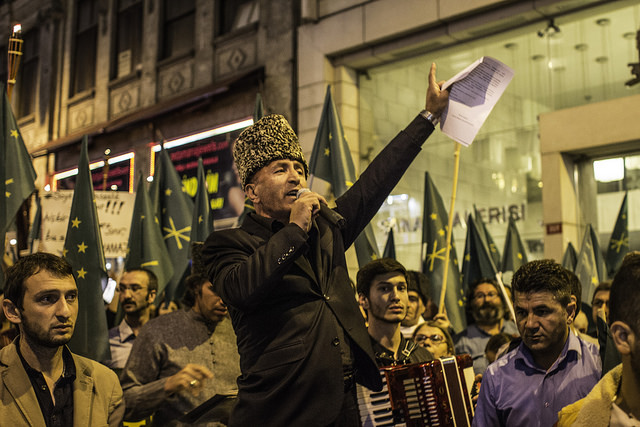 The facts of the Circassian genocide haunt the region today. Following the 101-year-long war, led by the Russians against the Circassians in the Caucasus, the Russian army finally succeeded in subduing the region. The result of this incredible period of resistance, however, was the development, in the Circassian social consciousness, of an undeniable hatred for the foreign invaders who sought total control of their homeland.
It was for this reason that the Russian army commenced a campaign, now seen by most of the world as a genocide, to oust the Circassians from the conquered region. The Circassian Genocide of 1864 is now remembered all over the world as one of the most gruesome genocides of the 19th century. The campaign utilized tactics, such as deportation, resource deprivation and mass murder. The idea was simple, conquer the land – extinguish the people. Prior to the Genocide, the region had roughly 1 million residents – by the end, all but 80,000 were either forcefully expelled or murdered.
Top 10 Circassian Genocide Facts
- Who are the Circassians? Since the fifteenth century, Circassians have adopted Islam as their religion, though most were Christian prior to then. They are a group native to the Caucasus.
- How long did the Russian campaign in Caucasia take? The Russians fought to take control of the Caucasus from the mid-eighteenth century until 1864. The genocide was perpetrated between March 6 and May 21, 1864.
- How did the Circassians hold the Russians back for so many years? The Circassians, unwilling to bow to the authority of a Christian foreign power, united with the forces of Chechnya and Dagestan. This alliance allowed for years of successful resistance, but it could not be maintained forever against the Russian Empire.
- Who decided to utilize this method of expulsion to conquer the Caucasus region?Count Dmitri Milyutin decided, after assuming his new role as Alexander II’s Minister of War in 1861, to implement a strategy presented in 1854.
- How many Circassians were killed? According to Russian government accounts of their final campaign in the Caucasus, more than 400,000 Circassians were murdered.
- How many Circassians were displaced? 497,000 were forced to leave the empire.
- Where were they sent? They were sent into the Ottoman Empire. Unfortunately, many perished of starvation and/or from drowning in the Black Sea, after leaving from the Port of Sochi.
- How many Circassians survive today? The diaspora populations are biggest in Turkey and Syria. Worldwide there are roughly 1.5 million ethnic Circassians.
- How does Russia view 1864? Russia officially denies the campaign as being a genocide. However, many citizens do recognize their nation’s actions as extremely devastating for the Circassian population.
- How do Circassians remember this day in their history? Ethnic Circassians observe a day of remembrance for their murdered ancestors each year, on the 21st of May.
Today, these events are classified, internationally, as a genocide. In this case, the qualifier was that the actions taken by the Russian army had the clear intent of extinguishing the presence of Circassians from the region, so as to ensure little resistance to their rule. This explanation is in line with the Convention on the Prevention and Punishment of the Crime of Genocide’s definition.
Despite the international recognition of the nature of these events, the Russian government refuses to do the same. What’s more, they continue to exercise autonomous control over the affairs of the region and have since divided it into five administrative districts with little regard to the ethnic divisions in the area.
The government’s primary reason for not recognizing the Circassian genocide is, of course, political in nature. If the Russian government were to officially recognize the Circassian genocide, it would likely result in a push by Circassian diaspora communities to return to the land their forefathers were forced to flee from. This could result in a massive shift in demographics, and power, in the Caucasus.
– Katarina Schrag
Photo: Flickr
