10 Important Facts About Refugees in Djibouti
The plight of refugees is of interest currently both in political and humanitarian terms. Refugees suffer a great uprooting from their homes, from their lifestyles and often experience a cultural shock at refugee camps. At their most vulnerable point, refugees must depend on stop-gap solutions to see them through their temporary and difficult living situations.
Djibouti is temporary shelter to thousands of refugees, as they search for a home beyond Djibouti. A tiny country on the Eastern coast of Africa, Djibouti is at the point where three countries meet: Somalia, Ethiopia and Eritrea. A narrow part of the Red Sea separates Djibouti from Yemen. Here are ten facts about refugees in Djibouti:
- Annually, 100,000 people pass through Djibouti. Such a large number of refugees pass through Djibouti because of its location adjacent to three countries.
- The refugees predominantly arrive from several places: Yemen, Somalia, Eritrea and Ethiopia. Of these, 55 percent of those who arrive at Djibouti are Yemeni. Yemeni and Ethiopian refugees get usually placed in Markazi, a refugee camp located near Obock, a port in the northern part of Djibouti. Somalis and Eritreans get often put in Ali Addeh and Holl Holl, other refugee camps, in the south of Djibouti.
- Approximately 19,636 Yemeni refugees and 5,100 Ethiopian refugees have arrived or passed through Djibouti since 2015. Around 70 percent of the refugees, including Somalis and Eritreans, are women and children.
- Yemeni refugees are fleeing south because of war, while Ethiopian refugees are fleeing north because of drought. A militant group, Houthi Shia, overthrew the Yemeni government in 2015. Consequently, Saudi Arabia began a bombing campaign in Yemen. Ethiopians fleeing north towards Yemen are sometimes not aware of the conflict when they reach Djibouti and head towards Yemen.
- Refugees enter Djibouti via bus or boat as the most common mode of transport. Ethiopian refugees also travel to Djibouti on foot, though crossing the desert surrounding Djibouti is dangerous since temperatures may reach 130 degrees. After their journey on foot, Ethiopian refugees use smugglers’ boats to reach Djibouti.
- Djibouti has a population of about one million people. Around 400,000 permanent residents live in slums near the edge of the capital, Djibouti City, with little access to necessities such as food and water. The sudden influx of refugees has created difficulties in resource allocation between long-time residents and refugees.
- Approximately 5,963 children in the country are suffering from severe acute malnutrition (SAM).
- Refugees predominantly live in three camps: Ali Addeh, Holl Holl and Markazi. Markazi alone is a temporary home to over 1,400 refugees as of February 2017. The living conditions in the camps are arduous. For example, in Markazi, refugees live in tents and have thin sleeping mats. The camps are fenced in to protect the refugees from wild animals, but snakes and scorpions often enter the camps. Refugees in Markazi are also concerned about sandstorms: in the past, sandstorms have blown over their tents.
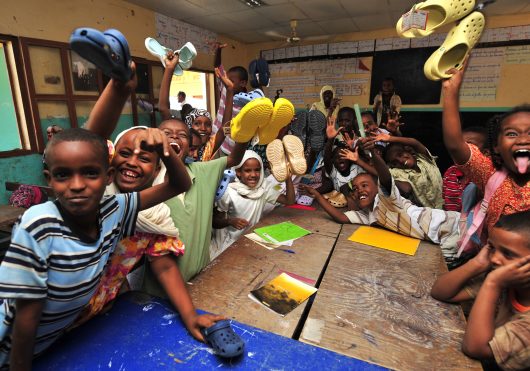
- Around 74 percent of the refugee population lives on less than $3 per day. Despite the poor living conditions, refugees still attempt to educate their children by sending them to temporary schools in the camps.
- The influx of refugees has helped expand business networks for permanent residents of Djibouti, boosting the local economy. The refugees and residents of Djibouti have developed strong, friendly connections. The government of Djibouti echoes the positive reception that refugees have received, calling the refugees “our brothers and sisters.”
These facts about the refugees in Djibouti show that they are suffering because of bloody conflicts and harsh environmental conditions, circumstances beyond their control. Fortunately, Djibouti’s welcoming of refugees underscores the importance of being open to those impoverished by their circumstances.
Through examining even 10 facts about the refugees in Djibouti, the realization of how refugees can positively contribute to business and social networks is emphasized. Ultimately, communities must fuse together to advocate for solutions to poverty.
– Smriti Krishnan
Photo: Google
