Breastfeeding to Combat Malnutrition in Ghana
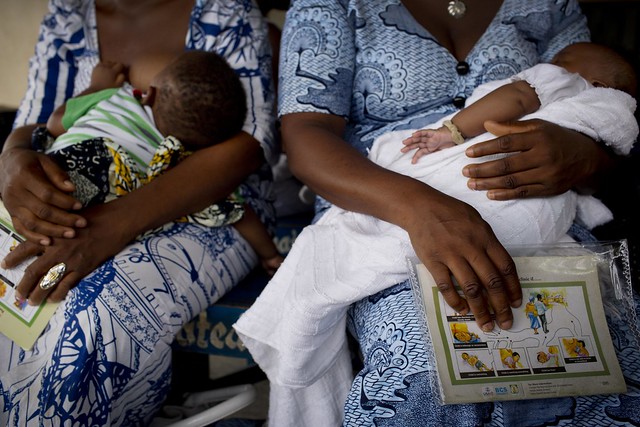 Malnutrition in Ghana has cost its economy $2.6 billion annually or 6.4% of gross domestic product (GDP) due to increased health care costs, additional burdens on the educational system and lower productivity by its workforce, according to a new United Nations report.
In the Northern Region, malnutrition is much more prevalent with 20 percent of children under five being underweight. As a result, there is a high stunting rate of 32.4 percent. The region is also plagued by high rate of micronutrient deficiencies such as anemia and vitamin A deficiency.
The USAID Resiliency in Northern Ghana (RING), a collaborative project dedicated to sustainably reducing poverty and improving livelihoods and nutritional status of vulnerable populations, called for exclusive breastfeeding to combat malnutrition in Ghana.
“Mothers should stick to [exclusive] breastfeeding for the first six months after which they can introduce the sour foods to children,” nutrition officer of the USAID-RING Project, Kristen Kappos underscored.
Kappos also implored health workers, volunteers and farmers to continue raising people’s awareness on breastfeeding within their operational zones.
As far back as 1991, Ghana adopted the Baby-Friendly Hospital Initiative (BFHI) to promote and support the practice of exclusive breastfeeding. However, exclusive breastfeeding rate has remained unchanged for two decades at 64.7%, far lower than the World Health Organization would prefer.
According to a recent study, knowledge gaps in key nutritional areas, especially infant and young child feeding, are the main reason leading to a low rate of exclusive breastfeeding in Ghana.
About 26% of the mothers studied were unable to define exclusive breastfeeding and 22% of them said breastmilk only was not sufficient to meet the nutritional needs of the child. They believed that the child may not be satisfied and could die if fed with only breastmilk for six months. Nearly 90% of the mothers did not know that breast milk could be expressed, stored safely and given to the child when the mothers were absent.
In addition, cultural factors also create challenges for mothers to breastfeed. The majority of the mothers showed a lack of confidence in expressing and storing breastmilk, a taboo in the local context.
Interventions must be designed to increase women’s confidence and dispel their misconceptions regarding breast milk, USAID-RING Project urged. Meanwhile, Hajia Ayishetu Bukari, Central Gonja district director of Ghana Health Service, also emphasized the need for employers to create and maintain conducive workplaces for exclusive breastfeeding practices.
– Yvie Yao
Photo: Flickr
