• Link to X
  • Link to Facebook
  • Link to Instagram
  • Link to TikTok
  • Link to Youtube
  • About
    • About Us
      • President
      • Board of Directors
      • Board of Advisors
      • Financials
      • Our Methodology
      • Success Tracker
      • Contact
  • Act Now
    • 30 Ways to Help
      • Email Congress
      • Call Congress
      • Volunteer
      • Courses & Certificates
      • Be a Donor
    • Internships
      • In-Office Internships
      • Remote Internships
    • Legislation
      • Politics 101
  • The Blog
  • The Podcast
  • Magazine
  • Donate
  • Click to open the search input field Click to open the search input field Search
  • Menu Menu
Blog - Latest News
Education, Global Poverty

Uganda’s Struggling Universal Primary Education Policy
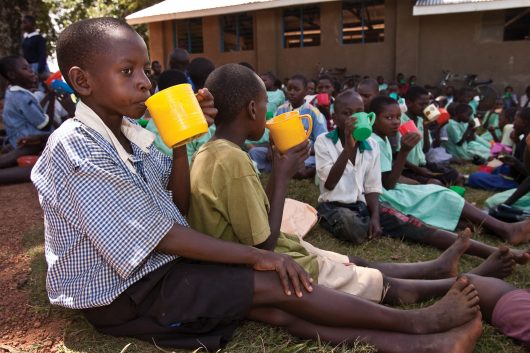
Universal Primary Education Policy
The Ugandan government spends roughly $300 million annually on universal primary education. Despite the government’s devotion to free public education, the universal primary education policy is enduring severe growing pains.

One main issue is that despite the government’s large expenditure, parents still pay for half of their students’ fees. According to Nelson Wanambi, an economist at Uganda’s Ministry of Education, parents now pay 46.9 percent for education whereas the government pays a mere 27.6 percent.

The high cost for families causes many children to drop out of school as education becomes burdensome for parents. This economic strain on families contributes to Uganda’s staggering 75.2 percent primary school dropout rate.

After the universal primary education was introduced in 1997, Ugandan schools grew at such a high rate that not enough teachers could be trained to accommodate the increased enrollment rate. Further, many teachers receive insufficient salaries, resulting in strikes and frequent teacher absenteeism.

Fortunately, the government has recently received financial support from the Global Partnership for Education. The most recent contribution was over $100 million to support Uganda’s Education Sector Strategic Plan (EESP). The ESSP originally ran from 2004-2015, and the Global Partnership for Education has made a pledge to continue the program from 2014-2018.

As in many developing nations, gender-related issues contribute to the high drop out rate. On average, Ugandan boys stay in school for two more years than girls — 6.3 compared to 4.5 years respectively. In Uganda, 30 percent of girls drop out of school when they start menstruating because they cannot afford sanitary pads.

Organizations like Afripads, which is headquartered in Uganda, work to increase accessibility to sanitary pads for young girls and provide job opportunities for Ugandan women. Some schools, such as Katwe primary school, are successfully implementing the universal primary education policy. At Katwe, the school provides sanitary pads for their female students.

In theory, the universal primary education program would relieve the burden for many families to pay tuition for their children and increase graduation rate. However, the program has faced many obstacles. With the help of organizations such as Global Partnership for Education and Afripads, Uganda’s future for education is bright once again.

– Sabrina Yates

Photo: Flickr

November 9, 2016
Share this entry
  • Share on Facebook
  • Share on X
  • Share on WhatsApp
  • Share on Pinterest
  • Share on LinkedIn
  • Share on Tumblr
  • Share on Vk
  • Share on Reddit
  • Share by Mail
https://borgenproject.org/wp-content/uploads/borgen-project-logo.svg 0 0 Borgen Project https://borgenproject.org/wp-content/uploads/borgen-project-logo.svg Borgen Project2016-11-09 06:00:152024-12-13 17:55:47Uganda’s Struggling Universal Primary Education Policy

Get Smarter

  • Global Poverty 101
  • Global Poverty… The Good News
  • Global Poverty & U.S. Jobs
  • Global Poverty and National Security
  • Innovative Solutions to Poverty
  • Global Poverty & Aid FAQ’s
Search Search

Take Action

  • Call Congress
  • Email Congress
  • Donate
  • 30 Ways to Help
  • Volunteer Ops
  • Internships
  • Courses & Certificates
  • The Podcast
Borgen Project

“The Borgen Project is an incredible nonprofit organization that is addressing poverty and hunger and working towards ending them.”

-The Huffington Post

Inside The Borgen Project

  • Contact
  • About
  • Financials
  • President
  • Board of Directors
  • Board of Advisors

International Links

  • UK Email Parliament
  • UK Donate
  • Canada Email Parliament

Get Smarter

  • Global Poverty 101
  • Global Poverty… The Good News
  • Global Poverty & U.S. Jobs
  • Global Poverty and National Security
  • Innovative Solutions to Poverty
  • Global Poverty & Aid FAQ’s

Ways to Help

  • Call Congress
  • Email Congress
  • Donate
  • 30 Ways to Help
  • Volunteer Ops
  • Internships
  • Courses & Certificates
  • The Podcast
Link to: 6 Facts About Education in Romania Link to: 6 Facts About Education in Romania 6 Facts About Education in Romania Link to: Women-Only Villages of Kenya Defy Patriarchal Laws Link to: Women-Only Villages of Kenya Defy Patriarchal Laws Women-Only Villages of Kenya Defy Patriarchal Laws
Scroll to top Scroll to top Scroll to top