• Link to X
  • Link to Facebook
  • Link to Instagram
  • Link to TikTok
  • Link to Youtube
  • About
    • About Us
      • President
      • Board of Directors
      • Board of Advisors
      • Financials
      • Our Methodology
      • Success Tracker
      • Contact
  • Act Now
    • 30 Ways to Help
      • Email Congress
      • Call Congress
      • Volunteer
      • Courses & Certificates
      • Be a Donor
    • Internships
      • In-Office Internships
      • Remote Internships
    • Legislation
      • Politics 101
  • The Blog
  • The Podcast
  • Magazine
  • Donate
  • Click to open the search input field Click to open the search input field Search
  • Menu Menu
Blog - Latest News
Water, Women

The Hippo Roller: A Water Collection Solution
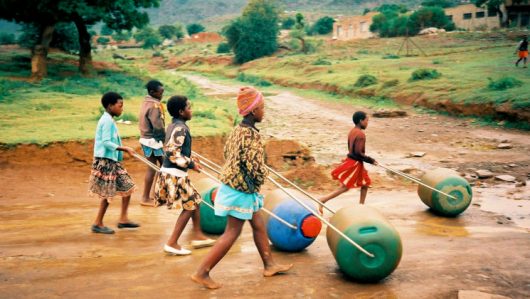
Hippo Roller

Almost 1 billion people in Africa struggle for access to water. According to the Water Project, this is equal to one in eight of the world’s population. Water supplies are often many miles from the village. Women and children must travel to collect water and carry full buckets back home.

However, solutions like the Hippo Roller are helping revolutionize this process.

When water supply points are as far as 10 kilometers (6 miles) from home, water is often carried in 20-liter (5 gallons) buckets balanced on top of heads. The Hippo Roller is a simple solution that allows the people who collect water to collect up to five times more.

The Hippo Roller is a 90 liter (24 gallon) container that is rolled along the ground. The water collectors are usually elders, women and children. Instead of being carried on the head, as usual, the water is rolled–either pushed or pulled. This allows more people to access water, which improves food security and income generation.

Two South Africans, Pettie Petzer and Johan Jonker, invented the Hippo Roller in 1991. They both knew the water crisis’ effects on daily life. The Hippo Roller Project was established in 1994 with the mission of “helping communities to improve access to water–90 liters at a time.”

As of Sept. 2015, there had been 46,000 Hippo Rollers distributed in 20 countries. This has helped 300,000 people in families where the average size is seven. The ability to roll the water instead of carrying it reduces injuries and gives more time for school and other activities.

Grant Gibbs, Project Leader for Hippo Water Roller Project explains that women in rural Africa can spend up to 26 percent of their time collecting water. This automatically includes the children. When women can collect more water at a time, they can spend more of their day on other important tasks. When children are needed less to collect water, they can go to school.

The innovation of transporting more water more efficiently makes more “time available for education, household tasks and food production.” The design allows for hygienic collection and storage of water and even irrigation of crops.

– Rhonda Marrone

Photo: Hippo Roller

August 1, 2016
Share this entry
  • Share on Facebook
  • Share on X
  • Share on WhatsApp
  • Share on Pinterest
  • Share on LinkedIn
  • Share on Tumblr
  • Share on Vk
  • Share on Reddit
  • Share by Mail
https://borgenproject.org/wp-content/uploads/borgen-project-logo.svg 0 0 Borgen Project https://borgenproject.org/wp-content/uploads/borgen-project-logo.svg Borgen Project2016-08-01 01:30:082024-12-13 17:54:44The Hippo Roller: A Water Collection Solution

Get Smarter

  • Global Poverty 101
  • Global Poverty… The Good News
  • Global Poverty & U.S. Jobs
  • Global Poverty and National Security
  • Innovative Solutions to Poverty
  • Global Poverty & Aid FAQ’s
Search Search

Take Action

  • Call Congress
  • Email Congress
  • Donate
  • 30 Ways to Help
  • Volunteer Ops
  • Internships
  • Courses & Certificates
  • The Podcast
Borgen Project

“The Borgen Project is an incredible nonprofit organization that is addressing poverty and hunger and working towards ending them.”

-The Huffington Post

Inside The Borgen Project

  • Contact
  • About
  • Financials
  • President
  • Board of Directors
  • Board of Advisors

International Links

  • UK Email Parliament
  • UK Donate
  • Canada Email Parliament

Get Smarter

  • Global Poverty 101
  • Global Poverty… The Good News
  • Global Poverty & U.S. Jobs
  • Global Poverty and National Security
  • Innovative Solutions to Poverty
  • Global Poverty & Aid FAQ’s

Ways to Help

  • Call Congress
  • Email Congress
  • Donate
  • 30 Ways to Help
  • Volunteer Ops
  • Internships
  • Courses & Certificates
  • The Podcast
Link to: Poverty in Central America: Advancements and Needs Link to: Poverty in Central America: Advancements and Needs Poverty in Central America: Advancements and Needs Link to: 6 Facts about Poverty in South Africa Link to: 6 Facts about Poverty in South Africa 6 Facts about Poverty in South Africa
Scroll to top Scroll to top Scroll to top