• Link to X
  • Link to Facebook
  • Link to Instagram
  • Link to TikTok
  • Link to Youtube
  • About
    • About Us
      • President
      • Board of Directors
      • Board of Advisors
      • Financials
      • Our Methodology
      • Success Tracker
      • Contact
  • Act Now
    • 30 Ways to Help
      • Email Congress
      • Call Congress
      • Volunteer
      • Courses & Certificates
      • Be a Donor
    • Internships
      • In-Office Internships
      • Remote Internships
    • Legislation
      • Politics 101
  • The Blog
  • The Podcast
  • Magazine
  • Donate
  • Click to open the search input field Click to open the search input field Search
  • Menu Menu
Blog - Latest News
Advocacy, Global Poverty, Health

How GMOs Could Potentially End Poverty and Hunger in Africa
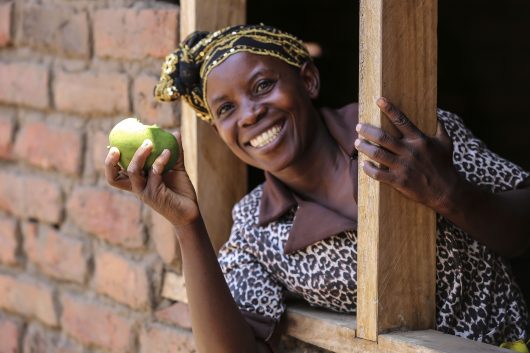
Hunger_Africa

One of the major ways extreme poverty and hunger can be terminated is an increase in agricultural activity. Genetically modified organisms, or GMOs, could potentially be a part of solving the poverty challenge.

Food products with GMOs are genetically engineered to increase crop yields, lower costs for food production, reduce the need for pesticides, enhance nutrient composition and food quality, resist pests and disease and increase food security.

Technological advancement has also made it possible for GMOs to withstand environmental stressors, allowing them to grow in conditions where they may not otherwise be able to thrive.

Though there are risks and controversies surrounding the use of GMOs, they could play a role in creating a new green revolution in Africa. African governments and donors can initiate the use of GMOs in Africa, according to the Center for Global Development (CGD).

Primarily, governments in Africa can develop cost-effective regulatory policies for these organisms. The policies would cover developing, testing, commercializing and importing genetically modified crops—most areas. Clear strategies would reduce uncertainty for potential investors by ensuring breakthroughs that occur can be distributed to farmers.

African governments can also exchange experiences and information about GMOs among each other. A platform to share information would help governments make cost effective decisions and learn potential opportunities and risks associated with GMO traits under certain conditions.

Pursuing South-South cooperation on GMO trade and regulatory policies is another tactic African governments can execute. Though the European Union is the largest market for African agricultural exports, trade with emerging markets is growing at a much faster rate. Thus, African governments should coordinate with countries like Argentina, Brazil, India and China to develop regulations for trading GMOS.

Lastly, the CDG says that donors should provide technology-neutral support for research and development for food security. Donors should also build capacity to facilitate trade in GMOs. African countries need support for research on modified staple crops, which donors can provide. In addition, EU donors should also provide technical and financial support due to its role as a major market.

Genetic modification is just one of many technologies that can improve agricultural productivity in Africa and the investments required to implement them could improve agricultural productivity as a whole.

– Kerri Whelan

Photo:  Flickr

April 28, 2016
Share this entry
  • Share on Facebook
  • Share on X
  • Share on WhatsApp
  • Share on Pinterest
  • Share on LinkedIn
  • Share on Tumblr
  • Share on Vk
  • Share on Reddit
  • Share by Mail
https://borgenproject.org/wp-content/uploads/borgen-project-logo.svg 0 0 Borgen Project https://borgenproject.org/wp-content/uploads/borgen-project-logo.svg Borgen Project2016-04-28 06:37:222024-12-13 18:05:58How GMOs Could Potentially End Poverty and Hunger in Africa

Get Smarter

  • Global Poverty 101
  • Global Poverty… The Good News
  • Global Poverty & U.S. Jobs
  • Global Poverty and National Security
  • Innovative Solutions to Poverty
  • Global Poverty & Aid FAQ’s
Search Search

Take Action

  • Call Congress
  • Email Congress
  • Donate
  • 30 Ways to Help
  • Volunteer Ops
  • Internships
  • Courses & Certificates
  • The Podcast
Borgen Project

“The Borgen Project is an incredible nonprofit organization that is addressing poverty and hunger and working towards ending them.”

-The Huffington Post

Inside The Borgen Project

  • Contact
  • About
  • Financials
  • President
  • Board of Directors
  • Board of Advisors

International Links

  • UK Email Parliament
  • UK Donate
  • Canada Email Parliament

Get Smarter

  • Global Poverty 101
  • Global Poverty… The Good News
  • Global Poverty & U.S. Jobs
  • Global Poverty and National Security
  • Innovative Solutions to Poverty
  • Global Poverty & Aid FAQ’s

Ways to Help

  • Call Congress
  • Email Congress
  • Donate
  • 30 Ways to Help
  • Volunteer Ops
  • Internships
  • Courses & Certificates
  • The Podcast
Link to: Poverty in Reunion: Six Things You Need to Know Link to: Poverty in Reunion: Six Things You Need to Know Poverty in Reunion: Six Things You Need to Know Link to: Studio Samuel: Fighting Poverty in Ethiopia Link to: Studio Samuel: Fighting Poverty in Ethiopia Studio Samuel: Fighting Poverty in Ethiopia
Scroll to top Scroll to top Scroll to top