• Link to X
  • Link to Facebook
  • Link to Instagram
  • Link to TikTok
  • Link to Youtube
  • About
    • About Us
      • President
      • Board of Directors
      • Board of Advisors
      • Financials
      • Our Methodology
      • Success Tracker
      • Contact
  • Act Now
    • 30 Ways to Help
      • Email Congress
      • Call Congress
      • Volunteer
      • Courses & Certificates
      • Be a Donor
    • Internships
      • In-Office Internships
      • Remote Internships
    • Legislation
      • Politics 101
  • The Blog
  • The Podcast
  • Magazine
  • Donate
  • Click to open the search input field Click to open the search input field Search
  • Menu Menu
Blog - Latest News
Development, Global Health, Global Poverty, Sanitation

Water and Sanitation for Nicaraguans
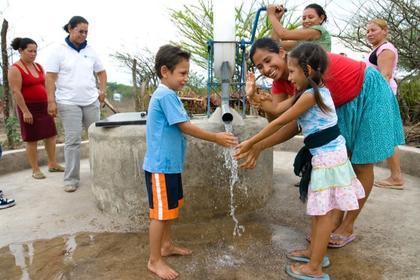
Water and Sanitation for Nicaraguans


The Nicaraguan urban poor have a long-standing history of lacking access to basic services, such as water and sanitation. In the capital city, Managua, the Greater Managua Water and Sanitation Project (PRASMA) was devised to create new water and sanitation infrastructure throughout the city.

This includes a system of low-cost sewage networks designed to target the poor regions of Managua. Although the PRASMA was a solid start, city officials realized that more was needed if they hoped to achieve their goal of reaching universal piped water connectivity.

The Ministry of Finance and Public Credit (MHCP) reached out to the World Bank for funding to create the Nicaraguan Water and Sewerage Enterprise (ENACAL) in order to expand 15,798 water and 19,716 sewer connections to some of the poorest households.

Before ENACAL was launched, only 26.5 percent of households had access to piped water. Only 1.2 percent had in-house toilets. The majority of the population, more than 72 percent, used latrines. The remaining portion of the population concerned city officials the most, with more than 26 percent lacking access to any sanitation services.

Among the poorest neighborhoods, it was not uncommon to see raw sewage running down the streets. In other impoverished neighborhoods, even for those connected to piped-in water, service was less than reliable. Some households received water as infrequently as two hours per day.

Since collecting $20 million in credit and $20 million in grant money from the World Bank to get ENACAL operational, the project has improved service reliability for 161,896 Nicaraguans as well as increasing the overall financial sustainability of its operations.

The World Bank reported a little less than half of the money was used to expand and add additional infrastructure. The remainder of the funds were used to optimize technical efficiency and strengthen institutional activities.

Moving forward, ENACAL is developing the Master Plan for Operational Efficiency in Managua. This focuses on non-revenue water reduction and the optimization of energy efficiency.

With the assistance in the funding of $300 million from the World Bank and other international donors, continued improvements under the Program for Human Water and Sanitation will take place over the course of the next 15 years.

Thus far, ENACAL has benefited 62,295 residents and improved the percentage of households with access to water for 16 or more hours a day to 72 percent.

– Claire Colby

Sources: Central America Data, World Bank
Photo: University of Colorado Boulder

November 26, 2015
Share this entry
  • Share on Facebook
  • Share on X
  • Share on WhatsApp
  • Share on Pinterest
  • Share on LinkedIn
  • Share on Tumblr
  • Share on Vk
  • Share on Reddit
  • Share by Mail
https://borgenproject.org/wp-content/uploads/borgen-project-logo.svg 0 0 Borgen Project https://borgenproject.org/wp-content/uploads/borgen-project-logo.svg Borgen Project2015-11-26 01:30:452024-12-13 18:05:26Water and Sanitation for Nicaraguans

Get Smarter

  • Global Poverty 101
  • Global Poverty… The Good News
  • Global Poverty & U.S. Jobs
  • Global Poverty and National Security
  • Innovative Solutions to Poverty
  • Global Poverty & Aid FAQ’s
Search Search

Take Action

  • Call Congress
  • Email Congress
  • Donate
  • 30 Ways to Help
  • Volunteer Ops
  • Internships
  • Courses & Certificates
  • The Podcast
Borgen Project

“The Borgen Project is an incredible nonprofit organization that is addressing poverty and hunger and working towards ending them.”

-The Huffington Post

Inside The Borgen Project

  • Contact
  • About
  • Financials
  • President
  • Board of Directors
  • Board of Advisors

International Links

  • UK Email Parliament
  • UK Donate
  • Canada Email Parliament

Get Smarter

  • Global Poverty 101
  • Global Poverty… The Good News
  • Global Poverty & U.S. Jobs
  • Global Poverty and National Security
  • Innovative Solutions to Poverty
  • Global Poverty & Aid FAQ’s

Ways to Help

  • Call Congress
  • Email Congress
  • Donate
  • 30 Ways to Help
  • Volunteer Ops
  • Internships
  • Courses & Certificates
  • The Podcast
Link to: CEO of the Global Poverty Project Receives Humanitarian Award Link to: CEO of the Global Poverty Project Receives Humanitarian Award CEO of the Global Poverty Project Receives Humanitarian Award Link to: Health Education for Women Improves in Southern Asia Link to: Health Education for Women Improves in Southern Asia Health Education for Women Improves in Southern Asia
Scroll to top Scroll to top Scroll to top