The World’s Poorest Citizens and Climate Change
Climate change, once considered an extremely controversial subject that provoked bipartisan deadlock within American politics, is now widely accepted as an unfortunate reality by many of the world’s most developed countries. Last week, for instance, President Obama introduced his “Clean Power Plan,” a government initiative aimed at reducing greenhouse gas emissions from America’s coal-burning power plants.
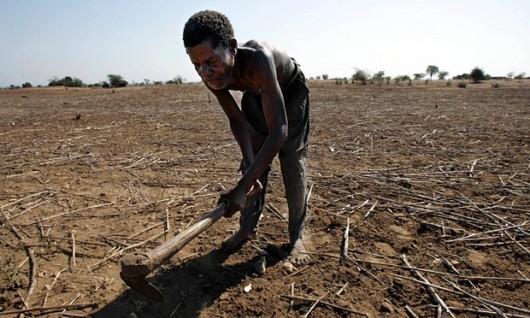
However, while climate change has been (at least superficially) accepted as a fact in rich countries such as the United States, many of the world’s population has still never heard of the term “climate change,” let alone of its harrowing consequences.
A study conducted this year, which analyzed data collected from over 100 countries by the Gallup Poll in 2007 and 2008, discovered that over 40 percent of the world’s inhabitants have never heard of climate change. The study also found that a correlation exists between a country’s income level and the general public awareness about the issue. In developed, first-world countries such as the United States, Canada and Russia, for instance, over 90 percent of people are aware of climate change. In developing countries, such as India, Pakistan and Egypt, however, the number of people conscious of climate change is vastly lower, measuring around or less than 30 percent.
Interestingly, the study also discovered that while a smaller percentage of people in poorer countries were aware of the phenomenon, those who had heard of it regarded the issue with greater severity than those in rich countries. According to VICE Magazine, this phenomenon, in turn, reflects the fact that poorer countries are actually more vulnerable to climate change, especially since they are worse equipped to deal with its effects.
Researchers involved with the study told VICE that the results confirmed the impossibility of a one-size-fits-all approach to climate change communication. A multitude of factors affects how people come to know about and engage with the issue, even in first-world countries. In China, for example, a citizen’s concern with climate change tends to correlate with the quality of air pollution experienced in different regions.
Despite these other factors, however, researchers reflected that the biggest revelation brought about by the survey was the discovery that climate change awareness blatantly mirrors global income inequalities.
While this might seem daunting for the future of poor countries, researchers have argued that the discovery that knowledge of climate change and global poverty are more inextricably linked than previously thought actually offers a glimmer of hope for the future of our fragile Earth and its billions of poor inhabitants.
For instance, a study conducted in the past year by Frances Moore and Delavane Diaz of Stanford University found that future projections based on economic growth in third-world countries also projected parallel downward trends in global temperatures. Their research thus showed that targeting global poverty could have an inadvertent positive effect on climate change, by providing poor countries with the knowledge and tools with which to limit their negative environmental impact.
In light of this, the discovery of Gallup’s most recent poll offers valuable insight into one way in which the global community can help manage the calamitous effect of climate change: by first managing the calamitous effects of global poverty.
In order to achieve this, however, it is first necessary to eradicate the correlation that currently exists between wealth and knowledge of climate change. In a world where all, and not just 60 percent, of humanity will be affected by climate change, all, and not just 60 percent, must first be made aware of the issue and of its potentially and universally catastrophic consequences.
– Ana Powell
Sources: CNN, The Guardian, VICE
Photo: The Guardian
