• Link to X
  • Link to Facebook
  • Link to Instagram
  • Link to TikTok
  • Link to Youtube
  • About
    • About Us
      • President
      • Board of Directors
      • Board of Advisors
      • Financials
      • Our Methodology
      • Success Tracker
      • Contact
  • Act Now
    • 30 Ways to Help
      • Email Congress
      • Call Congress
      • Volunteer
      • Courses & Certificates
      • Be a Donor
    • Internships
      • In-Office Internships
      • Remote Internships
    • Legislation
      • Politics 101
  • The Blog
  • The Podcast
  • Magazine
  • Donate
  • Click to open the search input field Click to open the search input field Search
  • Menu Menu
Blog - Latest News
Disease, Global Poverty, Health

Improving Vaccine Shelf Life
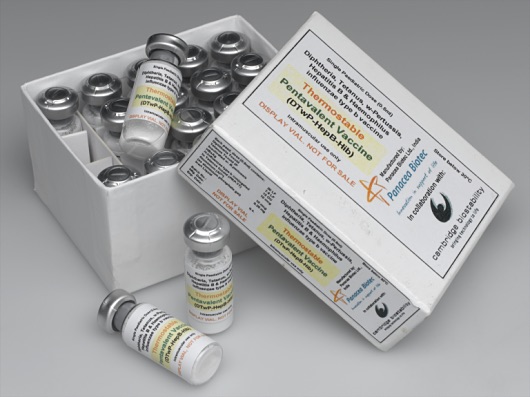
Vaccine-Shelf-LifeIt is hard enough to find vaccines for the world’s deadliest diseases, but scientists also grapple with another concern: shelf life.

In order for vaccines to remain potent, they must be kept within a range of suitable temperatures. For instance, they are rendered useless in excessive heat.

The effects of such temperature fluctuations can be substantial. According to the global health nonprofit PATH, the cholera vaccine Dukoral has a shelf life of 36 months when stored at temperatures between 2-8 degrees Celsius. If stored at 27 degrees Celsius, the vaccine will only last 14 days.

This poses a problem for those performing vaccinations in the developing world; in countries near the equator, the heat can be stifling. That means vaccines could expire when they are needed most.

Compounding the problem is the lack of electricity in certain regions. With high temperatures and no reliable way of keeping supplies cold, many vaccines go to waste.

At Intellectual Ventures Lab, scientists are developing a new device to keep vaccines at the ideal temperature, as part of their Global Good program. The Arktek, a passive vaccine storage device, is able to keep vaccines cold for a month with no electricity. It uses the same techniques to remain protected from extreme temperatures as employed by spacecrafts.

The device was put to the test during the recent Ebola outbreak. When health care workers started to test Ebola vaccine candidates, they needed a way to keep them cold during transport and storage.

The vaccines were required to be kept between -60 and -80 degrees Celsius, well below the usual temperature range of the Arktek device. However, with some quick modifications and carefully conducted tests, the container was modified to support such low temperatures.

That meant scientists could prolong the shelf life of experimental Ebola vaccines, if only for a few days longer.

– Kevin McLaughlin

Sources: Intellectual Ventures Lab, PATH, World Health Organization
Photo: Science Museum

July 27, 2015
Share this entry
  • Share on Facebook
  • Share on X
  • Share on WhatsApp
  • Share on Pinterest
  • Share on LinkedIn
  • Share on Tumblr
  • Share on Vk
  • Share on Reddit
  • Share by Mail
https://borgenproject.org/wp-content/uploads/borgen-project-logo.svg 0 0 Borgen Project https://borgenproject.org/wp-content/uploads/borgen-project-logo.svg Borgen Project2015-07-27 15:11:012020-07-10 15:44:52Improving Vaccine Shelf Life

Get Smarter

  • Global Poverty 101
  • Global Poverty… The Good News
  • Global Poverty & U.S. Jobs
  • Global Poverty and National Security
  • Innovative Solutions to Poverty
  • Global Poverty & Aid FAQ’s
Search Search

Take Action

  • Call Congress
  • Email Congress
  • Donate
  • 30 Ways to Help
  • Volunteer Ops
  • Internships
  • Courses & Certificates
  • The Podcast
Borgen Project

“The Borgen Project is an incredible nonprofit organization that is addressing poverty and hunger and working towards ending them.”

-The Huffington Post

Inside The Borgen Project

  • Contact
  • About
  • Financials
  • President
  • Board of Directors
  • Board of Advisors

International Links

  • UK Email Parliament
  • UK Donate
  • Canada Email Parliament

Get Smarter

  • Global Poverty 101
  • Global Poverty… The Good News
  • Global Poverty & U.S. Jobs
  • Global Poverty and National Security
  • Innovative Solutions to Poverty
  • Global Poverty & Aid FAQ’s

Ways to Help

  • Call Congress
  • Email Congress
  • Donate
  • 30 Ways to Help
  • Volunteer Ops
  • Internships
  • Courses & Certificates
  • The Podcast
Link to: The New Three-Minute Diagnosis of HIV/AIDS Link to: The New Three-Minute Diagnosis of HIV/AIDS The New Three-Minute Diagnosis of HIV/AIDS Link to: 5 Answers to Your Questions About Polio Eradication in Nigeria Link to: 5 Answers to Your Questions About Polio Eradication in Nigeria 5 Answers to Your Questions About Polio Eradication in Nigeria
Scroll to top Scroll to top Scroll to top