10 Facts Regarding Colombian Refugees
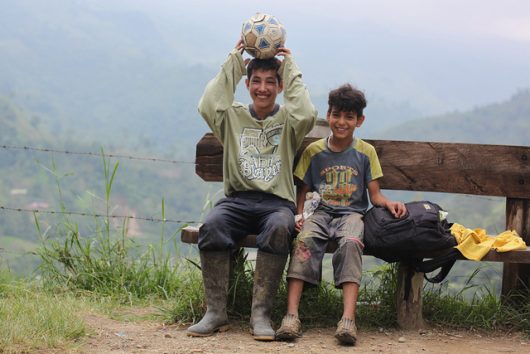
For over 50 years, guerilla soldiers, paramilitaries, drug cartels and the government’s armed forces have been fighting in Colombia creating waves of refugees. Though each group has different motivations, most are fighting to gain power and influence.
This internal fighting in Colombia has led to the displacement of many individuals across the country. Here are 10 facts about Colombian refugees.
- Colombia has the second-highest number of internally displaced persons in the world. Colombia has a staggering population of over 6 million internally displaced persons. The Syrian Arab Republic is the only other country with a higher population with 7.6 million internally displaced persons.
- Children are at high risk for displacement and militant group recruitment. Unfortunately, the same laws that let Colombian refugees leave the country’s borders allow militant groups to do the same. Several of these groups are able to follow refugees out of the country and often take children as recruits for their cause.
- Indigenous populations and Afro-Colombians are also at-risk. Though they only make up a small proportion of the total Colombian population (3.4 percent), an estimated eight percent of Colombia’s internally displaced persons are of the indigenous population. Afro-Colombians and indigenous Colombians tend to live in the rural areas of Colombia where there is little assistance.
- About 250,000 Colombian refugees live in Ecuador. Though many Colombians traveled to Ecuador, only 15,000 have been recognized as refugees by the country. This means only 15,000 Colombians receive government assistance and legal residence permits. Colombian refugees are often discriminated against and struggle to compete for jobs in Ecuador.
- Colombian refugees often travel to Panama and Venezuela seeking asylum. In Panama, Colombian refugees are often forced to live in the jungle without basic provisions that would usually accompany refugees in such living environments, according to Refugee Counsel USA. In Venezuela, Colombian refugees tend to have trouble accessing the job market due to a poor refugee status determination system. They also have very limited access to schools and health systems.
- Refugee women tend to have trouble finding jobs once displaced. Due to an inability to access the job market, many Colombian refugee women are forced to work on the streets and in brothels. For many, this is the only way they can get money to support their children.
- Some refugees are receiving legal support. The United Nations High Commissioner for Refugees (UNHCR) and the Norweigan Refugee Council (NRC) have provided legal clinics that have helped 14,300 internally displaced persons.
- Long-term solutions are being established. The UNHCR has changed its focus from providing immediate service to creating long-term solutions for Colombian refugees. By doing so, the organization hopes to create lasting change for those who need it most.
- Their communities are being recognized. Recently, a long-standing refugee community was finally recognized by the city of Cúcuta, Colombia. In its recognition, the community gained access to many of the cities services.
- Action is being taken by some. The UNHCR recently established the Gender-Based Violence Information Management System (GBVIMS). In doing so, the organization is helping fight sexual and gender-based violence toward refugees in the countries it operates, including Columbia.
Though many of these facts about Colombian refugees may be discouraging, the refugees have not been forgotten. Organizations are working to help them in their length endeavor, unfortunately, when a crisis is so large, it takes a lot of time and resources in order to effect change.
– Weston Northrop
Photo: Flickr
