• Link to X
  • Link to Facebook
  • Link to Instagram
  • Link to TikTok
  • Link to Youtube
  • About
    • About Us
      • President
      • Board of Directors
      • Board of Advisors
      • Financials
      • Our Methodology
      • Success Tracker
      • Contact
  • Act Now
    • 30 Ways to Help
      • Email Congress
      • Call Congress
      • Volunteer
      • Courses & Certificates
      • Be a Donor
    • Internships
      • In-Office Internships
      • Remote Internships
    • Legislation
      • Politics 101
  • The Blog
  • The Podcast
  • Magazine
  • Donate
  • Click to open the search input field Click to open the search input field Search
  • Menu Menu
Blog - Latest News
Global Poverty

Energy Poverty in Nigeria
energy_poverty
Nigeria’s crude oil reserves are currently estimated at 35 billion barrels; its natural gas reserves an estimated 185 trillion cubic feet. Though import levels have since dropped dramatically, in March 2007 the United States imported 41,767 barrels of Nigerian crude oil and petroleum products.

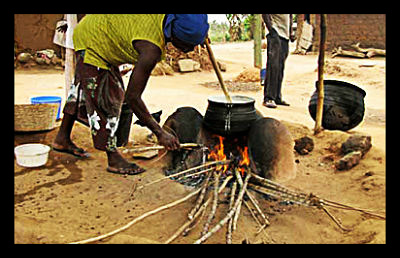
Despite this, 44 percent of Nigerian households have no access to electricity.

Indeed, even in Nigerian homes with electricity, the quality of service provided is often intermittent while growing increasingly unaffordable. In an op-ed in the International New York Times, published August 8, 2014, author Adewale Maja-Pearce explained that in February 2014 his monthly bill jumped from $30 per month to nearly $185 per month, despite the fact that he was receiving roughly three hours per day of power. This price increase occurs at a time when 92.4 percent of Nigerians live on less than $2 per day, and 70.8 percent live on less than one dollar per day.

The problem of energy poverty is not exclusive to Nigeria. According to the International Energy Agency, “over 1.3 billion people are without access to electricity and 2.6 billion are without clean cooking facilities. More than 95% of these people are in sub-Saharan Africa or developing Asia and 84% are in rural areas.”

Though the problem is not unique to Nigeria, it does bring to light the global inequality behind the phenomenon of energy poverty despite Nigeria’s status as a major energy exporter. It is seemingly paradoxical for a nation which began exporting large amounts of liquid petroleum gas through Chevron in 1997 to have a per capita liquid petroleum gas usage rate of 0.4 kilograms per second, one of the lowest in the region.

Addressing energy poverty is a key point in the fight against global poverty. Greater access to alternative energy sources will reduce unnecessary deaths, such as the 95,300 Nigerian deaths which occur annually from smoke created by the use of solid biomass fuels. It will enhance the financial capabilities of those nations currently struggling to provide power to businesses. This, in turn, will expand the global community of consumers.

Regardless, the importance of treating energy exporters as nations, and not simply as trade partners, remains a primary challenge moving forward in the fight against global inequality.

– Andrew Michaels

Sources: NY Times, CAI, UNICEF EIA, International Association for Energy Economics, Journal of Public Administration and Policy Research 3.2 International New York Times
Photo: Vanguard

May 21, 2015
Share this entry
  • Share on Facebook
  • Share on X
  • Share on WhatsApp
  • Share on Pinterest
  • Share on LinkedIn
  • Share on Tumblr
  • Share on Vk
  • Share on Reddit
  • Share by Mail
https://borgenproject.org/wp-content/uploads/borgen-project-logo.svg 0 0 Borgen Project https://borgenproject.org/wp-content/uploads/borgen-project-logo.svg Borgen Project2015-05-21 08:00:222024-12-13 17:51:23Energy Poverty in Nigeria

Get Smarter

  • Global Poverty 101
  • Global Poverty… The Good News
  • Global Poverty & U.S. Jobs
  • Global Poverty and National Security
  • Innovative Solutions to Poverty
  • Global Poverty & Aid FAQ’s
Search Search

Take Action

  • Call Congress
  • Email Congress
  • Donate
  • 30 Ways to Help
  • Volunteer Ops
  • Internships
  • Courses & Certificates
  • The Podcast
Borgen Project

“The Borgen Project is an incredible nonprofit organization that is addressing poverty and hunger and working towards ending them.”

-The Huffington Post

Inside The Borgen Project

  • Contact
  • About
  • Financials
  • President
  • Board of Directors
  • Board of Advisors

International Links

  • UK Email Parliament
  • UK Donate
  • Canada Email Parliament

Get Smarter

  • Global Poverty 101
  • Global Poverty… The Good News
  • Global Poverty & U.S. Jobs
  • Global Poverty and National Security
  • Innovative Solutions to Poverty
  • Global Poverty & Aid FAQ’s

Ways to Help

  • Call Congress
  • Email Congress
  • Donate
  • 30 Ways to Help
  • Volunteer Ops
  • Internships
  • Courses & Certificates
  • The Podcast
Link to: Burundi Protests Threaten Economic Stability Link to: Burundi Protests Threaten Economic Stability Burundi Protests Threaten Economic Stability Link to: Malnutrition in Bhutan Link to: Malnutrition in Bhutan Malnutrition in Bhutan
Scroll to top Scroll to top Scroll to top