Advancing Women’s Rights in Georgia
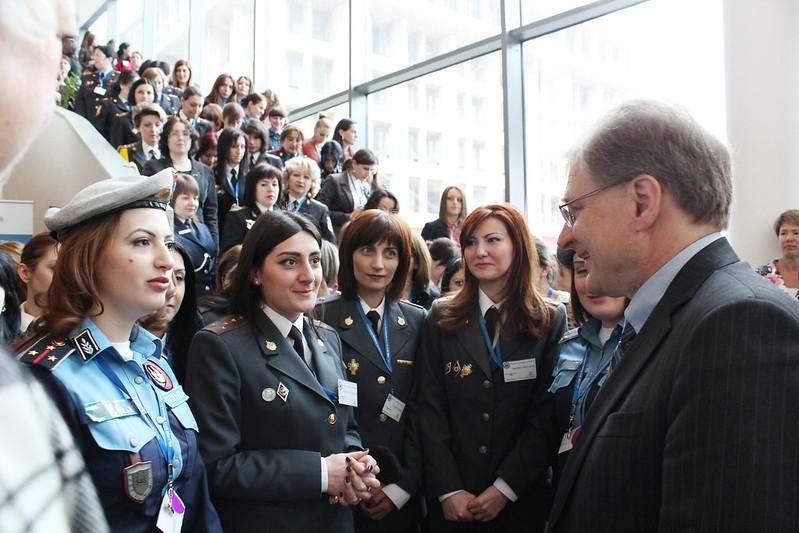 Traditional gender norms and stereotypes in Georgia have led to inequality between men and women. A lack of equality between men and women’s rights has led to issues such as a 21.4% gender wage gap at a monthly level, a lack of women’s representation in political processes and poor education for women. However, there are four main areas where various projects are improving women’s rights in Georgia
Legislative Reforms
There have been numerous legislative reforms the government implemented to help protect women’s rights in Georgia. For example, in September 2022, the Government approved the second National Strategy for the Protect of Human Rights in Georgia for 2022-2030, which includes a whole chapter that focuses on gender equality. One major legal reform is the Istanbul Convention, which the Council of Europe adopted in 2011, stating that violence against women is a human rights violation and a form of discrimination. This was an incredibly important reform due to the high rates of physical and sexual violence against women in Georgia. According to the EU4GenderEquality: Reform Helpdesk, 6% of women in Georgia are victims of physical and/or sexual violence and there is a 14% rate of child marriage, compared to 1% of boys married before the age of 18.
In 2017, the Georgian government ratified the Istanbul Convention, confirming its commitment to combatting violence against women. Legislation reforms are important for protecting women’s rights in Georgia, as certain laws treat violence against women as a punishable offense, therefore encouraging women to report any instances of violence and rape.
Education and Awareness Programs
Another issue affecting women’s rights in Georgia Is the lack of comprehensive education for girls and women. Many girls drop out of school early due to child marriage. According to Girls Not Brides, in 2018, 48% of women between the ages of 20-49 were married before the age of 18 and only 29% completed upper secondary education, 14% completed vocational education and 8% completed higher education.
The ongoing education system reform aims to make education more flexible and modern and it focuses on quality education outcomes. The government developed a funding system to support inclusive education for children of all genders and special education needs. In 2018, the government also developed informational databases to collect data on persons with disabilities, including girls with disabilities in education, to help improve the quality of their education.
Furthermore, in 2019, “GITA launched a program for 3,000 advanced IT specialists in highly demanded professions.” The number of women and girls’ enrollment in the courses “has increased significantly” where “at least 45% of the beneficiaries of the Agency’s ICT courses are women,” according to U.N. Women.
U.N. Women reports that “GITA is also running STEAM boot camps where participants are chosen following strict gender balance, to ensure there are equal amounts of male and female participants enrolled.” Ensuring that women and girls have equal access to education is incredibly important, as it helps them to gain independence to the ability to seek employment later in life.
Women’s Participation in Politics
Efforts to increase women’s representation in political and decision-making processes could help to empower women and encourage more women to participate in leadership roles, leading to equality. Only 11% of women in Georgia are parliamentarians in national and local governments, meaning that there’s still a lot of work necessary. However, electoral reforms in Georgia established compulsory gender quotas to create gender balance in the party list in the elections. Although women’s participation in politics remains low, this is still a huge step towards gender equality.
Economic Empowerment
Economic empowerment is crucial for reducing gender disparities and financial independence. In 2020, the government introduced the Law of Georgia on Labour Assistance, which aims to support Georgians find employment. Furthermore, it added a provision on equal pay for work of equal value to the Labour Code, meaning that employers must ensure equal pay for men and women for the equal work they perform, according to the EU4GenderEquality: Reform Helpdesk.
In addition to this, the government’s SME Development Strategy of Georgia 2021-2025 aims to promote the development of women’s entrepreneurship in small and medium-sized enterprises (SMEs). The government aims to achieve this through “popularising the Women’s Empowerment Principles (WEPs), improving gender statistics in state programs, promoting women’s participation in state programs, strengthening women’s digital skills and the capacity building of state agencies to enable them to mainstream gender in their programs,” according to the EU4GenderEquality: Reform Helpdesk.
Overall, while there is still a lot of work necessary to help advance women’s rights in Georgia, the country has come a long way in its commitment to providing gender equality.
– Bethany O’Connell
Photo: Flickr
