Water Access in Iraq: How Two Men in Iraq Helped Save Their Community
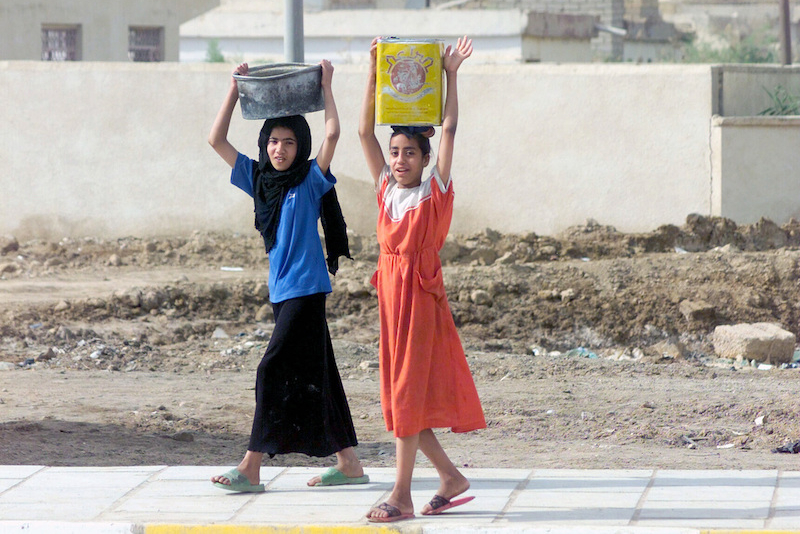 Despite decades of poor access to water in Iraq, one family may have finally found a solution. They live in the village of Al-Huta, a small community near the Port of Basrah. Even with their proximity to water, the potable quality worsened. In 2018, pollution became so bad that water poisoned more than 100,000 residents. This contamination was so bad that it even corrupted the crops, sending Ali Sattar, his family and the entirety of the village of Al-Huta into food and drinkable water scarcity.
It was 28-year-old Ali Sattar, a financial expert for a flourishing oil field, and his neighbor Nazim Yousif who came up with a solution.
The Solution
To address the water scarcity issue, Sattar and Yousif led the community in combining their resources to purchase weekly tankers to bring clean water to Al-Huta. These containers were able to supply ten households with potable water, ensuring safe drinking water and supporting agricultural activities in the neighborhood.
While this solution effectively provided clean water, the cost of each tanker was around $400, equivalent to a month’s salary. Sattar and Yousif realized that this approach was not sustainable in the long term. They recognized the need for external assistance to bring lasting change. Eventually, they sought support from USAID, understanding that collaboration was crucial to achieving their goals.
As early as 2019, USAID has worked with the United Nations Development Programme regarding supporting water treatment plants found throughout Basrah. Since then, its actions have adapted to meet local and international standards, renovating these plants for safe, clean water access in Iraq to roughly 625,000 residents, according to USAID.
By extension, tankards dropped from $400 to $30 for the community, an attainable cost for a sustainable solution.
Iraq As a Whole
Al-Huta is not the only community struggling with contaminated water in Iraq. In fact, according to The Iraqi Observatory for Human Rights, as of March 2023, the majority of the country’s natural water supply is polluted with oil, feces and medicinal waste. Drinking it has caused a massive upheaval of diseases among the populace.
The Tigris and Euphrates are not safe to drink. However, support from USAID and others may be able to help the rest of the country, as was the case with Al-Huta.
Ongoing Support
Some activists based in Iraq have also been working to fight the water crisis. Salman Khairalla, founder of the advocacy campaign Save The Tigris and Iraqi Marshes in March 2012, partnered with 30 other activists across the Iraqi Social Forum and Iraqi Activist Network. Their actions include bringing attention to the negative impact of dams on the safety of their water. Their voices created such a stir that the UNESCO World Heritage List added the marshlands in 2016, allowing the movement to receive more funding.
One of these movements also involves the ongoing Iraq Water Fund, established through Human Appeal in 2016. Through donations, the initiative builds solar-powered purifiers for water access in Basrah villages, offering fresh water and electricity to those who need it most. These efforts have proven successful in rehabilitating over 20 schools and providing meals for 85,000 children. This is alongside many other impressive feats that continue to bear fruit for the country even today.
– Nathan Bronk
Photo: Picryl
