Top 10 Facts About Girls’ Education in South Sudan
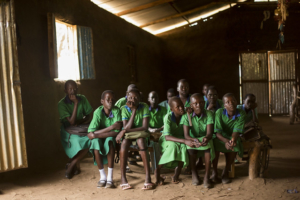
South Sudan has experienced widespread political conflict and insecurity in recent years. Working towards a more peaceful and inclusive future, the South Sudanese government has set out to completely restructure its education sector. Despite some growth in this area, education remains inaccessible for women and girls due to the nation’s dedication to maintaining traditional gender roles. This has grossly affected girls’ livelihood, quality of life and educational opportunities. Below are the top 10 facts about girls’ education in South Sudan.
Closing the Gender and Socio-Economic Gap in Education
- South Sudanese women and girls are less likely to complete primary and secondary education than boys. According to the World Bank, it is estimated that seven girls per ten boys attend primary school. Meanwhile, only five girls per ten boys enroll in secondary education.
- Although some girls do manage to make it to secondary school, not many of them are able to
finish. In 2013, only 500 girls in the entire country were in their graduating year of
secondary school. - Gender inequity in the South Sudanese education remains an issue. Females make up only 12 percent of the country’s teaching population.
- According to Fiona Mavhinga of Zimbabwe, “extreme poverty and gender inequity drive the injustice” preventing girls’ education in countries like South Sudan. Fiona was one of the first girls supported by Camfed, an international educational charity.
- Cultural notions that women are child-bearers and homemakers drive inequity. Meanwhile, men dominate the educational, business, and political sectors of society. In fact, South Sudanese women and girls are more likely to die during childbirth than complete primary education.
- South Sudan partnered with UNICEF in 2007 to help more children get to school. The initiative also created alternate forms of education for women and girls unable to travel to school every day.
- In the northern states, almost five percent of students travel more than one and a half miles to and from school each day. In southern states, educational sites average from one for every five communities to one for every 15 communities.
- The student to teacher ratio in South Sudanese schools is overwhelming. Urban classes often exceed 100 students under the direction of just one teacher.
- While education is technically free for South Sudanese students, there are many expenses that the system does not cover. Families are expected to pay additional fees if they want their children to have an education. This includes charges for textbooks, uniforms, school fees and more. Thus, socio-economic status plays a major factor in access to education.
- South Sudan is working with global partners such as UNICEF and Plan International to restructure the education system and expand girls’ access to education. Organizations based within South Sudan like Girls’ Education South Sudan (GESS), work to remove those barriers that block women and girls from study.
While organizations such as UNICEF, Plan International, and GESS are working to open access to education for girls, South Sudan is still struggling to close the gender gap in education. Regardless, the top 10 facts about girls’ education in South Sudan show that the movement to support girls’ education is more prosperous than ever.
– Morgan Everman
Photo: Flickr
