• Link to X
  • Link to Facebook
  • Link to Instagram
  • Link to TikTok
  • Link to Youtube
  • About
    • About Us
      • President
      • Board of Directors
      • Board of Advisors
      • Financials
      • Our Methodology
      • Success Tracker
      • Contact
  • Act Now
    • 30 Ways to Help
      • Email Congress
      • Call Congress
      • Volunteer
      • Courses & Certificates
      • Be a Donor
    • Internships
      • In-Office Internships
      • Remote Internships
    • Legislation
      • Politics 101
  • The Blog
  • The Podcast
  • Magazine
  • Donate
  • Click to open the search input field Click to open the search input field Search
  • Menu Menu

Tag Archive for: Poverty in Jamaica

Posts

Global Poverty, Human Rights

The State of Human Rights in Jamaica

Human Rights in JamaicaIn the 2007 Human Development Index published by the United Nations Development Programme (UNDP), Jamaica ranked 101 of 177 countries – the second-lowest in the Caribbean, ahead of only Haiti. Since then, the nation’s rank has climbed to 94; however, human rights in Jamaica and national human development still face several obstacles that need to be addressed.

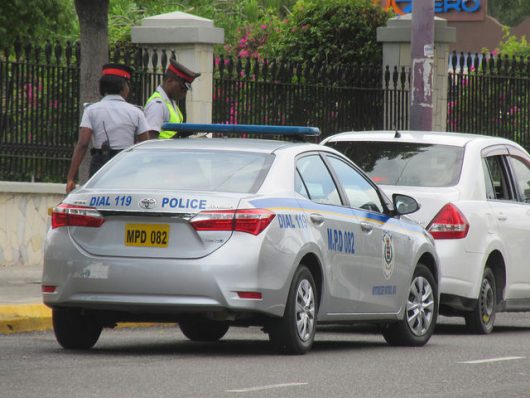
Poverty and public security are the primary human rights concerns in Jamaica. Gang violence and violent murders are rampant and affect a majority of the population, especially the poorest. Although there has been a slight decrease in gang activity in the last few years, gang violence still accounts for a majority of murders in Jamaica. Last year, the Acting Police Commissioner reported that 65 percent of murders were linked to gangs.

Police violence is also a major issue. The state’s answer to significant violent crime has largely been to respond with its own violence. Human rights activists in recent years have reported the prevalence of unlawful killings on behalf of the state police force on the order of – or complicit with – higher authorities. Since 2000, it is alleged that the Jamaican constabulary force has killed over 3,000 people. Although these killings have been decreasing since 2010, the numbers are still high. In 2016, there was an average of two police killings per week.

Beyond the killings themselves, international human rights watchdog organizations have claimed that police officers perpetuate an atmosphere of fear. The planting and tampering of evidence, along with the intimidation and terrorizing of witnesses, are commonplace.

Another major obstacle to improving human rights in Jamaica is the treatment of the LGBTQ community. Hate crimes directed at these individuals have been committed both by citizens and the police. Between 2009 and 2012, estimates show that over 200 attacks, including physical attacks, mob attacks and home invasions, were directed at LGBTQ members. More recently, the government has formally acknowledged the issue and has put in place initiatives, such as a division of the police focused on diversity, to help aid the problem.

The state of human rights in Jamaica over the past decade has been improving. Initiatives on behalf of the government and the support and direction of human rights organizations have attempted to systematically address the issues that plagued the Jamaican community, and have already made progress. However, there is still a lot of room for improvement and as long as Jamaica suffers from chronic poverty, human rights issues will always be present.

– Alan Garcia-Ramos

Photo: Flickr
August 19, 2017
https://borgenproject.org/wp-content/uploads/borgen-project-logo.svg 0 0 Kim Thelwell https://borgenproject.org/wp-content/uploads/borgen-project-logo.svg Kim Thelwell2017-08-19 07:30:562024-05-28 00:15:32The State of Human Rights in Jamaica
Global Poverty

IDB Assistance: Reducing Poverty in Jamaica

Poverty in Jamaica
With over 2 million stopover visits, the tropical island of Jamaica remains one of the most popular tourist vacation areas; renowned home of Reggae legend Bob Marley and the fastest man in the world, Usain Bolt. However, within and around the outskirts of paradise lives the poor and those experiencing financial hardship.

Yet many remain oblivious to the existence of poverty in Jamaica. The poverty rate in Jamaica remains at 16.5 percent, after increasing in the past two years.

The Inter-American Development Bank (IDB) will be providing $50 million in support of the Jamaican Government’s efforts to help alleviate poverty. The IDB investment loan was initiated to support poor families who were beneficiaries of the Program of Advancement Through Health and Education (PATH).

With the aim of alleviating poverty in Jamaica, PATH was put into effect by the government within its social safety net budget. The IDB’s project was put into place to provide financial and health stability for eligible beneficiaries of the PATH program such as children and pregnant women.

“The Integrated Support to Jamaica’s Social Protection Strategy project is a continuation of support by the IDB to the reform of Jamaica’s SSN,” said Therese Turner-Jones, IDB country representative for Jamaica said.

She noted that since 2000, in partnership with the World Bank, IDB is to achieve greater equity, efficiency and effectiveness. This included a previous investment loan in 2009 to reduce the life-threatening effects of the food price crisis on the most impoverished.

For two consecutive international financial crisis periods, the IDB has created scheduled loans against social spending as well as to protect against labor policies. Their efforts have promoted human capital and supported the networking of the poor into labor markets.

Turner-Jones outlined that the Integrated Support to Jamaica’s Social Protection Strategy project will help reduce the negative impact of fiscal adjustment on the poor.

The IDB loan for $50 million is set to continue for 25 years, with extended overtime of 5.5 years and an interest rate based on LIBOR.

The IDB has come on board to support the long-term development plan for Jamaica, Vision 2030 Jamaica, to reduce poverty by ensuring access to basic goods and services, responsive public policy, opportunities for sustainable livelihoods and social inclusion.

– Shanique Wright

Photo: Flickr

October 30, 2016
https://borgenproject.org/wp-content/uploads/borgen-project-logo.svg 0 0 Borgen Project https://borgenproject.org/wp-content/uploads/borgen-project-logo.svg Borgen Project2016-10-30 01:30:062024-05-27 23:54:09IDB Assistance: Reducing Poverty in Jamaica
Economy, Food & Hunger, Global Poverty

8 Facts About Poverty in Jamaica

Poverty in Jamaica Poverty rate
Jamaica has struggled with poverty, unemployment and crime for the past half century, but the nation has recently seen ambitious government economic policies bear fruit. Discussed below are the leading facts about poverty in Jamaica and their implications.

8 Facts about Poverty in Jamaica

  1. Jamaica is not in extreme poverty and is regarded as a middle income country. For comparison, Jamaica has about 1/20th the GDP per capita of the United States, but a four-times-higher GDP per capita than the nearby country Haiti.
  2. Since the 1970s and 80s, Jamaica has experienced serious problems with poverty and unemployment. Through the 90s, unemployment remained around 15 percent, with poverty above 25 percent. The unemployment rate is currently 14 percent and poverty is 16 percent.
  3. A serious hindrance to Jamaica’s development has been slow rates of economic growth. In the past 30 years, Jamaica has had an average annual GDP growth rate of less than one percent. The slow growth rate is a major cause of persistent poverty in Jamaica.
  4. Relationships between Jamaican officials and crime groups cause widespread corruption, which results in many of Jamaica’s problems. The corruption not only hurts law abiding Jamaican citizens, but makes foreign investors far more hesitant to get involved in Jamaican industry.
  5. Public education in Jamaica is not entirely free. There is a registration fee and other school expenses that are not covered by the government. As a result, many of the nation’s most poor children are not able to attend school.
  6. Jamaica jumped 27 places in the 2015 Doing Business ranking, as the Jamaican government has improved its credit rating and decreased the national debt. It is hoped that the improved ranking will increase investment and alleviate poverty in Jamaica.
  7. The World Bank has a positive outlook for Jamaica’s economy, with forecasts of the country’s GDP growth rate climbing to over two percent in 2017.
  8. The Jamaican Government is currently working with the UNDP and the European Union to alleviate poverty on both a macro and micro level. Poverty alleviation and achievement of Millennium Development Goals remains a top priority for the Jamaican government.

Despite Jamaica’s history of poverty and some ongoing problems, economic forecasts for the country remain optimistic. It is possible that Jamaica will experience an economic resurgence and alleviate problems of unemployment and poverty in coming years.

– John English

Photo: Pixabay

August 6, 2016
https://borgenproject.org/wp-content/uploads/borgen-project-logo.svg 0 0 Borgen Project https://borgenproject.org/wp-content/uploads/borgen-project-logo.svg Borgen Project2016-08-06 01:30:342024-06-07 05:07:368 Facts About Poverty in Jamaica
Page 4 of 41234

Get Smarter

  • Global Poverty 101
  • Global Poverty… The Good News
  • Global Poverty & U.S. Jobs
  • Global Poverty and National Security
  • Innovative Solutions to Poverty
  • Global Poverty & Aid FAQ’s
Search Search

Take Action

  • Call Congress
  • Email Congress
  • Donate
  • 30 Ways to Help
  • Volunteer Ops
  • Internships
  • Courses & Certificates
  • The Podcast
Borgen Project

“The Borgen Project is an incredible nonprofit organization that is addressing poverty and hunger and working towards ending them.”

-The Huffington Post

Inside The Borgen Project

  • Contact
  • About
  • Financials
  • President
  • Board of Directors
  • Board of Advisors

International Links

  • UK Email Parliament
  • UK Donate
  • Canada Email Parliament

Get Smarter

  • Global Poverty 101
  • Global Poverty… The Good News
  • Global Poverty & U.S. Jobs
  • Global Poverty and National Security
  • Innovative Solutions to Poverty
  • Global Poverty & Aid FAQ’s

Ways to Help

  • Call Congress
  • Email Congress
  • Donate
  • 30 Ways to Help
  • Volunteer Ops
  • Internships
  • Courses & Certificates
  • The Podcast
Scroll to top Scroll to top Scroll to top