WHO Advocates Progress for Syrian Women’s Health
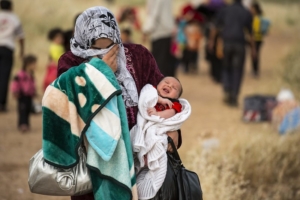 With more than 6 million women in need of health support in Syria and ongoing challenges like gender-based health care discrimination, political bias and social inequality, the World Health Organization (WHO) has taken meaningful steps to improve Syrian women’s health. These efforts include mental and physical support for survivors of gender-based violence, health education and the promotion of women’s rights through a more inclusive, mainstream health care network.
Gender-Biased Laws Upon Women in Syria
Extremist groups Jabhat al-Nusra, Islamic State of Iraq and Sham have imposed strict gender-biased laws upon women in Syria. Women have unlawfully become required to wear hijabs and full-length robes and threatened if they do not comply, according to Human Rights Watch. Failure to conform leads to misogynistically charged discrimination, barring girls from attending schools, moving freely in public and working.
Since the onset of the Syrian Civil War and its backlash effects on women, the WHO has championed programs in Syrian women’s health care that offer rehabilitation and education services alongside their advocacy for systemic changes. Since 2018, the WHO has institutionalized routine care for victims of gender-based violence.
Syria’s Health Care System
The prolonged conflict has desecrated approximately half the health care infrastructure in Syria, resulting in a shortage of medicine, facilities, health workers and equipment. More than 100 health facilities in northwest Syria have sustained severe damage and a loss of complete funding. More than 15.9 million people are left in need of health support, including 257,000 pregnant women, according to the United Nations Population Fund (UNPF).
With women making up nearly 50% of Syria’s population and the majority of those displaced in refugee camps, the WHO has launched targeted programs to address their health needs. According to the WHO, these initiatives ensure that “every woman enjoys her right to the highest attainable standard of health.”
Advancing Gender Equality in Syria’s Health System
The WHO base in Syria has “mainstreamed gender equality in its programming.” It assures women the highest standard of care through pregnancy, birth, violence and discrimination. By educating women on how to make informed decisions about their health care, the Syria-based program has made meaningful progress in preventing the rise of mental health issues and gender-based violence.
These efforts empower women with knowledge, helping them protect their well-being and advocate for their rights in a challenging environment. The organization provides essential psychosocial treatments to aid in women’s mental and physical health after facing gender-based violence. According to the WHO team in Syria, these services have been implemented in health facilities around Syria.
The fertility rate in Syria was reported by the WHO at 2.7% per woman in 2021, a reduction from 3.4% recorded in 2010. In light of this, reproductive health care in Syria has been threatened by unjust rulings. The WHO and UNPF support hospitals in northeast Syria by providing natural and c-section births, family planning, nursing and how-to care.
Looking Forward
“As we continue supporting gender mainstreaming in the health sector through research, policy formulation and capacity-building, we draw our inspiration and strength from the women of Syria, who, together with other members of society, drive gender transformative changes in achieving universal health coverage and health for all,” the WHO said.
– Chloe Fox Rinka
Chloe is based in Los Angeles, CA, USA and focuses on Global Health for The Borgen Project.
Photo: Flickr
