Social Remittances to Ukraine: Exchanging Ideas Across Borders
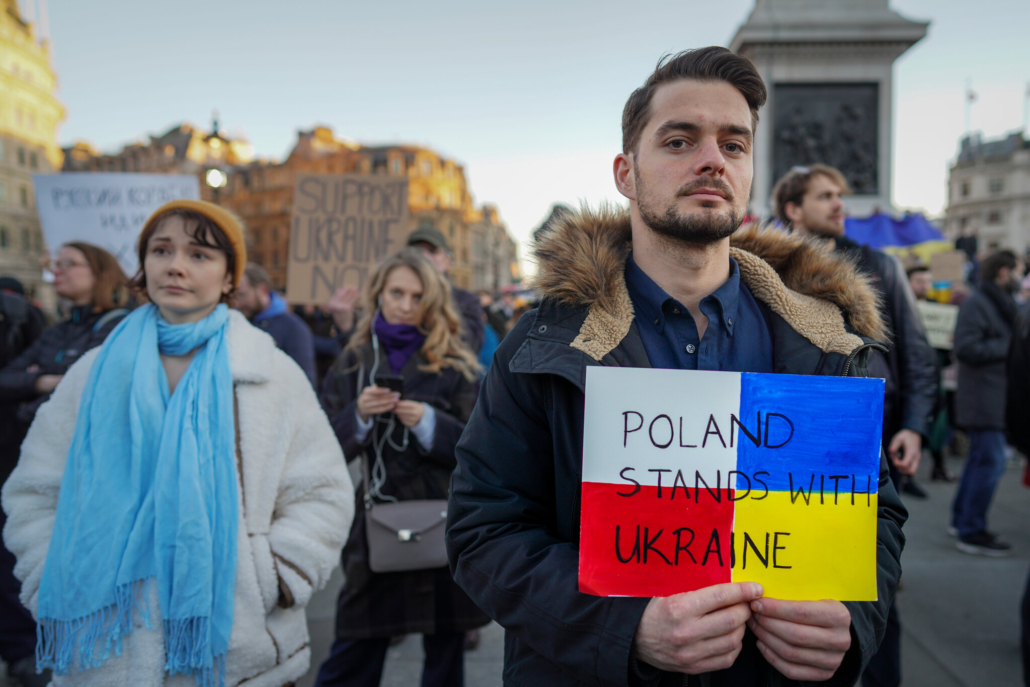 The story of Ukrainian refugees shows how migration can generate not just financial assistance, but also the transfer of ideas, skills and civic values. These “social remittances” can help Ukraine recover from war, resist aggression and build an economy less vulnerable to poverty.
Remittances, sums of money sent to another place, are often a way for migrants to continue relationships while abroad, a method for supporting their communities from a distance. Beyond financial remittances, some Ukrainian refugees have found another way to support their nation, planning to bring social remittances to Ukraine home with them. These ideas, skills and values can strengthen democratic institutions and create economic opportunity.
Poverty in Ukraine & Financial Remittances
According to the Economic Commission for Europe, poverty rates in Ukraine decreased by an estimated 30.5% from 2016-2021. In 2021, the estimated rate of people below the Ukrainian subsistence minimum (the minimum income required to cover basic living expenses) was 20.6%. Since the Russian invasion in 2022, the poverty rate has been on the rise. While there is a lack of data for 2022, the following year’s (2023) poverty rate in Ukraine was 35.5%, having increased 14.9% in just two years.
The Ukrainian National News reports that in 2024, remittances to Ukraine reached $9.6 billion. The report shares that, according to the National Bank of Ukraine, the top sources for these funds were the U.S., Israel and Germany.
Refugee Relocation
The Council on Foreign Relations estimates that since the Russian invasion, 2.9 million Ukrainians have fled to the Eastern border, entering Russia. Another 1.6 million refugees escaped to Poland, where they joined the 1.3 million Ukrainians that already migrated there. The remaining refugees headed to the Czech Republic, Moldova, Romania, Slovakia and other European nations.
Social/Intangible Remittances
As Silke Meyer, a professor of European Ethnology at the University of Innsbruck, shared, remittances can extend beyond financial support. Migrants may also send back social capital, networks, knowledge and community norms.
Sociologist P. Levitt describes these as “social remittances,” ways of thinking and living that migrants transfer back to their home. Later research by Grabowska, professor of Social Sciences and Economics at Kozminski University, explains that the concept expanded into “intangible remittances,” encompassing professional and educational practices, attitudes towards mental health, disability, gender roles and political participation. Such exchanges are quietly political and can lay the groundwork for reducing poverty.
The Ukrainian context stands apart because the Russian invasion has forced millions to flee. In this setting, intangible remittances often “emerge[d] as urgent responses to national crisis, moral obligation, or collective recovery,” according to Grabowska. For the women in her study, displacement deepened their attachment to Ukraine. Their intent to bring home what they have learned reflects a will to see Ukraine become stronger, self-reliant and economically resilient.
Migrant Focus on Ukraine
One study participant noted that a work culture fostering development “is something that could benefit [the Ukrainian] workforce back home.” Another expressed a wish to see the hands-on learning and critical thinking she encountered abroad implemented in Ukrainian schools. Others spoke of professional flexibility, cross-cultural respect and greater inclusion for people with disabilities, values that also support long-term poverty reduction.
Grabowska’s work also explores the cumulative advantage effect, a theory explaining how people with more initial resources – money, education or recognition – tend to expand those advantages more quickly. Ukrainian refugees with these resources were better positioned to gather skills and networks abroad, which they then return as powerful remittances to Ukraine.
Unique Predictors
Beyond material resources, “higher civic engagement attitudes and autonomous reflexivity” were strong predictors of which refugees would benefit most from the cumulative advantage effect. War migrants who had a history of community activism and independent decision-making were “more than twice as likely” to gain advantages that could be sent back home. This points to social remittances as not just cultural or personal contributions, but explicitly civic and political, with the potential to influence economic growth and help address poverty in post-war Ukraine.
Future Remittances
The invasion forced Ukrainians into survival-based emigration, but it also created space to imagine a different future for the country. Some refugees plan to return permanently; others foresee a transnational lifestyle or contribution from afar. The only constants throughout the female war migrants’ interviews is their “emotional and symbolic ties to Ukraine” and “desire to contribute to its recovery.” Such commitments to restore and strengthen democratic, inclusive and resilient institutions are inherently political acts of resistance to attempts of domination and can lay the groundwork for reducing poverty by creating more equitable opportunities for all Ukrainians.
Benefits of Remittances
Ukraine is not the sole beneficiary of these contributions. The refugees see themselves as global citizens, fostering cooperation between Ukraine and their countries of residence. In sending back social remittances to Ukraine, they not only help their nation resist aggression but also share ideas that can strengthen anti-poverty efforts both locally and globally.
Whether through peacebuilding, civic participation or inclusive social practices, Ukrainian refugees are shaping conversations about the kind of world they, and their homeland, want to live in, one where the roots of poverty are addressed alongside the wounds of war.
– Alyse Rhee
Alyse is based in Winter Garden, FL, USA and focuses on Good News and Politics for The Borgen Project.
Photo: Flickr
