The Shanghai Oasis Green Food Bank in China
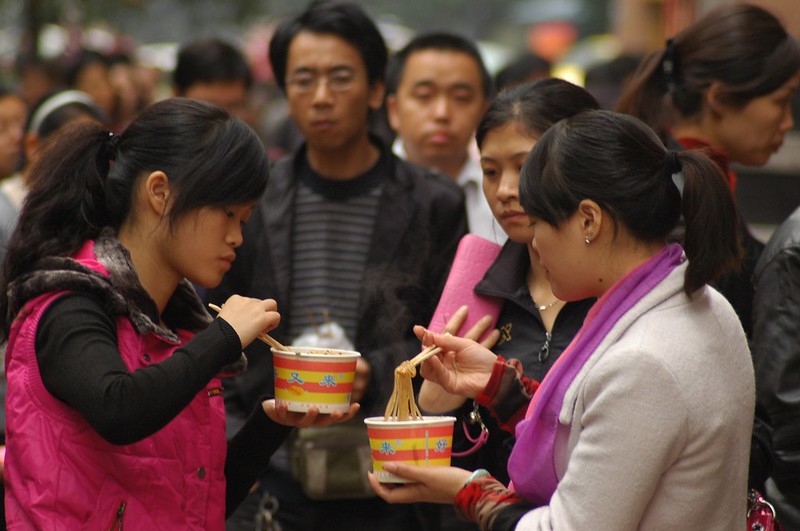 Over the past few decades, China has stunned the world with its rapid economic growth. Indeed Shanghai stands out as a modern and populous port city. However, urbanization brings challenges. Although the GDP per capita in Shanghai rose to 85,000 RMB, the city’s surveyed unemployment rate climbed to 4.5% in 2023. Additionally, food waste poses a significant issue. Shanghai contributes 5 million tons to the country’s total of 10 million tons of food waste annually.
Food Waste Problem in China
China discards food valued at approximately 200 billion RMB each year. This waste is a significant loss that affects the economic stability of food supply chain participants. Furthermore, it challenges the livelihoods of hundreds of millions of Chinese smallholder farmers. This substantial waste not only signifies a loss of economic potential but also squanders essential resources like water, seed and labor, all scarce in China. Moreover, these conditions have made China the world’s largest importer of food. Despite this, urban disposable income in China saw a substantial increase, rising to more than 30,000 RMB in 2015. For reference, this is nearly five times the amount in 2000, China’s National Bureau of Statistics reported. To address these ongoing issues, Li Bing founded the Shanghai Oasis Green Food Bank in 2015.
6 Initiatives of the Oasis Green Food Bank
- China’s First Food Bank. Shanghai Oasis Green Food Bank is China’s first food bank. Inspired by her participation at the Annual Foodbanking Leader Institute (FBLI) Conference in March 2015, hosted by the Global Foodbanking Network (GFN), science student Li Bing committed to fighting poverty in her hometown, Shanghai. Within less than three months, Bing launched the inaugural Shanghai Oasis Green Food Bank store in a district of Shanghai.
- Front-line Operational Model. Shanghai Oasis Green Food Bank adopts a ‘front-line’ model, which differs from the ‘warehouse’ food bank models prevalent in many other countries. While the ‘warehouse’ model involves storing food and distributing it to charity organizations that then deliver it to recipients, the organization directly collects food from donors and distributes it to those in need.
- Donations and Partnerships. Shanghai Oasis Green Food Bank receives donations from large corporations, including KFC and ALDI. ALDI China partnered with the organization in 2018 and together, they have delivered 750 tons of food to the community. According to the Shanghai Daily, KFC donated 1,600 tons of frozen fries to the food bank in 2020.
- Love Package, Shared Fridge and Daily Distribution. The food bank utilizes several distribution methods to meet daily nutritional needs: Love Package, Shared Fridge and Daily Distribution. In the Shared Fridge approach, the charity provides refrigerators in its store that people can access for processed products. Daily Distribution targets items that must be distributed by the day’s end. The Love Package, its most popular method, involves monthly distributions of staples like oil and rice to more than 200 families. Beyond food distribution, the organization also engages in charity events, such as “An Egg’s Rampage.” The Rampage is an eight-kilometer walk in Guangzhou designed to raise funds and awareness for illiterate and malnourished children.
- Staples to 860,000 People. The initiative, owned by Shanghai Oasis Public Service Development Center, has distributed staples to 860,000 people. This was achieved through more than 500 bases. From Jan. to Oct. 2020 alone, it distributed 157 tons of food, valued at approximately $1,438,305 (9.33 million RMB). The food bank has earned a 4A bronze medal from the Civil Affairs Bureau of Shanghai and is the only Chinese food bank listed in the World Food Bank. In addition, it won the Global Food Bank Innovation Award in 2018 and the 2017 Excellence in Social Innovation Partnership from the European Chamber of Commerce, highlighting its significant contributions to food security.
- National Delivery to Rural Areas. Shanghai Oasis Green Food Bank faces challenges in attracting donors due to public concerns about the quality of food donated to vulnerable communities. In response, the food bank has established food standards for donations, balancing quality with quantity. Additionally, it has expanded its reach by participating in Taobao, China’s online lifestyle platform and now offers national delivery services to rural areas.
Looking Ahead
Through innovative distribution methods and strategic partnerships, Shanghai Oasis Green Food Bank has broadened food access to support vulnerable communities across China. With substantial contributions from donors and an emphasis on quality standards, the organization exemplifies a community-driven approach to mitigating food waste and addressing hunger. As China’s first food bank, it sets a significant precedent, enhancing both local and national efforts toward sustainable food security.
– Jimmy Nguyen
Jimmy is based in Savannah, GA, USA and focuses on Business and Global Health for The Borgen Project.
Photo: Flickr
