Seismograph Technology Solutions for Typhoon Bualoi
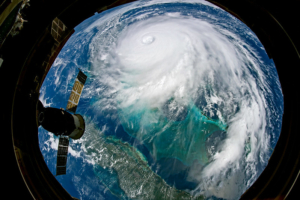 According to data measurements from the Nay Pyi Taw Seismological Observatory in the Philippines, the tropical storm typhoon Bualoi, which occurred in the West Pacific Ocean during September 2025, measured a strong 6.9 on the Richter scale. Typhoon Bualoi brought heavy rainfall, flooding and landslides that caused extensive damage to roads, buildings and bridges, along with power outages and numerous casualties in Vietnam, Laos and Thailand. In Vietnam, 30,000 people were evacuated ahead of the storm. Poverty rates remain high across Southeast Asia, where these three countries are located.
Tropical storms, such as Typhoon Bualoi, form over warm tropical oceans. When they intensify, they are classified as hurricanes, cyclones or typhoons, depending on the region in which they occur.
Typhoon Bualoi’s Impact on Vietnam’s Poverty and Infrastructure
According to Sky News reports, Typhoon Bualoi caused extensive flooding and landslides in Vietnam. Consequently, the town infrastructure of Vietnam became disarrayed, leading to the disconnection of roads and regional areas in the northern mountains of Son La and Lao Cai provinces, as well as central Nghe. Excessively high levels of water rose in the Thao River of Yei Bai to emergency levels, causing floods to overflow into residents’ houses.
Other news report stations have revealed that more than 200,000 homes, cities and farmland were destroyed by the typhoon, amounting to an approximate maximum of $600 million in damages. Tropical storms heighten and accelerate poverty due to the extensive cost of infrastructural repairs and disruption of town services. Poverty markers from the charity Oxfam indicate that 13 million people in Vietnam live in poverty.
Typhoon Bualoi also disrupted several transport networks: Vietnam’s Noi Bai International Airport had to suspend operations to ensure safety during the storm and Vietnam Railways Corporation canceled most services between Hanoi and the business hub of Ho Chi Minh City. Climate instability may have further worsened the storm’s impact, as rising global temperatures melt ice caps, raise sea levels and increase the likelihood of natural disasters.
Seismograph Technology Solutions
The seismograph at the Filipino Nay Pyi Taw Seismological Observatory records ground oscillations caused by seismic waves from earthquakes, volcanic eruptions and certain microseisms from storms at sea. Seismographs are built with electromagnetic sensor components that convert ground movement into electrical signals, which are recorded and processed by digital or analog circuitry. They can be calibrated to measure earthquake magnitude quantitatively, using scales such as the Richter scale.
Tropical storms, such as Typhoon Bualoi, leave detectable signatures in seismic data, as ocean waves generated by strong winds produce signals known as seismic fingerprints. Seismograph technology helps evaluate and assess these microseisms from typhoons, enabling authorities to implement effective evacuation plans and relief efforts according to the storm’s severity. More effective evacuation plans and a durable disaster risk management strategy, especially during the monsoon season, are crucial in reducing the widespread poverty caused by tropical storms.
Seismograph technology proved instrumental during Typhoon Bualoi, supporting the execution of evacuation protocols and the delivery of charitable aid to affected regions.
Innovative Seismograph Technology
Innovative seismograph technology has been developed for the enhanced detection of smaller, lighter and more types of seismic waves. The innovative technology employed mathematical research techniques in the field of polarization analysis, which involved studying the motion of particles in three dimensions to detect a wide range of polarized seismic waveforms. Such research has been pivotal in evaluating seismic waves from underground locations with minimal observation points.
The novel seismograph technology enhances the detection of earthquake seismic waves, facilitating the construction of more effective natural disaster risk assessments, as well as short-term and long-term preparedness for tropical storms. Building natural disaster shelters, implementing evacuation strategies and preparing for domestic flights, as well as irrigation dams and inland water transport, are all aspects of tropical storm preparedness.
Charity Response to Typhoon Bualoi
The charity ShelterBox supports relief efforts in regions affected by Bualoi through emergency shelters, solar lights, mosquito nets and blankets. The Samaritan’s Purse charity also provided aid to support the effects of the typhoon by distributing relief kits. It included food kits, cooking pots, mosquito nets, blankets and personal hygiene kits containing towels, soap and dental products, which were distributed to hundreds of families in Ha Tinh Province, Vietnam.
Seismograph technology has been an instrumental solution, alongside other charitable outreach efforts, in alleviating poverty caused by tropical storms. By evaluating seismic waves, it facilitates more effective evacuation protocols and disaster preparedness.
– Deborah Asante
Deborah is based in London, UK and focuses on Technology and Global Health for The Borgen Project.
Photo: Flickr
