SDG 4 in Haiti: Global Partnerships Advancing Education
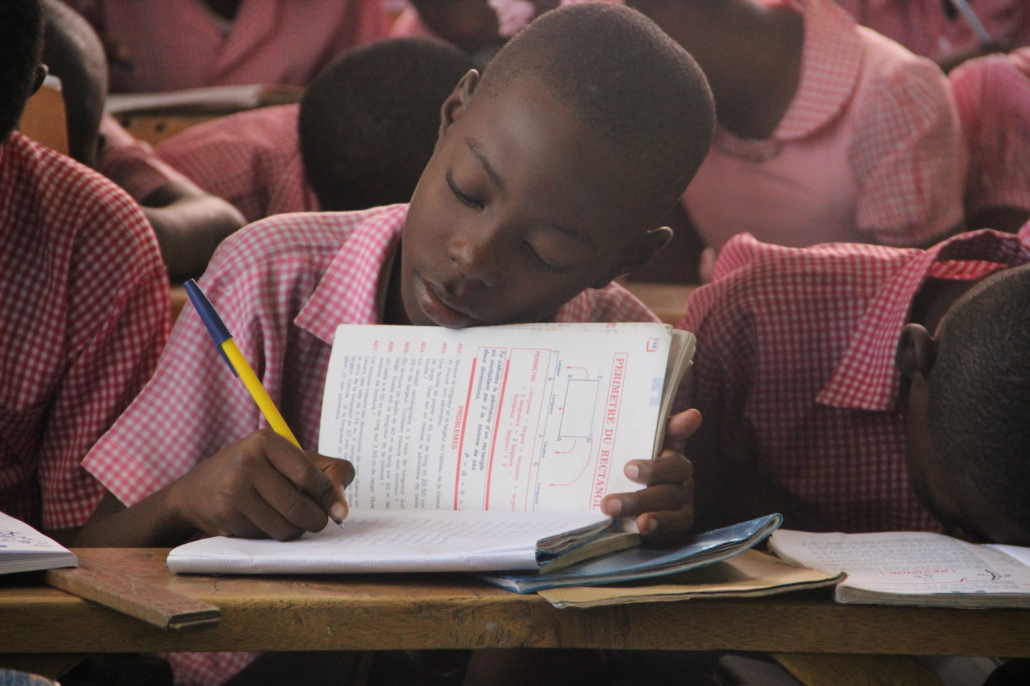
Across Haiti, school closures, language barriers and chronic underfunding continue to disrupt education for millions of students. The UN’s fourth Sustainable Development Goal (SDG) focuses on “ensuring inclusive and equitable quality education and promoting lifelong learning opportunities for all” by 2030. In a country like Haiti, achieving this goal is especially urgent as the population continues to face extreme levels of poverty, violence and repeated school disruptions. In recent years, however, efforts have emerged to create a more robust system that will support the overall growth of Haitian youth. International organizations and local partners play an important role in supporting progress toward SDG 4 in Haiti.
Barriers To Achieving SDG 4 in Haiti
Years of political instability and the rise of gang violence have long impacted Haiti’s education system. As of May 2025, more than 1,600 schools across four departments shut down, largely due to the escalating insecurity. In addition to these safety concerns, education is severely underfunded. Less than one-quarter of schools are public institutions. In fact, approximately 80% of primary schools are privately run. Many families do not have the necessary resources to pay for a proper education, while the government does not provide them with the adequate tools to do so.
There are also key systemic issues that hinder learning outcomes. Haiti has two official languages: French and Haitian Creole. However, in reality, only a small minority of Haitians are bilingual, with around 90% of the population only speaking Haitian Creole. Despite this reality, French remains the official language of instruction, which creates an additional barrier for the majority of monolingual students. Educational materials in Haitian Creole remain limited, further complicating classroom learning.
Proper instructor training is another ongoing concern. Many teachers do not have the proper training or qualifications needed to deliver high-quality instruction. To add on to that, classrooms are often overcrowded and lack basic resources. Millions of students lack the proper support and tools needed to succeed, making progress toward SDG 4 in Haiti particularly challenging.
UNESCO Supports Curriculum Reform in Haiti
Despite these many obstacles, international actors continue to create initiatives that aim to strengthen Haiti’s education system. UNESCO has been a major player in Haiti’s pursuit of higher quality education. The Ministry of National Education of Haiti and the UNESCO’s International Bureau of Education recently signed a $6.8 million agreement to support curriculum reform and development in the country.
This project aims to create a better system by understanding and addressing the root causes of issues. Rather than focusing solely on classroom content, it aims to address why education is delivered the way it is and who it serves. Self-described as an “endogenous” education, it aims to completely reform the way in which Haitians perceive education to a more holistic view of it, understanding the power of their environment, their culture and their realities. This approach integrates Haiti’s cultural and social context into the curriculum through a more interactive process that involves the students and their input.
The project will unfold in three phases. The program began with a diagnostic phase from 2022 to 2024. Its conclusions revealed the system’s most glaring issues including overloaded curricula, a discrepancy in teacher training, learning assessment and content, and issues surrounding the use of the language of learning. Phases II (2025-2027) and III (2026-2029) both involve an integration of the newly developed curriculum into schools, including experimentation in classrooms. The final phase will develop digital educational resources that students can access both online and offline. This is especially important in the context of Haiti today, where electricity and internet access can be inconsistent. In addition, the program will train teachers, inspectors and pedagogical advisers who will help implement and monitor the new curriculum as it is gradually rolled out nationwide.
While UNESCO’s initiative represents only one component of broader reform efforts, it is a great example of how international partnerships are helping move SDG 4 in Haiti forward.
Programs Supporting Students Beyond the Classroom
A student’s ability to focus and succeed in school is also contingent on their well-being outside of the classroom. The improvement of education outcomes therefore requires addressing broader challenges that students face such as nutrition, stability and access to basic resources among other factors. Hunger and financial hardship often reduce attendance and academic performance significantly.
Organizations such as the World Food Programme (WFP) work to address issues surrounding nutrition. WFP helps to provide daily meals to around 420,000 students all over the country. Hunger reduces overall focus and energy, making it difficult for students to be fully present in class. On the other hand, school meal programs improve nutrition and serve as an incentive for families to keep their children enrolled in school.
Other organizations, including UNICEF, have developed programs that address emotional and stability barriers to learning. For example, UNICEF’s EDUPOL provides psychosocial care for more than 200,000 children affected by gang violence and displacement. The program also provided financial assistance to around 18,000 households and supported 33,062 students across 129 schools through water, sanitation and hygiene (WASH) services designed to improve health and well-being.
By addressing these out-of-classroom challenges, these programs help create the conditions necessary for students to succeed academically. Education improvements require addressing both classroom and societal challenges.
Looking Ahead: The Future of Education in Haiti
Haiti continues to face numerous challenges that inevitably affect the education of all students. However, educators, policymakers and international actors increasingly recognize the need for a more robust education system. Different initiatives have already improved the lives of countless students. Sustained collaboration between these different entities will be essential for these efforts to continue to expand. By addressing both systemic education barriers and the broader social challenges students face, these initiatives can help build a more resilient education system and expand opportunities for Haiti’s next generation, advancing progress toward SDG 4 in Haiti.
– Chloe Bonnefil
Chloe is based in Miami, FL, USA and focuses on Technology and Solutions for The Borgen Project.
Photo: Flickr
