How Freed Communities Are Building Schools in Mauritania
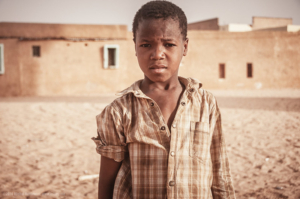 In Mauritania, hereditary slavery is not always visibly evident, but its influence remains strong. For generations, the Haratine, a Black ethnic group historically enslaved by the White Moors (Beidane), have been born into lives of servitude, owned as property and made to believe that their bondage is divine will. Women face sexual violence and are forced to bear children who inherit their enslaved status. Entire families work unpaid within a caste system that persists beyond legal abolition. Although Mauritania criminalized slavery in 2007 and reinforced laws in 2015, enforcement remains weak.
Few enslavers have been prosecuted and the government denies that slavery still exists, instead targeting anti-slavery activists who challenge the system. Illiteracy, common among the Haratine, deepens their marginalization, with only half able to read and write. Public education in Mauritania is underfunded and neglected, failing those most in need, while the elite send their children to private schools.
Without birth certificates, many Haratine children are prevented from attending school, reinforcing their exclusion. Nonetheless, communities are establishing their schools in response to systemic neglect. Since 2014, more than 60 grassroots schools have been built by and for the Haratine, providing literacy and empowerment. These initiatives challenge a divided nation, where rural slavery contrasts with urban segregation and where the legacy of slavery persists in slums and segregated neighborhoods.
The Rise of Community-Led Schooling
Pervasive illiteracy and the emergence of community-led schools in Mauritania underscore both significant challenges and the resilient efforts of formerly marginalized communities to reclaim their right to education, a transformative journey from enslavement to education. Although there have been gradual improvements, stark disparities persist, exacerbated by a brain drain of young, educated Mauritanians seeking higher education abroad, leading to a fractured system.
Ali Deng of the Sahel Foundation notes that primary education is highly stratified: wealthy families send their children to elite private schools, the middle class chooses lower-tier private institutions and the impoverished rely on underfunded government schools with few resources. Rural areas are hit hardest, with severe teacher shortages making access nearly impossible. With literacy rates as low as 52% and extreme poverty impacting three-quarters of the population, grassroots organizations have stepped in to fill the gap.
Groups like Graines d’Espoir Mauritania work directly with marginalized communities, offering educational support, nutrition and agricultural programs to promote long-term development. These efforts, often led by residents and supported by diaspora networks, focus on inclusive education, rejecting ethnic or religious discrimination. While the government is gradually expanding access, NGOs and community-led schools in Mauritania enable oppressed groups, such as the Haratin, to overcome systemic barriers and create their routes to literacy and empowerment.
Political Pushback and Progress
Despite Mauritania’s official abolition of slavery in 1981 and subsequent laws against it, the practice continues with alarming impunity. Those advocating for emancipation face relentless political repression. Leading this effort is Biram Dah Abeid, an anti-slavery activist and politician who established the Initiative for the Resurgence of the Abolitionist Movement (IRA-Mauritania).
Abeid is globally recognized for his bravery, receiving awards like the 2013 U.N. Human Rights Prize, the 2016 U.S. State Department’s TIP Hero Award and the 2015 Dutch Human Rights Tulip. Abeid works to free enslaved communities, prosecute slaveholders and challenge the government’s complicity. His activism has come at a personal cost. In 2014, he and 16 fellow activists were arrested during a protest against slaveholder impunity. He was charged with unlawful assembly and sentenced to two years in prison amid international protests.
Although released in 2016, he was re-arrested in 2018, highlighting the government’s effort to silence dissent. Nonetheless, IRA-Mauritania continues grassroots activism through protests, hunger strikes and global advocacy. These suppression tactics reflect a wider pattern of resistance against Black liberation movements, where legal and political systems are weaponized to uphold oppression. Yet, Abedi’s perseverance and international support show that liberated communities are demanding education and justice and redefining resistance narratives amid systemic violence.
The Lasting Effects
In Mauritania, community-led educational and economic programs are transforming freed slave communities by breaking cycles of oppression and reshaping cultural narratives. Organizations like Anti-Slavery International and SOS-Esclaves have supported formerly enslaved individuals, especially Haratine women. They do this through vocational training, financial literacy workshops and small business support, helping hundreds achieve economic independence for the first time.
These initiatives do more than foster livelihoods; they challenge caste hierarchies by promoting self-worth and empowerment. Personal stories, such as Moctar’s, who escaped slavery at age 13 and now aims to become a lawyer, illustrate the psychological freedom these efforts provide. His mother’s initial resistance, rooted in long standing beliefs about caste superiority, highlights the cultural barriers these programs face.
By teaching skills like embroidery, sewing and market entrepreneurship, these workshops offer income opportunities and reshape social roles for Haratines, historically limited to “dirty” or “degrading” work. These community-driven initiatives demonstrate how they can address immediate survival needs while fostering long-term cultural change, turning emancipation into genuine empowerment.
A Path Forward Through Collective Action
Mauritania’s transition from enslavement to education highlights both the persistence of systemic oppression and the empowering role of community-led resistance. Although slavery has been legally abolished, hereditary slavery continues under caste hierarchies, government denial and institutional neglect. Nonetheless, freed communities, especially the Haratine, are creating spaces for empowerment through grassroots schools, vocational programs and economic initiatives in Mauritania.
The growth of community-based schooling, supported by groups like Anti-Slavery International and activists such as Abeid, shows how education can break the cycle of intergenerational trauma. These successes, though hard-won, reveal the contradictions within a state that bans slavery but criminalizes those fighting against it.
The path forward remains challenging. Repressive government actions limited public funding and deeply rooted caste ideologies still obstruct progress. However, the resilience of Mauritania’s marginalized populations provides a change model, with these grassroots efforts fostering a future where emancipation signifies freedom from chains and the opportunity to thrive.
– Emilia Bartle
Emilia is based in Watford, UK and focuses on Good News and Politics for The Borgen Project.
Photo: Flickr
