Renewable Energy in Kiribati
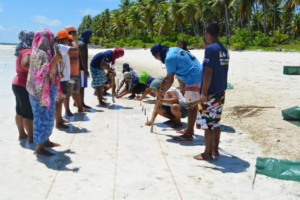 Kiribati is a nation consisting of 33 islands in the Pacific Ocean lying directly along the earth’s equator in Micronesia. The territory gained independence from the United Kingdom in 1979. Kiribati’s location makes it the only country in the world that falls into all four hemispheres. Sitting on the International Date Line, it has the earliest time zone in the world. The country’s natural resources are coconuts and fish. Due to the threat of rising sea levels possibly engulfing the low-lying nation as a result of climate change, Kiribati has purchased land in Fiji for potential resettlement of its citizens (approximately 116,000 people). Still, the country continues to progress, improving its infrastructure, creating jobs and advancing its resilience to fluctuating climate conditions. The use of renewable energy can be key to Kiribati’s continued growth.
Kiribati’s Energy Challenges
As a developing nation in the remote continent of Oceania, Kiribati has distinct economic challenges. Among these is its ability to provide reliable, affordable energy to all of its citizens. Not only is Kiribati dependent upon imported fossil fuel (currently about 80% of its power comes from foreign oil) but energy distribution to its outlying islands is difficult due to their long ocean distances from the inner islands. Kiribati’s outer islands currently derive their energy from limited-capacity solar power systems and biomass (mainly wood).
Burning of biomass can release particulates and chemicals that can cause respiratory issues, heart problems and cancer. A lack of reliable, affordable energy can affect the health and well-being of island inhabitants. The use of renewable energy in Kiribati can provide a sustainable, economic solution to the country’s energy challenges and could push Kiribati’s current long-term growth rate from slightly over 2% to 4% and significantly reduce poverty.
Kiribati’s Energy Roadmap
In 2017, Kiribati developed an “Integrated Energy Roadmap” to address its energy dilemma. The roadmap defines a plan for making Kiribati’s energy supply not only more cost effective, but also greener, targeting a 22% reduction in fossil fuels. Reducing fossil fuel use will not only help to lessen the global carbon footprint but can also manifest social inclusion by providing affordable energy to all of Kiribati’s citizens. The country’s proposed strategy can help Kiribati to achieve energy independence and enhanced economic development by harnessing natural resources and utilizing indigenous workers. The energy roadmap includes strategic choices tailored to various islands’ characteristics. Plans for renewable energy in Kiribati include more efficient solar programs, wind power, biofuels and ocean energy.
The Green Hope Foundation
Kiribati has made progress towards its goal. The Green Hope Foundation has installed solar water distillation systems that purify seawater for drinking and agricultural use on several islands. Purification systems are essential as Kiribati’s groundwater is being depleted due to rising sea levels. Indigenous women help manage the facilities and educate their communities on water conservation. The distillation systems currently serve 1,900 people on three islands. Green Hope has plans to serve five additional communities of 6,500 individuals. Also in the works is a grid-connected solar photovoltaic project in Tarawa, the nation’s capital city that holds almost half of its 116,000 residents.
Other Types of Energy
Wind power holds promise for some of Kiribati’s islands. Kiritimati (also known as Christmas Island) has sufficient wind speeds to provide energy generation for its population of about 7,000 people. However, certain issues, such as noise, safety and the need to cut down coconut trees that provide much of the country’s income must be resolved prior to implementation.
Biofuel from coconut oil holds potential as nearly 80% of Kiribati’s land is covered in coconut trees. A coconut oil mill owned by Kiribati Copra Mill Limited in Tarawa has done trials mixing coconut oil with diesel fuel and with kerosene. The trials were reasonably successful, and commercialization is feasible in the near future. This biofuel could potentially be used across the country.
Kiribati’s location and environmental conditions are optimal for ocean energy development. Indeed, the country’s energy roadmap includes plans for a 1-megawatt ocean thermal energy conversion plant. Testing and development have already occurred in South Tarawa. Though results demonstrated that such a plant would be feasible, it would require high startup costs and has logistical challenges such as the need for specialized vessels, ongoing maintenance, subsea cabling and material corrosion issues.
Outlook for Implementation of Renewable Energy in Kiribati
The use of natural resources for energy is an economical and environmentally friendly choice; however, implementation does not come without complications and challenges, including high installation costs. Kiribati and other developing countries do not always have the funds to build the required energy infrastructures. However, large-scale renewable power projects can attract investors who expect to receive a substantial return on their investment. The World Bank has contributed a considerable amount of funding, helping to enable renewable energy in Kiribati to become a reality.
Not only does Kiribati’s energy plan benefit the environment and help to accelerate its rise from poverty, but it also addresses social issues such as inclusion and women’s resilience. Indeed, Kiribati’s approach is a reminder that a well-thought out, inclusive policy to address energy challenges can have benefits far beyond the dollar.
– Debbie Barto
Debbie is based in Monroe, WA, USA and focuses on Technology and Global Health for The Borgen Project.
Photo: Flickr
