Fragility and Rule of Law in Serbia
 Rule of law aims to delimit arbitrary power by ensuring governments must follow the same legal standards as citizens. In Serbia, leaders have repeatedly tested this principle. Nevertheless, Serbia’s post-authoritarian recovery, rooted in the stability of potential European integration, produced a rule of law that drew fair and equitable governance. However, since 2012, Serbia has faced burgeoning fragility across state institutions and a shrinking of the nation’s civic space. The following article on fragility and rule of law in Serbia highlights the impact this has on the country’s poorest.
From Recovery To Institutional Fragility
Serbia’s post-Yugolsav trajectory has moved through three distinct phases. War and international isolation defined the 1990s under the authoritarian rule of President Milošević. However, the 2000s brought political openings and rapid recovery through stronger international ties such as the EU Stabilization and Association Agreement, which helped anchor domestic reforms.
This momentum stalled after the 2008 financial crisis, as public confidence in EU accession waned. This shift aligned with the rise of the Serbian Progressive Party (SPS). In 2014, the SPS’s ascent to power under Aleksandar Vučić triggered a measurable decline in democratic performance and institutional independence. International bodies, including the OSCE have repeatedly raised concerns that the centralization of power and political pressure on institutions is producing corruption. This corruption has undercut the state’s legal accountability and exacerbated poverty for marginalized groups.
How Fragility and Rule of Law in Serbia Impacts Poverty
Serbia’s at-risk-of-poverty rate stands at around 20%, with nearly one-fifth of the population receiving an income below the poverty line. The government continues to highlight GDP growth, which grew 3.9% in 2024, as markers of success. Nevertheless, these gains have not alleviated Serbia’s poverty, partly because weakening rule of law has distorted how authorities wield state power and distribute support.
Since 2014, corruption allegations and institutional deregulation have hollowed-out watchdog bodies, limiting civic oversight and weakening the delivery of public resources. The geographies of poverty remain most concentrated in the south and east, where it affects more than 27% of residents. The region counted around 77,000 unemployed in 2025. A slowed inflow of FDI amid failing investor confidence has accelerated factory closures. Serbia’s Association of Free and Independent Trade Unions warn the shutdowns “have only just begun.”
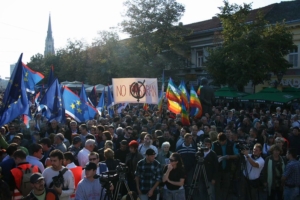
A major turning point came with the collapse of a newly built train station in 2024. The incident triggered a series of anti-government protests. Protesters blamed the collapse on corruption and the breakdown of rule of law. Student-led demonstrations swiftly grew into a national movement, exposing Serbia’s political fragility and exacerbating concerns from foreign investors. The economy felt the impact immediately, producing a rise in job insecurity and pushing households closer to poverty.
Failing Measures
Serbia spends 19.5% of GDP on social protection. However, most funding goes toward broad social insurance rather than targeted anti-poverty support. In reality, Serbia spends only 5% of GDP on program directly aimed at poverty reduction. Opposition figures argue officials use the inflated number to portray success while masking gaps in direct support.
For many families the support is not enough. An unemployed family of three receives 22,000 dinars per month in cash social assistance, far below the estimated 56,868 dinars that make up Serbia’s minimum consumer basket.
The Future of Fragility and Rule of Law in Serbia
Despite the declining rule of law, there are signs that Serbia’s future trajectory may be shifting. The 2024 protests evolved into a more organized political force in 2025, whose push for an early election has now been announced for 2026.
Civil society has also grown more influential. NGO groups such as the A11 Initiative for Economic and Social Rights argue leaders have governed Serbia through short-term, selective measures rather than sustained, rights-based policy. This has resulted in a system that A11 states keeps marginalized people “just enough above water to survive,” rather than reducing poverty in meaningful terms.
– Rory Wesson
Rory is based in London, the United Kingdom and focuses on Politics for The Borgen Project.
Photo: Flickr
