Renewable Energy in Grenada
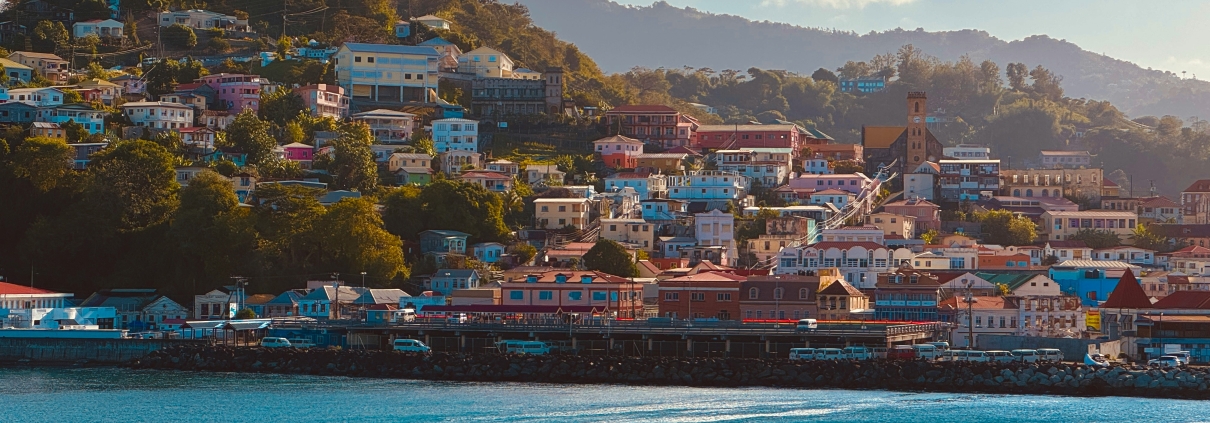 Grenada, like many other island nations in the Caribbean, faces a critical challenge: breaking its dependence on expensive, imported fossil fuels. Currently, a staggering 93% of Grenada’s energy supply relies on imported oil products. This costs that country an average of 105 million East Caribbean Dollars (ECD), draining resources that the country could better allocate locally and making the nation particularly vulnerable to global price shocks and supply disruptions. Additionally, imported oil’s monopoly on Grenada’s energy sector causes widespread energy poverty, which is the lack of energy needed to provide basic services, such as heating, cooling and cooking.
Yet, the Spice Island is planning an ambitious new course. According to the United Nations Development Program (UNDP), Grenada has pledged a 40% reduction in its 2010 emissions by 2030, with the ultimate goal of using 100% renewable energy in its transport and electricity sectors. Additionally, new renewable energy initiatives can combat energy poverty by allowing families to own solar panels and generate their own electricity off the national grid. This would lower household costs, keep money in the Grenadian economy, and improve the quality of life for many impoverished Grenadians.
Challenges
Issues riddle Grenada’s path forward. Grenada’s electrical grid currently relies on diesel generators, for which cooling alone accounts for one-third of the nation’s total greenhouse gas emissions. Meanwhile, poverty remains high, with 25% of Grenadians living below the poverty line. Additionally, while there has been progress to expand the renewable energy sectors, a vast majority of Grenada’s renewable energy output comes from small-scale projects rather than large-scale government investment.
Progress on the Ground
Despite these obstacles, renewable energy in Grenada has continued to expand. In November 2024, Grenada launched a tender for a major solar project at Maurice Bichop International Airport, and while a company has not won the tender, the project continues to develop, with officials choosing the sites for the solar panels. The winning developer will secure a 25-year power purchase agreement with the state utility, Grenlec, and planners expect the project to meet 40% of Grenada’s energy grid needs.
Grenlec has also announced that the construction of a new substation and upgraded grid infrastructure is underway on the island. Improving the efficiency of the grid and lessening overall waste. This project will also create a resilient microgrid at the airport, allowing for reliable power during prolonged grid outages.
International support also provides optimism for the Island’s future development. In December 2024, the United Kingdom pledged 10 million British pounds to support geothermal energy development in Grenada, aiming to reduce its former colonies’ reliance on expensive imported fossil fuels. Additional United Nations programs like the Building Effective Resilience for Human Security in the Caribbean Countries and the Harnessing Blue Economy Finance for SIDS Recovery and Sustainable Development initiatives work to develop the renewable energy grids of the region and help the impoverished in Grenada.
Tourism
Tourism remains both Grenada’s largest industry and a major contributor to overall emissions, but the sector is beginning to adopt new, climate-friendly policies. A pilot project at the True Blue Bay Resort has demonstrated that replacing conventional air-conditioning units with R290 units, which are both propane-fueled and very efficient, achieved an energy consumption reduction of around 26%. For a nation with a large number of hotels, in which cooling can account for a majority of its energy demand, improvements in cooling efficiency can reduce annual electricity consumption by hundreds of thousands of ECD.
Impacts on Poverty
The transition to renewable energy in Grenada carries large implications for poverty reduction, as about 25% of the population lives below the poverty line, and the unemployment rate stood at 11.1% in 2023.
Currently, high electricity costs burden low-income households, forcing many to spend large portions of their income on energy. Lowering these costs through renewable sources would free up household income for food, education, healthcare and many other expenses. To combat this, Grenada plans to launch its “Solar for All” Program, which will expand access to rooftop solar and accelerate nationwide adoption of solar energy, particularly for vulnerable households.
Renewable energy also creates local jobs. The country cannot outsource the installation, maintenance and management of renewable energy sources, and will create many jobs for the country’s unemployed. Unlike fossil fuel imports, which send money overseas, investments in renewable energy will keep capital within the local economy.
The expansion of renewable energy in Grenada has the potential to transform the Grenadian economy and open doors for Grenada’s impoverished.
– Luca Napolitano
Luca is based in Boston, MA, USA and focuses on Politics and The Good News for The Borgen Project.
Photo: Unsplash
