A Long-Term Battle: Remaining Causes of Poverty in Vietnam
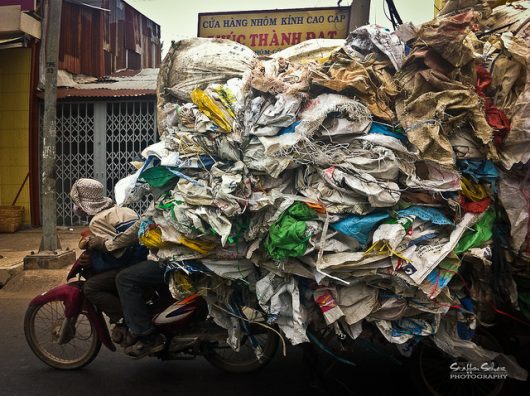
Based on the swift drop in Vietnam’s poverty rate from 20.7% to 13.5% between 2010 and 2014, it is clear that conditions in the nation are improving. However, issues such as ethnic discrimination, a lacking education system, deteriorating infrastructure and a weak domestic private sector in the economy threaten its growth and stand as the remaining causes of poverty in Vietnam.
While statistics describing poverty throughout the Vietnamese population seem optimistic, they do not account for the fact that over half of the population among ethnic minorities continue to live below the poverty line of $2 a day. Individuals from ethnic minority backgrounds are continually isolated, geographically and socially. Their historically limited access to opportunities has created a cycle the country is working to break.
To address these inequalities, the government of Vietnam instituted a ministry known as CEMA (the Committee for Ethnic Minority and Mountainous Area Affairs) and is working to increase education and social opportunities for this population.
With Vietnam having emerged as a lower middle-income country in 2010, all eyes are turned to its economy. Historically, almost all of Vietnam’s production has been handled by its government, weakening its private sector. Even still, in 2016, it was ranked 98 out of 189 countries in the ease of doing business index. Experts from the World Bank argue that a richer domestic private sector could be the final push the country’s economy needs to eliminate poverty.
Failing infrastructure remains one of the large causes of poverty in Vietnam, and many other countries. Although immense efforts were made in the late nineties to bring electricity to its people, Vietnam’s infrastructure systems for energy, water, sanitation and telecommunication are far from where they need to be.
Without an efficient and reliable infrastructure, the private sector cannot grow, as individuals are unable to reach the marketplace. Furthermore, until the water system and roadways improve, education cannot flourish, as students are unable to attend school.
The country’s SEDS (Socio-Economic Development Strategy) for 2016-2020 acknowledges the biased education system, struggling market institutions and stagnant infrastructure development as causes of poverty in Vietnam and articulates the need to accelerate progress. This acknowledgment is a clear step forward in the nation’s fight against poverty.
– Emily Trosclair
Photo: Flickr
