Left Behind: Refugee Education in Jordan
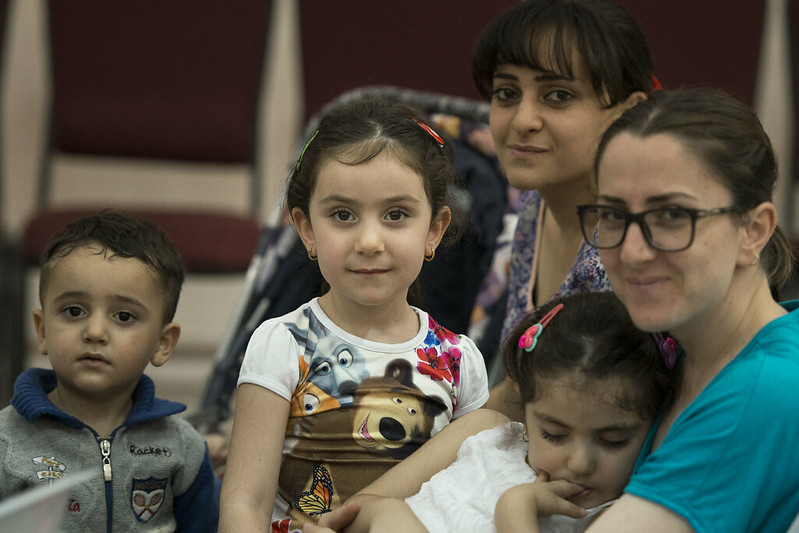 Hundreds of thousands of refugee children in Jordan remain cut off from their right to education, not because they lack the will to learn but because layers of bureaucratic red tape block them. Human Rights Watch reports that schools often ask families to present documents that many refugees cannot obtain, such as valid legal residency papers or certified school transcripts from the countries they fled. For those who escaped war or persecution with little more than the clothes on their backs, these requirements become impossible to meet. Hidden administrative fees and long processing delays further complicate the process, leaving even the most determined parents struggling to get their children into classrooms.
Jordan’s Struggles with Access to Education
Nearly one in three Syrians registered with the United Nations (U.N.) refugee agency in Jordan—about 226,000 of 660,000—are children between the ages of 5 and 17. In 2017, more than 80,000 of them did not receive any form of formal education. These obstacles keep countless children, particularly those from Syria and Sudan, out of classrooms and expose them to greater risks of child labor or early marriage.
A mother of an 8-year-old Syrian refugee student, Muhannad, shared her story: “I had a lot of difficulties with Muhannad, especially when he was diagnosed with autism. He didn’t like going to school, and the fact that teachers weren’t trained to deal with his case made it more difficult.”
Many families fled from Syria without official documentation or necessary civil documents, making enrolment for education nearly impossible. Additionally, the Jordanian Interior Ministry requires Syrian refugees to obtain a “Service Card,” which is often tied to a specific district. This creates an issue for families who have to move around to find work.
Furthermore, Jordanian education authorities prohibit the enrollment of children who have been out of school for three years or more. This rule makes it extremely difficult for children affected by conflict and unable to secure the required documents to access basic education.
The culmination of these factors, along with asynchronous societal changes, has caused societal and economic shifts in Jordan to outpace the education system’s ability to adapt. Furthermore, significant policy and data gaps persist, particularly regarding unregistered refugees, creating a lack of comprehensive understanding of their educational needs.
Jordan’s Innovative Double-Shift School Model
Despite hosting one of the world’s largest Syrian refugee populations, the government, backed by international partners, has introduced “Double Shift” schools. Introduced in the 1960s, this pragmatic educational system addresses overcrowding within the education sector, simplifies registration procedures and significantly expands access to public education. This approach reflects the 2015 U.N.-sponsored Refugee Response and Resilience Plan (3RP), which promotes inclusive education by offering access to a wider curriculum, additional resources, teacher training and national accreditation of established education systems, improving educational experiences for Syrian refugees.
The Double Shift system not only eases access to education for both Syrian refugees and Jordanian children but also provides hundreds of thousands of students with a sense of normalcy by utilizing existing infrastructure and requiring minimal new financial resources.
The Double Shift Model: Implementation
The Double-Shift School Model is the most notable strategy for keeping refugee education in Jordan accessible. Under this system, the regular school day is divided into two separate sessions: Jordanian nationals typically attend classes in the morning, while Syrian refugee students take their lessons in the afternoon. By running two full school days back-to-back in the same buildings, the Ministry of Education makes far better use of existing facilities, significantly reducing the need for costly new construction or additional school sites.
This arrangement not only allows tens of thousands of refugee children to receive a formal education that might otherwise be out of reach but also helps relieve overcrowding, maintain smaller class sizes and keep local communities more cohesive. International partners such as the United Nations International Children’s Emergency Fund (UNICEF) have provided teacher training, materials and funding to sustain the model, demonstrating how targeted collaboration can turn a severe capacity crisis into an opportunity for inclusive education.
The Future of Refugee Education in Jordan
Greater funding for the U.N. Refugee Agency (UNHCR), Education Cannot Wait and similar programs, combined with sustained diplomatic engagement, could encourage governments to remove paperwork barriers and adopt inclusive education policies. These efforts can improve infrastructure, enhance teacher training and strengthen the Ministry of Education’s capacity for data-driven planning and crisis-responsive systems.
Jordan has made significant strides in providing wider access not only to its citizens but also to the influx of Syrian refugees by implementing the “Double Shift” programs and “cash for education” systems. Organizations such as UNICEF provide cash-based assistance to families, helping them cover the costs of transportation, uniforms and school supplies, thereby encouraging and incentivizing children to stay in school.
– Carise Wallbank
Carise is based in the United Kingdom and focuses on Global Health for The Borgen Project.
Photo: Flickr
