Technologies to Prevent Food Insecurity in Morocco
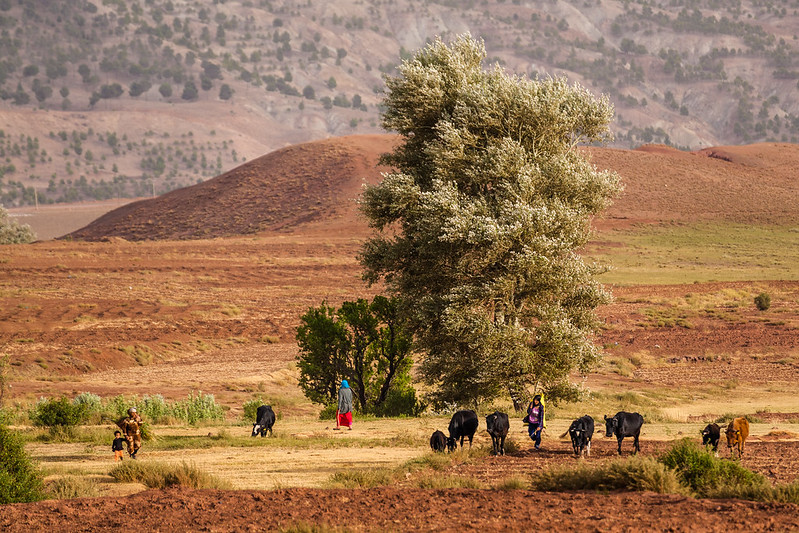 In 2024, Morocco suffered a 50% decrease in its wheat harvests, compared to the previous year, leaving many farmers and rural labourers without work or income. Although Morocco has always battled droughts and water shortages, the effects have become more apparent in the past decade. According to ROPUR, 40% of the Moroccan workforce participates in agricultural activities, with 137,000 jobs lost to the drought in 2024.
The lack of rainfall and reservoirs affects not just the rural populations in the most barren parts of Morocco, but also urban centers such as Rabat, which came close to a total dry up in 2023. Despite the inevitable threat of a water shortage in the country, foreign investors have partnered with scientists from Mohammed VI Polytechnic University to utilize technology in reducing the economic and health consequences associated with droughts and food insecurity.
Agritech and the Green Generation Strategy
A particular project that has worked effortlessly to solve food insecurity in Morocco is Agritech. The Green Generation Strategy (2020-2030), set out by King Mohammed VI, aims to modernise the Moroccan agricultural sector of the economy, not only to boost exports, but also to support the 73% of people living in rural Morocco who work in agriculture.
As a product of this 10-year strategy, Agritech aims to provide precise and timely information to farmers through a mixture of satellite-based imagery, drones and artificial intelligence in order to help the sector better prepare for droughts.
Al Moutmir: Irrigation and Job Creation
Agriculture in Morocco accounts for 14% of GDP, meaning slight shifts in the climate during growing seasons can have catastrophic consequences for locals. Among the frequent effects of climate shifts is a reduction in the rural labor force. However, through technological innovation, projects such as Al Moutmir have overcome some of these challenges.
Through its gravity-fed irrigation systems, some farmers have been able to reduce their field water losses from 40% to just 15%. In addition, the umbrella strategy that Al Moutmir forms a part of – Le Plan Maroc Vert –has created an additional 342,000 jobs since its inception in 2008.
Sand to Green and Terraa
While organizations and partnerships in Morocco have taken direct action on combating food insecurity and water shortages, a hybrid of both physical and virtual uses of technology has benefited farmers. For example, Sand to Green uses technology to insert green spaces into previously arid lands or solar-powered desalination methods to increase the flow of appropriate water for agriculture.
Terraa, on the other hand, is a digital network that farmers use to distribute their products efficiently and cost-effectively so as to avoid waste in times of surplus. Through the combination of the two, farmers can work toward a more stable harvest, all the while selling their produce for a price that is fair for their work. As such, the Moroccan agricultural sector reinforces itself in the long term and expands its GDP.
Looking Ahead
Although droughts are an inevitable reality in Morocco, state-of-the-art technology allows small and large-scale farmers to prepare for the worst. Although Morocco may seem like a distant country, 34% of Moroccan exports to the U.K. are fruits and vegetables, meaning a stable agricultural industry in Morocco leads to a consistent supply for British consumption.
– Alfie Williams-Hughes
Alfie is based in Nottingham, UK and focuses on Business and Politics for The Borgen Project.
Photo: Flickr
