Seoul Learn: Education Reducing Poverty in South Korea
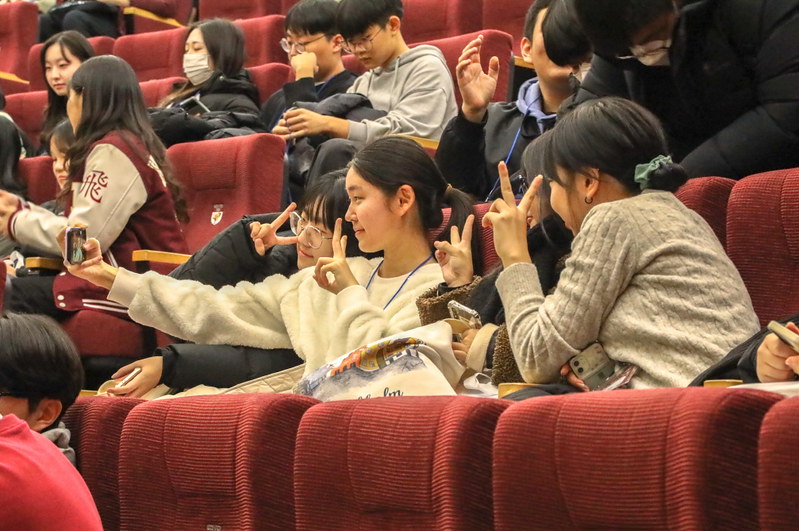 South Korea values its educational system. A big reason for their financial success lies in the country’s devotion to education. Many celebrate their accomplishments as highly educated South Korean students attend international universities and excel.
However, education in South Korea is very competitive. Additionally, economic differences among students exacerbate the situation. Students from low-income households do not have access to higher education. This leads to an educational gap between them and students who are financially better off. Hence, the difference in the opportunities available in the job market. Therefore, education intertwines with poverty in South Korea. In other words, it leads to generational poverty. This is where the technological education program named “Seoul Learn” enters the equation.
What is the “Seoul Learn?”
Launched in August 2021, “Seoul Learn” is a project that aims to address and improve the issue of educational inequality. This program recognizes the distinction in educational opportunities, as lower-class students come at a disadvantage.
Due to their socio-economic situation, these students experience difficulties in acquiring access to educational resources. “Seoul Learn” highlights that this results in generational poverty. This program emerged from the COVID-19 pandemic as the educational inequalities broadened. It intends to prevent inequality between students and make education equal for all.
The Seoul Metropolitan Government (SMG) aspires to complete three distinct goals:
- “A fair city of education”: Putting their focus on providing the necessary support to households with low earnings.
- “A sustainable city of education”: Allowing students who are members of “Seoul Learn” to customize their educational content to benefit them in their lives.
- “An innovative city of education”: Making the educational platforms more advanced by incorporating other educational technologies, such as Artificial Intelligence (AI).
A Fair City of Education
The first step that SMG completed was ensuring that the underprivileged students obtain devices to use for their studies. For example, tablets or computers to work on. Additionally, the government and the administration of education provided reliable internet services.
Interestingly, in recent years, the mayor of Seoul Oh Sehoon announced the “Seoul Run 3.0 Promotion Plan.” The project then made some changes in order to expand the eligibility of the recipients. The eligibility criteria were upgraded from households with nearly 60% of the median income to 80%. And thus, expanding the circle of targeted people, like the youth from the local children’s centers.
Research states that the number of students who can benefit from this upgrade increases from nearly 120,000 to 170,000.
In addition, entering this program begins with a qualification test conducted online. Following the completion of this quiz, students from vulnerable groups can thus join the community of “Seoul Learn.”
Within the project, there are significant objectives, such as eliminating the burden of private school expenses. The issue is that only private schools offer private content. However, with “Seoul Learn”, students from vulnerable groups then have the opportunity to acquire access to more advanced education.
A Sustainable City of Education
In 2025, an article reported how the project turned into a student-customized educational platform. New learning services were included in the program that have strengthened it. They are designed to better accommodate the students’ needs. Such learning services include:
- “Real-time AI tutor”: a support that is targeted for young students who are a bit slower.
- “1-on-1 essay monitoring”: customized support that focuses on high school students who are drafting their college essay. As students work, their questions would be immediately answered and their issues tackled.
An Innovative City of Education
The reorganization called “Seoul Run 3.0 Promotion Plan” focused on strengthening career dedication as well as the incorporation of AI in this platform. With the 2026 academic year, “Seoul Learn” planned to implement an AI system through the program. It will focus on how the members respond to the platform, and thus offer “customized counseling and career exploration.” The services incorporated, like ChatGPT and Gemini, allow the use of features that assist the students’ learning. For example, creating practice tests, image/video generation, lists of English vocabulary, and AI Q&A. Moreover, “Seoul Learn” doesn’t only concentrate on helping students improve their grades, but it also encourages them to plan their lives based on their developing abilities, invoking hope in students.
To Conclude
“Seoul Learn” aims to improve the situation of education and poverty at once in South Korea. This further demonstrates how “Seoul Learn” works towards helping students from low-income households to evaluate their potential fairly, just like any other student. This gives them a better chance of acquiring valuable employment in the competitive job market. And thus, poverty in South Korea is reduced through the mission of technological education.
– Lara Ibrahim
Lara is based in Créteil, France and focuses on Technology and Global Health for The Borgen Project.
Photo: Flickr
