Permaculture Farming Fights Global Poverty
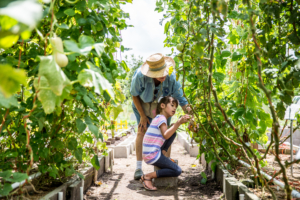
Permaculture farming is a design system for farming that applies ecological principles from nature to human agriculture. It attempts to banish pollution, water waste and energy waste. In the same vein, it focuses on improving productivity, efficiency and upcycling production to improve farmers’ conditions and their land. The heart of permaculture is caring for the planet, caring for people and promoting equitable distribution.
Permaculture Farming Integrates Production
This concept grew out of a sustainable agriculture movement initially developed by Bill Mollison and David Holmgren in Australia in the 70’s. The principles of permaculture are many. For instance — observing and interacting, catching and storing energy, obtaining a yield, applying self-regulation and feedback. Additional principles include using and valuing renewables, producing no waste, designing from patterns to details, integrating production (instead of segregating it), using small solutions, valuing diversity, valuing the marginal and creatively responding to change.
Enabling Self-Subsistence
NGOs and charity organizations often provide direct aid that is helpful in the short term but does not offer long-term solutions. A permaculture advocate named Josephine Awino explained, as an example, that in Kenya cash crops are primarily grown. However, when a community transitions from growing cash crops and moves towards growing plants that their community can eat — it allows the community to depend less on imports and exports. With less dependence on external subsidies, which are transitory and sometimes withdrawn, the community can create a long-standing, institutional baseline for financial success.
The Reuse of Land
Permaculture typically uses cyclical farming techniques to reduce waste and sewage problems. Permaculture farming primarily focuses on practical ways one can enrich the soil, to maximize garden output. It is also possible to implement the cycling of produce types during this process so that the land can consistently retain the same nutrients during each growing season. Any community can improve the soil quickly through using compost-making, water catchment systems and improving the landscape for water retention. Instead of focusing on what one can get from the land, permaculture focuses on how one can continue to reuse land exponentially. In communities where there is minimal space for gardening and farming, the reuse of land is particularly helpful. The consistent ability to reuse the soil can help protect low-income communities from famines due to blockades or sanctions from other countries.
Generating Income
Many communities often function with small economies. In this same vein, even small economies utilize mutual trade and aid — made possible through permaculture. Additionally, permaculture reorients the economic goals of a community. Instead of working to gain more money to buy imported food, the community can save money by consuming the food that they have created, themselves. Permaculture farming creates less dependence on outside income and promotes the circulation of the local economy in conjunction with surrounding economies and the instrumentation of direct, mutual aid. Also, permaculture farms can utilize the space they have created to offer other community services, which can, in turn, be used to generate income. Once the farm is successful, it can also serve as a teaching site for other communities within the region. In this way, communities can learn permaculture practices and this service (of teaching) itself can serve as yet another direct source of income.
Promotion of Community Reliance
When communities implement various kinds of food production, it does not necessarily require that individuals own land or have money. For example, a community can band together to petition their government to provide ground for a shared, community garden. Frequently, permaculture can function successfully in limited, private spaces — like rooftops or walls, to optimize the area and encourage growth. Individuals are inspired to rely on their community members to identify which places will work best for creating garden zones. Additionally, permaculture farming can unite a small community in the shared goal of making food to be used for and sold by the community, exclusively.
– Hannah Bratton
Photo: Flickr
