Understanding Poverty Among the Orang Asli in Malaysia
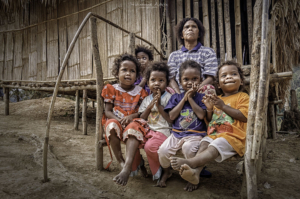 Orang Asli is the collective name for the various Indigenous communities in Peninsular Malaysia. Orang Asli is translated as the “original people” in Malay and is used to describe the estimated 18 ethnic groups in Malaysia. The Orang Asli communities have various traditional lifestyles, including hunting and gathering, hill rice cultivation, along with semi-nomadic groups known as the Negritos and coastal fishing communities such as the Orang Seletar and Mah Meri.
Most Orang Asli communities practice subsistence farming with surplus crops sold to neighboring villages to supplement income. Most of these communities depend on the local environment for their lifestyle; local rivers are used for drinking water, agriculture, washing and transport to other communities or urban areas.
The Orang Asli make up 13.8% of Malaysia’s population. Yet, 80% live below the global poverty line. Additionally, the infant mortality rate for the Orang Asli is 51.7% compared to the national Malaysian average of 8.9%, due to inadequate access to health infrastructure.
Land Rights and Environmental Pressures
Orang Asli live on land designated by the Aborigines Act of 1954, which was created under British colonial rule. This act deems that the Malaysian government owns all land. The Orang Alsi are established as “tenants at will” and only given minimal financial compensation for encroachment. Land encroachment forces the Orang Alsi to leave their traditional lifestyle and settle in urban areas.
Government initiatives since the ’60s have focused on integrating the Orang Asli into urban society. Schemes include the introduction of cash crop agriculture and actively discouraging the hunter/gatherer lifestyle that the Orang Asli use. The Orang Asli have a sustainable lifestyle and only take what they need from the surrounding forest, keeping an equilibrium in the areas entrusted to the Orang Asli communities.
This contrasts with harsh economic development practices that have relied on rapid deforestation for monetary gain, causing mudslides, floods and soil erosion. Deforestation to make room for oil palm plantations greatly contributes to the increased poverty levels among the Orang Asli. Palm oil provides 2.5% of Malaysia’s GDP in 2021, with government officials using financial incentives to buy off Orang Asli headmen.
Land inhabited by the Orang Asli is targeted because they lack the means to advocate for themselves. Malaysia’s economic improvement strategies include hydroelectric dams to meet its expectations for renewable energy by 2050. However, it is disrupting the Orang Asli rivers, which hold spiritually significant areas of importance.
Without access to forested regions, the Orang Alsi have their rights to food, clean water and access to health and education infrastructure jeopardized.
Education and Social Marginalization
Many Orang Asli who withdrew from school expressed concerns about the lack of transport, support, and resources to access government-built schools. However, education is a key component of poverty alleviation; without it, many remain unable to improve their living conditions.
The Orang Asli also face cultural marginalization. Their lifestyle is often viewed as primitive by the wider Malaysian government. Deforestation hinders their cultural identity and unique livelihoods and places their entire way of life at risk.
Strategies To Help the Orang Asli Communities in Malaysia
Nongovernmental organizations (NGOs) such as Pusat KOMAS in Malaysia raise advocacy for human rights issues surrounding the Orang Asli. It particularly focuses on racial discrimination that the Orang Asli face in wider society. Humanitarian Affairs Asia assembles volunteers to redevelop primary schools for Orang Asli communities, ensuring they are easily accessible.
Furthermore, the Malaysian government launched the Shared Prosperity Vision as a blueprint for 2030. It addresses various social and economic problems affecting the Orang Asli, including welfare assistance, legal protections and reducing inequality within their communities. Financial contributions of $19 million have been allocated to JAKOA (Department of Indigenous People Development) to improve socioeconomic status, such as upgrading existing health facilities.
The Jahai Jeli school scheme is an innovative strategy that targets community inclusion. It uses a culturally receptive school curriculum to foster a collaborative relationship between the school and the wider community. The scheme was a trial project between 2018 and 2020. It showed promising results, including increased Orang Asli involvement at national decision-making levels.
The importance of the Orang Asli maintaining cultural agency, such as preserving their language, religious beliefs and environmental ownership, should coexist within poverty reduction frameworks.
– Liberty Whitford Webb
Liberty is based in London, UK and focuses on Good News and Politics for The Borgen Project.
Photo: Flickr
