• Link to X
  • Link to Facebook
  • Link to Instagram
  • Link to TikTok
  • Link to Youtube
  • About
    • About Us
      • President
      • Board of Directors
      • Board of Advisors
      • Financials
      • Our Methodology
      • Success Tracker
      • Contact
  • Act Now
    • 30 Ways to Help
      • Email Congress
      • Call Congress
      • Volunteer
      • Courses & Certificates
      • Be a Donor
    • Internships
      • In-Office Internships
      • Remote Internships
    • Legislation
      • Politics 101
  • The Blog
  • The Podcast
  • Magazine
  • Donate
  • Click to open the search input field Click to open the search input field Search
  • Menu Menu
Blog - Latest News
Health

Niger Villagers gather to vow against FGM
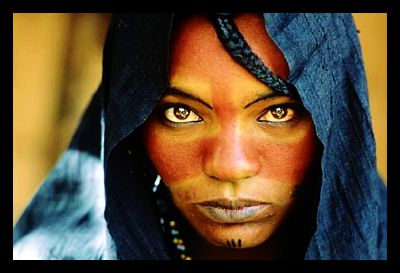
Niger Villagers gather to vow against FGM

In discussions about female genital mutilation (FGM), the communities which traditionally engage in the practice are often depicted as unwilling to end it, or unaware of the dangers of it.

Yet recently, in a heartening display of commitment to progress, nearly 14,000 villagers from various communities in Niger gathered to publicly vow to end the tradition. In the ceremony, a pit was dug in the village square and participants threw knives, scissors and blades into it before it was symbolically filled in.

Though Niger officially outlawed FGM in 2003, it remained common in certain communities.

A health issue as well as a social one, FGM leaves women with a myriad of medical problems including infertility, incontinence, pain, cysts, and infections. It is nearly always done on young girls, before the age of 15. It has been decried by the WHO as a practice which “violates a person’s rights to health, security and physical integrity, the right to be free from torture and cruel, inhuman or degrading treatment, and the right to life when the procedure results in death.”

The issue of FGM is not merely an issue of the practice itself, but is inextricably tied to the status of women within the communities. To ensure success in stopping FGM, women must be elevated through education and increased access to their rights.

While the rate of the practice has decreased – slipping from 5% to 2% of girls in Niger, according to UNICEF – it has proved very difficult to eradicate entirely. It has deep roots and a strong cultural presence, with many seeing it as the proper way to raise a young girl and discourage promiscuity. It also falls in line with local ideas of femininity and chastity, with certain parts of the female anatomy seen as “male” and “dirty”, with removal becoming a necessity. There is also the simple but powerful social pressure of subscribing to tradition.

These are all attitudes which need to be changed within the local communities, rather than coming from international intervention. The very public display of support from ordinary citizens is a great step forward for seeing the end of this primitive practice against the communities’ most vulnerable members.

– Farahnaz Mohammed

Source: Yahoo News
Photo: Tribe

May 25, 2013
Share this entry
  • Share on Facebook
  • Share on X
  • Share on WhatsApp
  • Share on Pinterest
  • Share on LinkedIn
  • Share on Tumblr
  • Share on Vk
  • Share on Reddit
  • Share by Mail
https://borgenproject.org/wp-content/uploads/borgen-project-logo.svg 0 0 Borgen Project https://borgenproject.org/wp-content/uploads/borgen-project-logo.svg Borgen Project2013-05-25 04:00:502020-06-21 22:34:37Niger Villagers gather to vow against FGM

Get Smarter

  • Global Poverty 101
  • Global Poverty… The Good News
  • Global Poverty & U.S. Jobs
  • Global Poverty and National Security
  • Innovative Solutions to Poverty
  • Global Poverty & Aid FAQ’s
Search Search

Take Action

  • Call Congress
  • Email Congress
  • Donate
  • 30 Ways to Help
  • Volunteer Ops
  • Internships
  • Courses & Certificates
  • The Podcast
Borgen Project

“The Borgen Project is an incredible nonprofit organization that is addressing poverty and hunger and working towards ending them.”

-The Huffington Post

Inside The Borgen Project

  • Contact
  • About
  • Financials
  • President
  • Board of Directors
  • Board of Advisors

International Links

  • UK Email Parliament
  • UK Donate
  • Canada Email Parliament

Get Smarter

  • Global Poverty 101
  • Global Poverty… The Good News
  • Global Poverty & U.S. Jobs
  • Global Poverty and National Security
  • Innovative Solutions to Poverty
  • Global Poverty & Aid FAQ’s

Ways to Help

  • Call Congress
  • Email Congress
  • Donate
  • 30 Ways to Help
  • Volunteer Ops
  • Internships
  • Courses & Certificates
  • The Podcast
Link to: UNICEF’s First Celebrity Ambassador, Danny Kaye Link to: UNICEF’s First Celebrity Ambassador, Danny Kaye UNICEF’s First Celebrity Ambassador, Danny Kaye Link to: The Effect Global Poverty has on Wildlife Link to: The Effect Global Poverty has on Wildlife The Effect Global Poverty has on Wildlife
Scroll to top Scroll to top Scroll to top