Modi’s New Welfarism Doctrine Is Combating Poverty in India
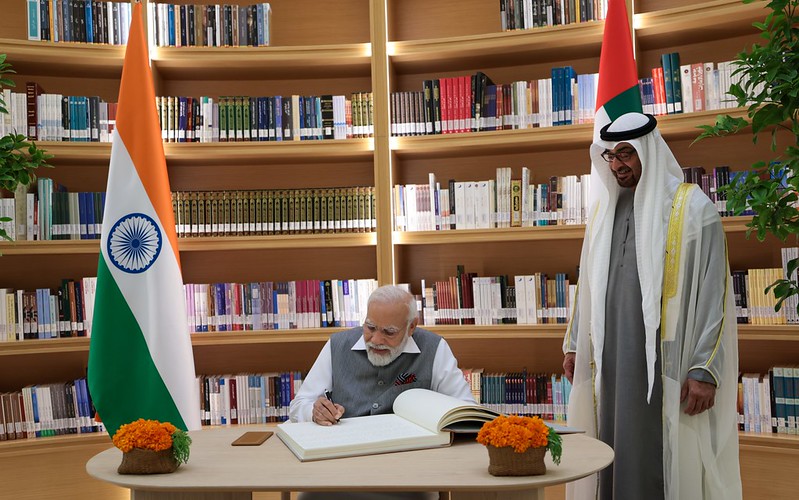 Narendra Modi, India’s Prime Minister, is often perceived in the Global North as a far-right populist who cares only about votes and identity politics. Counterintuitively, he has also established an impressive and expanding social welfare system. Under the doctrine of “New Welfarism,” the government of India has prioritized providing tangible goods and services (food, shelter, infrastructure, direct cash transfers and more) to vulnerable communities while deemphasizing the provision of intangibles such as education and healthcare.
Despite being controversial in development, New Welfarism has yielded impressive dividends for India’s needy and marginalized. Here are four of the doctrine’s most remarkable achievements.
Food Security in India
According to the World Food Programme (WFP), approximately 21% of India’s 1.4 billion inhabitants live on less than $1.90 daily. Meanwhile, the country is home to a whopping quarter of all undernourished people despite representing only 18% of the global population.
To mitigate this dire food insecurity, the Indian government provides more than half the population—821 million people—with 11-pound (5 kg) bags of free rice or wheat a month. This direct food aid almost quintupled in size during the COVID pandemic, becoming a literal lifeline for millions of Indians as the domestic economy reached a near standstill.
Rural Roads in India
In his second term as Prime Minister (2019-2024), Modi launched a large program titled “PMGSY-III” to construct and upgrade rural roads. While behind schedule to be completed by its slated end date of March 2025, the program’s delays “are nowhere near as egregious as PMGSY-I,” per Newslaundry, an Indian news outlet, in their deep-dive.
Despite the delays, more than 766,000 kilometers of roadway have been completed under the scheme as of August 2024, as have more than 68,000 “upgradation works.” Improving rural infrastructure has been a goal of the Indian government for decades, which is sensible, given that 65% of India’s population lives in rural areas.
Domestic Infrastructure
The Modi government has invested considerable resources to construct homes, electrify rural regions and improve sanitation. One scheme (Pradhan Mantri Awas Yojana or “PMAY” for short) aims to build 20 million affordable homes, with more than 15 million completed. The homes include amenities such as a kitchen, toilet, water supply and electricity. Any Indian without a permanent dwelling is eligible for the program, with priority given to vulnerable and marginalized communities.
The budget for PMAY was increased by 66% in the fiscal year 2023-24 and was again expanded in the FY 2024-25 budget. Rural electrification has been another area of focus for the Modi regime: from 2014 to 2020, the percentage of rural villages with access to electricity increased from 88% to 99.6%.
Aadhar
Aadhar is a voluntary, government-sponsored digital ID that any Indian adult can enroll in. In a testament to the program’s efficacy, 99% of Indians have done so. Aadhar has proven to be a massive development success for India, as it helps the government know who needs support most desperately. Aadhar also enables the state to send direct cash transfers to beneficiaries when linked to a bank account, cutting down on administrative corruption opportunities.
Final Remarks
The Modi government has made praise-worthy progress in the fight against domestic poverty in areas as diverse as food security, rural infrastructure, affordable housing and capacity building. Sadly, this has come at the cost of a decrease in India’s education and health care budgets.
– Kipling Newman
Kipling is based in Denver, CO, USA and focuses on Good News and Global Health for The Borgen Project.
Photo: Flickr
