• Link to X
  • Link to Facebook
  • Link to Instagram
  • Link to TikTok
  • Link to Youtube
  • About
    • About Us
      • President
      • Board of Directors
      • Board of Advisors
      • Financials
      • Our Methodology
      • Success Tracker
      • Contact
  • Act Now
    • 30 Ways to Help
      • Email Congress
      • Call Congress
      • Volunteer
      • Courses & Certificates
      • Be a Donor
    • Internships
      • In-Office Internships
      • Remote Internships
    • Legislation
      • Politics 101
  • The Blog
  • The Podcast
  • Magazine
  • Donate
  • Click to open the search input field Click to open the search input field Search
  • Menu Menu
Blog - Latest News
Global Poverty, War and Violence

How Military Conflict and Climate Change Intersect in Mali
Climate Change

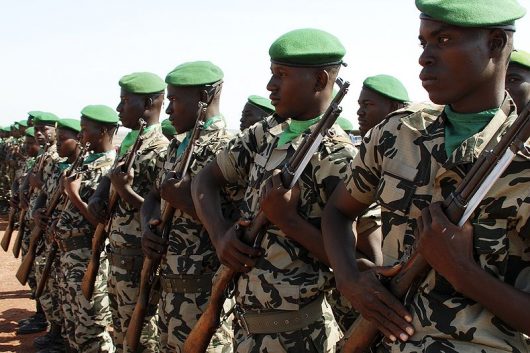
A military coup has worsened Mali’s national security, amplifying the impact climate change has had on the country and its people. Conflict erupted in northern Mali in 2012. The violence of the proceeding five years has since destroyed the nation’s land, diminishing the abilities local farmers have to grow vegetation.

Since 2012, Mali has witnessed a wave of poor harvests, pushing a food crisis upon the country. Hostile physical and environmental circumstances have forced about 475,000 people from their homes to neighboring countries, and those who remain in Mali face food shortages and security threats. With 25 percent of families moderately to severely food insecure, the United Nations Food and Agriculture Organisation (UNFAO) estimates that 270,000 people face starvation.

Two thirds of Mali is a desert or semi-desert that experiences long yearly periods of drought. Furthermore, the Sahara Desert is expanding southward at a rate of 48 km per year. Climate change has significantly decreased the amount of rainfall, dropping by 30 percent since 1998. Consequently, Mali is also suffering from water scarcity. Only three-fifths of Malians have access to safe drinking water and only about one-third have proper sanitation.

The water shortage has weakened Mali’s agricultural activities, taking an immense toll on its citizens. Agriculture employs 90 percent of the country’s rural population and 70 per cent of Mali’s entire labor force. Cotton, gold and livestock make up 80 to 90 percent of total export earnings.

The World Food Programme (WFP) has been working on generating food security, particularly between harvests. The organization built a total of 3,966 environmental assets such as ponds, dams, and canals to help alleviate Mali’s lack of water. Technical and economic assistance have been provided for local farmers, broadening Mali’s market and strengthening the agricultural sector.  WFP has also begun providing nutrition support for pregnant women, nursing mothers, underweight children and children under five suffering from chronic and moderate-to-acute malnutrition. Further assistance from organizations like WFP is necessary to lift Mali‘s people from the harsh grips of military conflict and climate change.

– Tiffany Santos

Photo: Google

September 24, 2017
Share this entry
  • Share on Facebook
  • Share on X
  • Share on WhatsApp
  • Share on Pinterest
  • Share on LinkedIn
  • Share on Tumblr
  • Share on Vk
  • Share on Reddit
  • Share by Mail
https://borgenproject.org/wp-content/uploads/borgen-project-logo.svg 0 0 Borgen Project https://borgenproject.org/wp-content/uploads/borgen-project-logo.svg Borgen Project2017-09-24 01:30:322024-05-28 00:16:02How Military Conflict and Climate Change Intersect in Mali

Get Smarter

  • Global Poverty 101
  • Global Poverty… The Good News
  • Global Poverty & U.S. Jobs
  • Global Poverty and National Security
  • Innovative Solutions to Poverty
  • Global Poverty & Aid FAQ’s
Search Search

Take Action

  • Call Congress
  • Email Congress
  • Donate
  • 30 Ways to Help
  • Volunteer Ops
  • Internships
  • Courses & Certificates
  • The Podcast
Borgen Project

“The Borgen Project is an incredible nonprofit organization that is addressing poverty and hunger and working towards ending them.”

-The Huffington Post

Inside The Borgen Project

  • Contact
  • About
  • Financials
  • President
  • Board of Directors
  • Board of Advisors

International Links

  • UK Email Parliament
  • UK Donate
  • Canada Email Parliament

Get Smarter

  • Global Poverty 101
  • Global Poverty… The Good News
  • Global Poverty & U.S. Jobs
  • Global Poverty and National Security
  • Innovative Solutions to Poverty
  • Global Poverty & Aid FAQ’s

Ways to Help

  • Call Congress
  • Email Congress
  • Donate
  • 30 Ways to Help
  • Volunteer Ops
  • Internships
  • Courses & Certificates
  • The Podcast
Link to: Why Is Mongolia Poor? Link to: Why Is Mongolia Poor? Why Is Mongolia Poor? Link to: Alleviation of Global Poverty a Benefit of Tourism Link to: Alleviation of Global Poverty a Benefit of Tourism Alleviation of Global Poverty a Benefit of Tourism
Scroll to top Scroll to top Scroll to top